Şort
The text details a skeptical response from a prominent Quraishi man, Itbah ibn Rabi'ah, to Prophet Muhammad’s claim of receiving divine revelation. Itbah suggests the Prophet may be suffering from a malevolent spirit or affliction and offers to enlist the help of his connections to find a cure. This illustrates the initial disbelief and attempts to rationalize the Prophet’s message through pre-Islamic beliefs. The text highlights the Prophet's unwavering conviction amidst this skepticism and the challenges faced in conveying a new message.

50

Dr. Israr Ahmad discusses the enigmatic figure of Zul-Qarnain mentioned in the Quran. He explores the possibility that Zul-Qarnain may be connected to the historical figure of Gautama Buddha, noting the lack of detailed information about Zul-Qarnain in both the Quran and Hadith. He suggests a link based on geographical references within Surah Al-Kahf and the story of a prince from Kapilavastu. Dr. Ahmad acknowledges the potential for later interpretations and additions to Buddha’s teachings, similar to those surrounding Jesus Christ, while also pointing out a possible consistency between the core principles of all prophets of God. He emphasizes the need for critical analysis and understanding of historical and religious figures.
59

Allama Iqbal, at the beginning of the 20th century, foresaw the rise of a destructive ideology, even before its full manifestation in Nazi Germany. His initial work focused on economics, but he was a philosopher and a poet with profound insight. He recognized the seeds of a sentiment that would later fuel the Holocaust—the perception of being controlled by external forces. This early awareness, predating overt reactions within Nazi Germany itself, allowed him to anticipate the potential for extreme brutality. The systematic extermination of six million people, a horrific event, stemmed from this perceived control and the resulting resentment. Iqbal understood the danger inherent in such beliefs.
59

This lecture discusses the concept of divine provision (rizq) and acceptance of God’s will. It explains that while individuals should strive to fulfill their obligations and help others, ultimate control over changing circumstances rests with God. The speaker emphasizes that one should do their best within their capacity, and accept that outcomes are ultimately in God's hands. The lecture highlights the importance of fulfilling one's duty with moderation and accepting God’s decree.
58

This lecture explores the name Al-Adl (The Just) of Allah, as found in Surah Al-Imran. It explains that justice is a fundamental attribute of God, present within the ninety-nine names revealed through the teachings of the Prophet Muhammad, as narrated by Abu Huraira. The discussion clarifies that while many divine names are expressed through different grammatical forms, the core essence of justice remains absolute and foundational. The speaker addresses the limitations of human language when attempting to define divine attributes, acknowledging that terms like ‘embodied’ or ‘form’ are unsuitable for God but necessary due to vocabulary constraints.
52
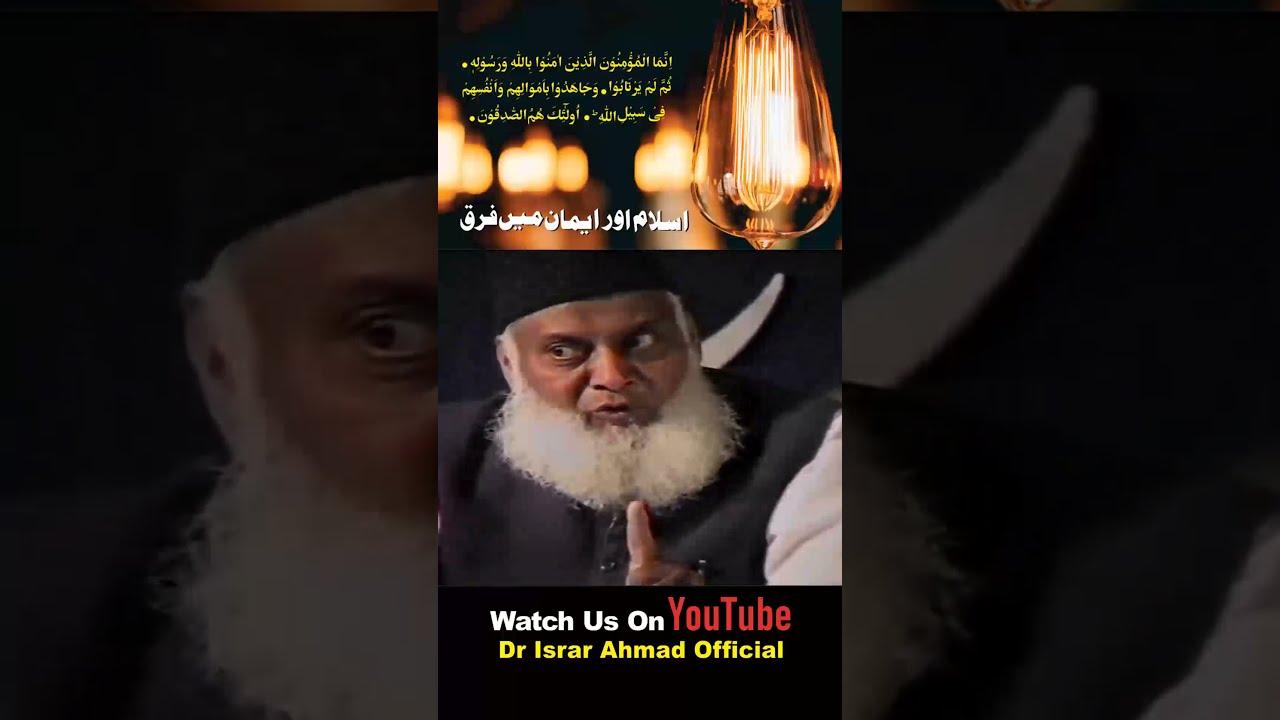
This lecture explores the distinction between Islam and Iman (faith). The speaker clarifies that simply professing Islam is insufficient; true faith requires the internalization of belief within the heart. The Quranic verse from Surah Al-Hujurat, chapter 49, verse 14, highlights the difference between outward submission and genuine belief. The speaker elaborates on the verse in Surah Al-Saf, chapter 6, verse 10, which emphasizes the need for a faith free from doubt and supported by striving in the path of Allah with wealth and life. The lecture emphasizes that a complete faith is demonstrated through both belief and action, and that true believers continuously strive to deepen their connection with Allah.
108
