Шорты
This lecture clarifies the distinction between *Nabuwat* (prophethood) and *Risalat* (messengership). It explains that all *Rusul* (messengers) are *Nabi* (prophets), but not all *Anbiya* (prophets) are *Rusul* (messengers). The analogy of a CSP officer’s career progression—qualifying through an exam, undergoing training, and then receiving specific assignments—illustrates the concept. Prophethood represents the foundational qualification, while messengership signifies a specific appointment to deliver a divine message. This appointment transforms the individual into a *Rasul*, tasked with conveying a warning or message to their people. The lecture emphasizes that this appointment defines the messenger’s role.

118
This lecture clarifies that humanity’s fundamental need is not material wealth or political power, but divine guidance. Humans are inherently equipped with the capacity to discern between right and wrong, good and evil, through the innate knowledge instilled within their souls. While individuals possess the ability to self-assess and find answers within their own hearts, external factors like forgetfulness, personal desires, and spiritual rust can obscure this innate knowledge. This lecture emphasizes the importance of seeking and maintaining a connection with this inner guidance.
54
This lecture elucidates the inherent truth and ultimate triumph of Islam as a complete way of life. It asserts that God sent His Messenger with guidance and truth to establish a just order, ensuring the dominance of divine law over all other systems. The core message emphasizes that the divine system will prevail, overcoming injustice and establishing a righteous world. The lecture highlights the inevitability of God’s plan for the supremacy of truth and justice, ultimately leading to a world governed by divine principles.
63
This lecture clarifies the essence of sacrifice, emphasizing that its core is submission to God and fostering piety. Mere ritualistic observance without a genuine connection to the Divine renders the act meaningless. The speaker critiques ostentatious displays of wealth during sacrifice, highlighting that true devotion lies in internalizing the spirit of humility and surrender. Genuine sacrifice necessitates a relationship with God and cultivating inner devotion. It is a demonstration of complete submission and sincerity.
66
The text highlights a unique distinction granted to Prophet Muhammad (peace be upon him). The Quran uses specific phrasing – “Rasool Allah” – exclusively for him, while other prophets are described with various roles like witness, herald, example, caller, messenger, teacher, trainer, and helper. This emphasizes his singular status as the final messenger of God.
107
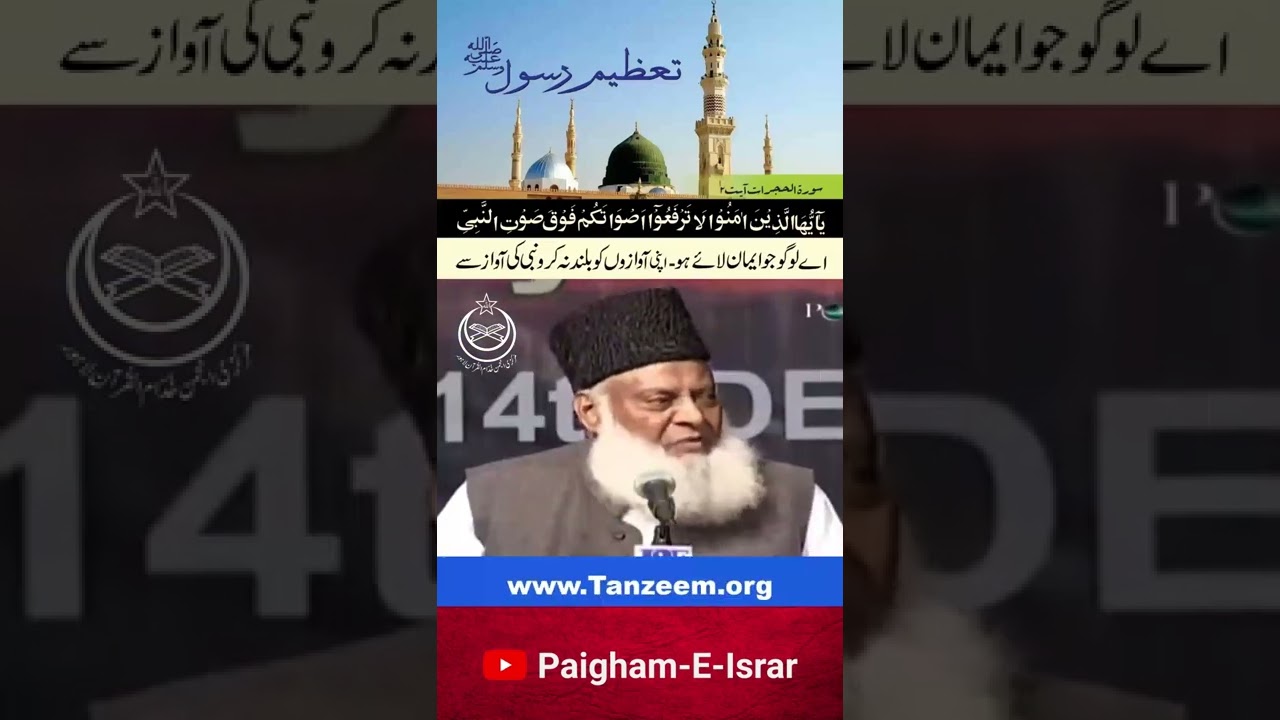
This lecture emphasizes the importance of respectful communication. It cautions against raising voices above the Prophet Muhammad’s, discourages boisterous or disrespectful dialogue, and warns that a lack of decorum can lead to the complete loss of influence and effectiveness, leaving one unaware of the damage caused. Maintaining respectful speech is crucial for preserving dignity and achieving positive outcomes in all interactions.
69
