শর্টস
This lecture emphasizes that ultimate authority and governance rest solely with God. It asserts that God does not share His power with any individual, ruler, nation, or humanity as a whole. The universe and the earth belong to God, and His will must prevail. This principle of divine sovereignty is absolute and unwavering, rejecting any form of shared authority or human intervention in matters of governance.

329
This lecture explores a specific supplication frequently recited by the Prophet Muhammad (peace be upon him) during his Tahajjud prayers. The core message centers on affirming the truth of Muhammad, the Quran, and Prophethood itself. The speaker emphasizes that repeatedly internalizing these truths is essential for strengthening one’s faith. Genuine belief isn't merely intellectual assent but a deeply ingrained conviction within the heart, forming the very foundation of true faith. The lecture stresses that this consistent affirmation cultivates a robust and unwavering certainty.
77
Dr. Israr Ahmad clarifies that the practice of collective Quran recitation for reward (sawab) is an innovation not found in Islamic tradition. True Quran recitation involves individual or attentive listening to a skilled reciter. He condemns the practice of dividing the Quran amongst multiple people to read portions as disrespectful and a form of mockery towards the scripture. The proper way to engage with the Quran is through personal recitation and focused, reverent listening.
68
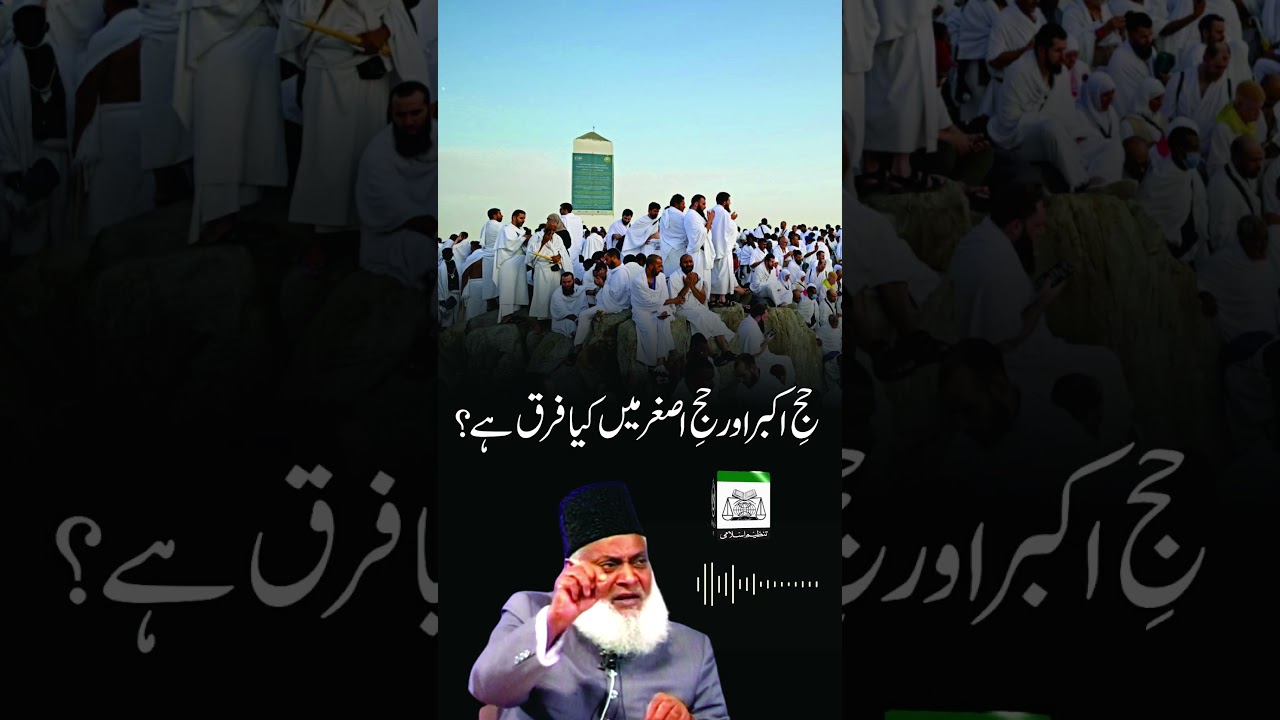
The common misconception that performing Hajj on a Friday is ‘Hajj Akbar’ is inaccurate. Originally, Arabs designated ‘Hajj Asghar’ for Umrah and ‘Hajj Akbar’ for the complete Hajj pilgrimage. The core meaning of ‘Hajj’ is intentional travel or journeying. Therefore, traveling for Umrah also constituted a ‘Hajj,’ albeit a lesser one. The Hajj performed during the designated days in Mecca is considered ‘Hajj Akbar.’ There is no additional merit to performing Hajj specifically on a Friday.
99
This lecture discusses the foundational principles of Pakistan’s political system, highlighting its historical roots in British parliamentary democracy. It emphasizes the concept of a shared national identity encompassing both Muslims and non-Muslims, established during the creation of Pakistan. The speaker points out that despite establishing Pakistan with a different vision, the country largely retained the British parliamentary system. The lecture examines the perception that this system was considered divinely ordained, leaving little room for alternative models and solidifying its place as the established political norm.
72
The greatest act of gratitude is towards one’s parents, a concept emphasized five times in the Quran. Simply *looking* at the Kaaba with reverence is considered an act of worship. Similarly, looking at one’s parents with love and respect is also an act of worship. This act of reverence, even without verbal interaction, holds significant spiritual reward. The Quran highlights the immense importance of honoring and showing affection to parents.
70
