شارٹس

This lecture discusses the grave sin of submitting to any authority other than God. It equates failing to establish a caliphate—a system promised by God—with disbelief, ingratitude, and rebellion. The speaker argues that Muslims must actively strive to fulfill this divine promise, or risk spiritual ruin. The lecture draws a parallel between this failure and the disobedience of Iblis, highlighting the seriousness of rejecting God's ordained system of governance. It serves as a warning against complacency and a call to action for the Muslim community.

56
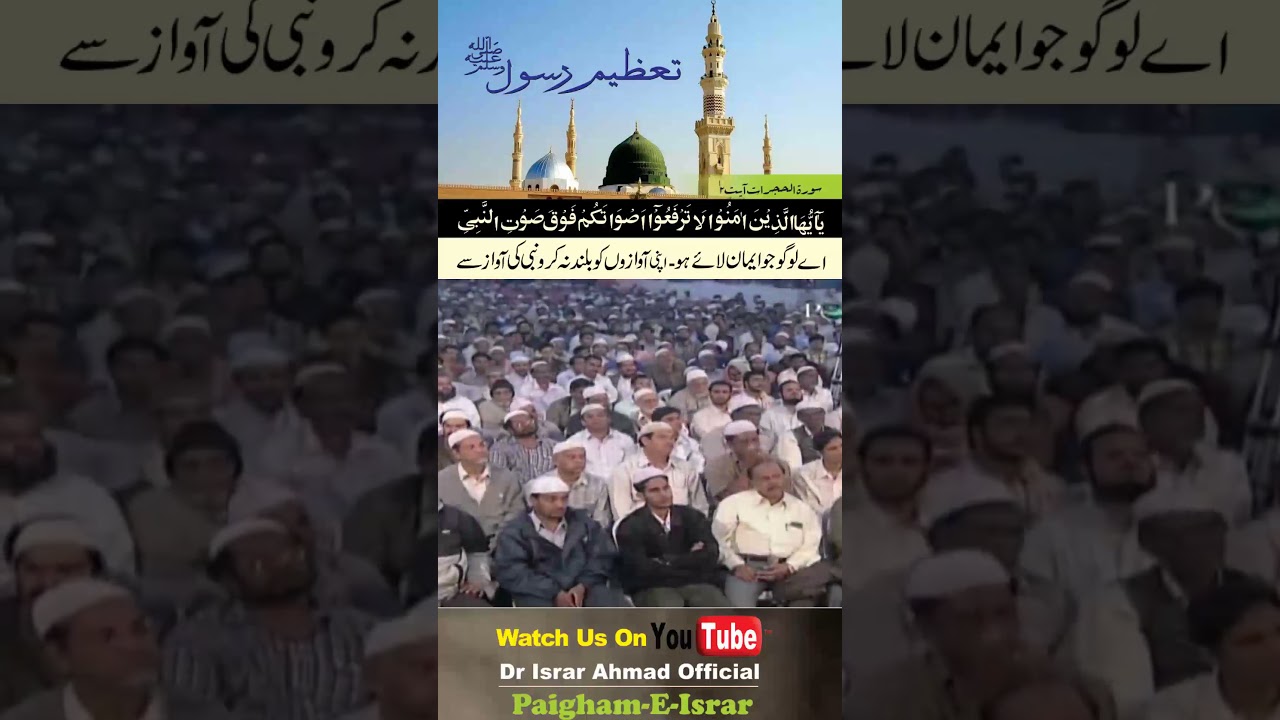
This lecture emphasizes the importance of respectful communication, particularly when discussing religious figures or sacred texts. It cautions against raising one’s voice in the presence of scholarly discussion or when referencing the sayings and actions of the Prophet Muhammad. The speaker stresses immediate silence when a tradition (hadith) is mentioned, prioritizing verification of its authenticity later. Disrespectful discourse is equated with diminishing the value of religious teachings and the Prophet’s legacy, demanding a mindful and humble approach to conversation.
58
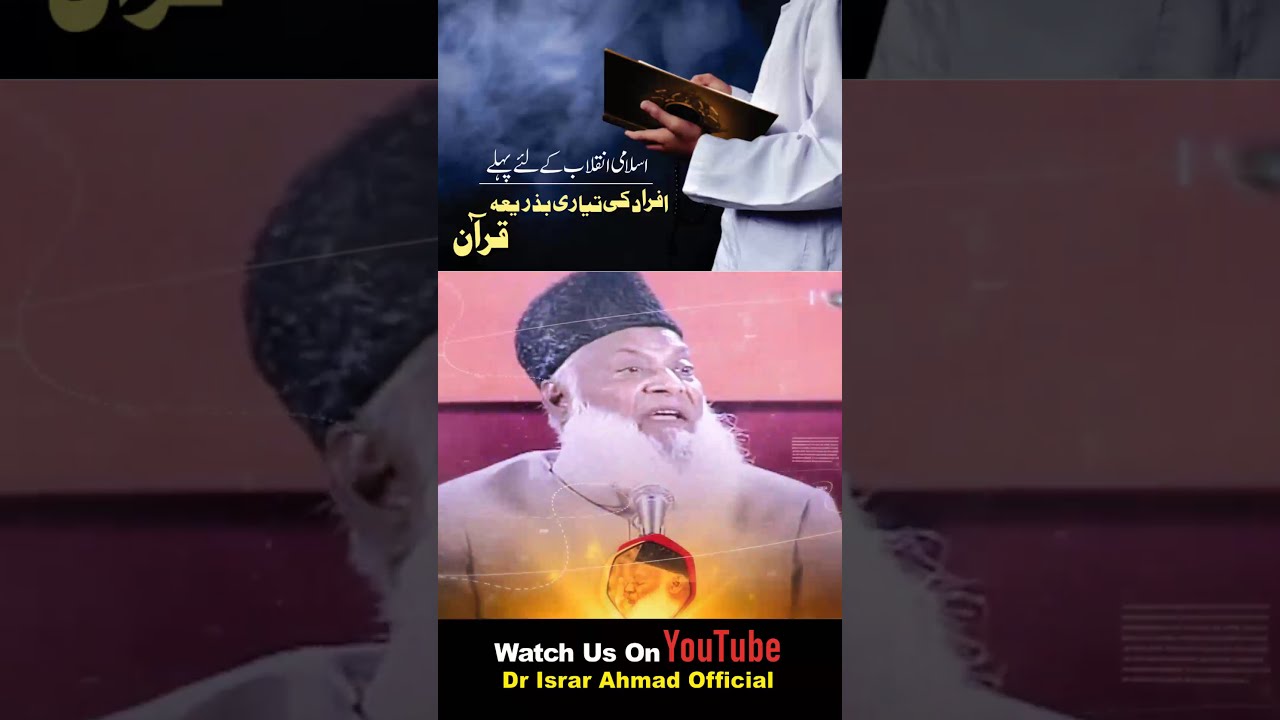
Dr. Israr Ahmad emphasizes the pivotal role of the individual in shaping the destiny of nations. He asserts that a nation's fate rests in the hands of its people, with each individual acting as a guiding star for the community. True progress stems from individual piety, devotion, and sincerity of purpose – working solely for the pleasure of God and striving for success in the afterlife. This lecture stresses the importance of solidifying individual character before uniting for collective advancement, with the Quran as the essential binding force.
82
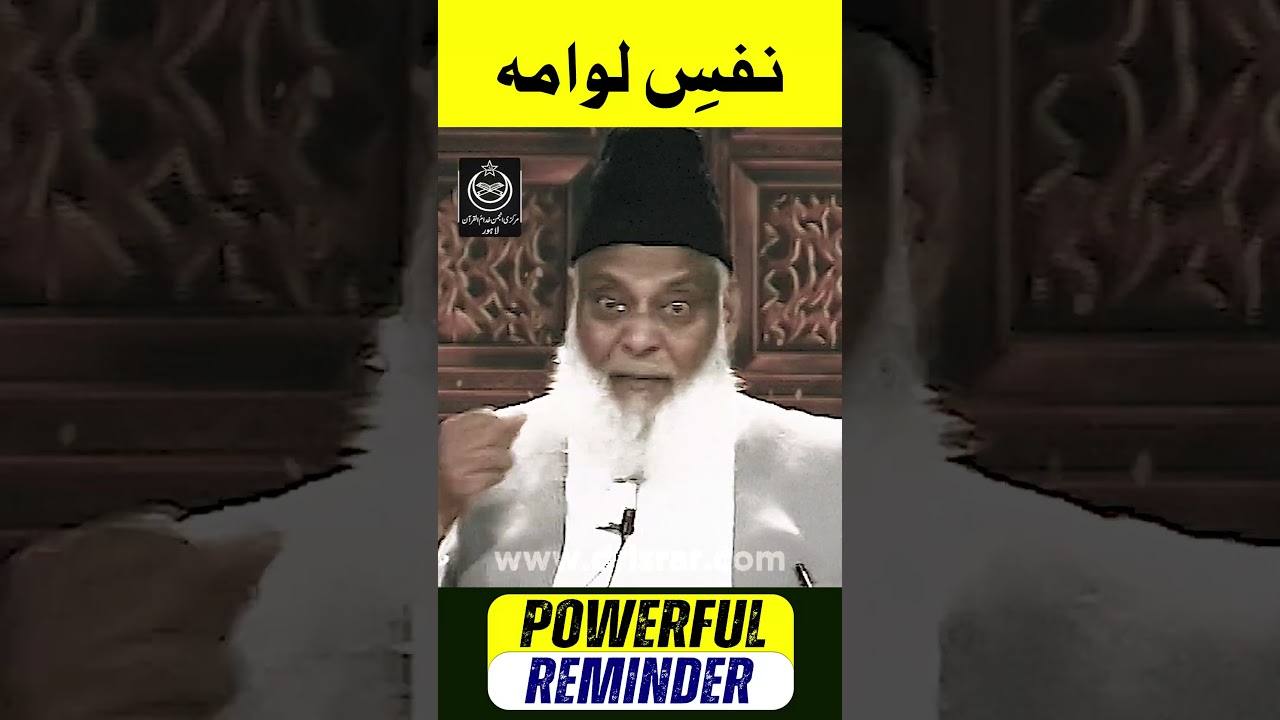
This lecture dissects the phenomenon of self-deception and the inescapable truth of one's own character. It asserts that while individuals may silence external opposition, they cannot escape the internal reckoning of their conscience. The lecture emphasizes that the self-reproaching soul (nafs-e-lawwama) possesses an inherent awareness of an individual's true nature and limitations. Despite rationalizations, excuses, or justifications, the conscience persistently reveals one's authentic self, stripping away facades and exposing underlying realities. This internal assessment remains constant regardless of external presentations.
41

This lecture explores the concept of attaining spiritual proximity to God through the practice of *nawafil* (voluntary prayers). It details how consistent devotion can lead to a state where the devotee experiences God’s presence in their senses—seeing with God’s sight, hearing with God’s hearing, acting with God’s hands, and walking with God’s feet. This concept, supported by a *hadith qudsi*, signifies a profound level of spiritual union and is acknowledged even by those who may not traditionally align with Sufi interpretations. The discussion emphasizes the transformative power of sincere worship and its capacity to elevate one's spiritual experience.
70

The lecture discusses the practice of adorning sacrificial animals with silk cloths and parading them, deeming it a display of wealth rather than a spiritually meaningful act. True sacrifice, it emphasizes, should stem from inner piety and submission to God. The speaker highlights that genuine devotion lies in humility and sincere worship, referencing the verse encouraging the Prophet to give glad tidings to those who are humble before God. The focus is on the internal state of the worshiper, not outward show.
50
