Corti
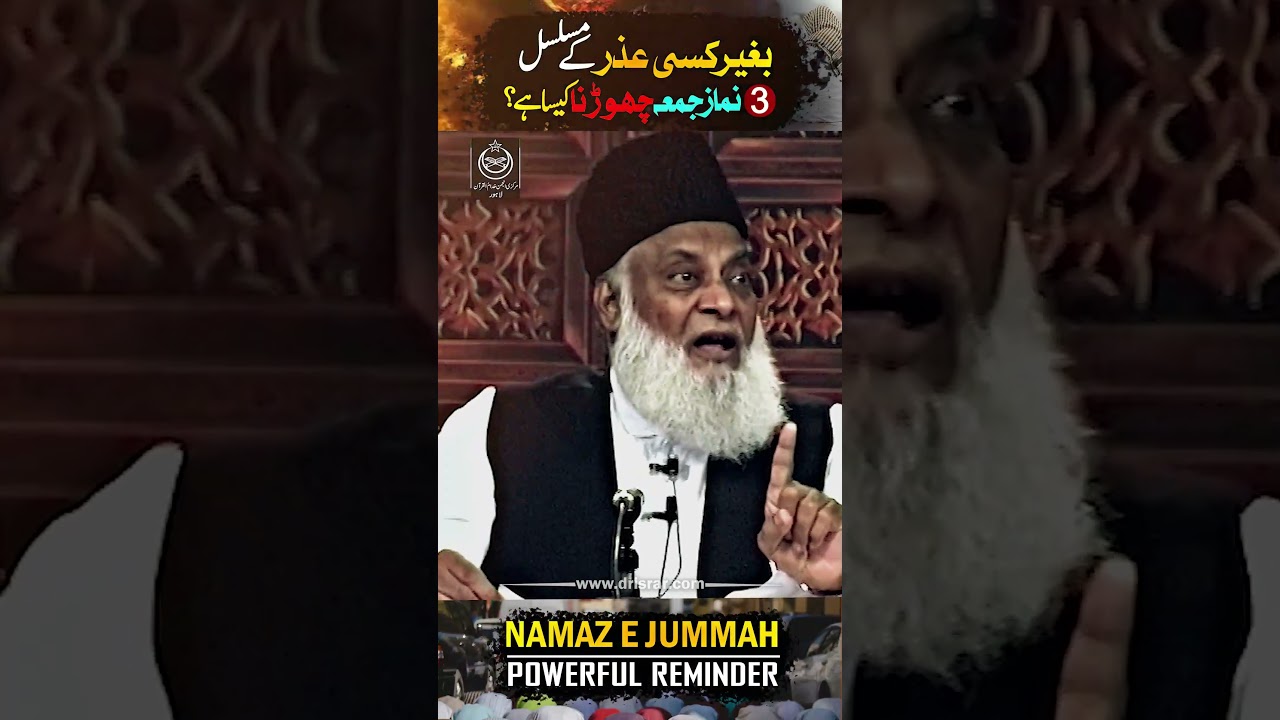
The sermon details a severe warning against neglecting Friday prayers. Abandoning three consecutive Friday prayers without a legitimate excuse results in Allah sealing one’s heart—a punishment reserved for the worst disbelievers. This sealing signifies a spiritual death, rendering the individual incapable of accepting faith. The sermon emphasizes the paramount importance of consistently attending Friday prayers as a demonstration of devotion and submission to Allah.

69
This lecture addresses the societal shift where religious practice has become a profession, particularly within certain communities. The speaker argues that Islam does not endorse professionalizing faith or creating hierarchies based on religious knowledge. He criticizes the practice of making religious scholars a closed class and highlights the irony that those who benefit from this system often criticize the scholars themselves. The core argument centers on the idea that Islam is a faith for all, not a vocation limited to a select few, and that the current system of professionalizing religion is a deviation from its original intent. He contrasts this with the historical practice where religious knowledge was freely accessible and emphasizes that making it a profession creates jealousy and division.
93

This lecture discusses the profound significance of Ramadan. It highlights that the blessings of this sacred month begin to manifest even before its official commencement, foreshadowing the spiritual benefits to come. The speaker emphasizes Ramadan as a time of immense blessings and spiritual elevation, particularly noting the presence of Laylat al-Qadr, a night superior to a thousand months. The talk centers on the anticipation and arrival of this blessed month, and the preparation for its spiritual opportunities.
76
This lecture clarifies the nature of faith (Iman) in Islam. It distinguishes between the declaration of faith – the verbal profession of ‘La ilaha illallah Muhammadur Rasulullah’ – and the inner conviction of the heart (yaqeen-e-qalbi). The speaker explains that simply being born into a Muslim family or joining a community adopting Islam does not automatically equate to true faith. True faith necessitates a deep, internal certainty. The initial declaration establishes a legal status of being a Muslim, but genuine belief requires a conviction within the heart. This discussion emphasizes the difference between outward profession and inward acceptance.
52
This lecture critiques the societal trend of prioritizing worldly education and careers over religious knowledge and practice. It argues that every Muslim should be capable of performing essential religious duties like leading prayers and conducting marriage ceremonies. The speaker challenges the audience to self-reflect and examine their own commitment to Islamic principles rather than criticizing religious scholars. The lecture highlights a shift in priorities towards material success and away from spiritual development, questioning why individuals pursue professions that offer wealth and status while neglecting religious obligations. It emphasizes that true religious understanding comes from personal devotion and not solely from professional clerics.
60

This lecture emphasizes the importance of respectful communication among believers. It advises maintaining polite language even when responding to rudeness, avoiding mirroring negative behaviors, and prioritizing peaceful interactions. The speaker highlights Satan's intent to sow discord and animosity, urging listeners to counter this by fostering kindness and understanding. Maintaining a gentle demeanor, even in the face of provocation, is presented as a crucial aspect of Islamic ethics and a safeguard against conflict. This promotes building harmonious relationships and strengthening the Muslim community.
46
