السراويل القصيرة

The sermon details a severe warning against neglecting Friday prayers. Abandoning three consecutive Friday prayers without a legitimate excuse results in Allah sealing one’s heart—a punishment reserved for the worst disbelievers. This sealing signifies a spiritual death, rendering the individual incapable of accepting faith. The sermon emphasizes the paramount importance of consistently attending Friday prayers as a demonstration of devotion and submission to Allah.

69

This lecture emphasizes the importance of respectful communication among believers. It advises maintaining polite language even when responding to rudeness, avoiding mirroring negative behaviors, and prioritizing peaceful interactions. The speaker highlights Satan's intent to sow discord and animosity, urging listeners to counter this by fostering kindness and understanding. Maintaining a gentle demeanor, even in the face of provocation, is presented as a crucial aspect of Islamic ethics and a safeguard against conflict. This promotes building harmonious relationships and strengthening the Muslim community.
46
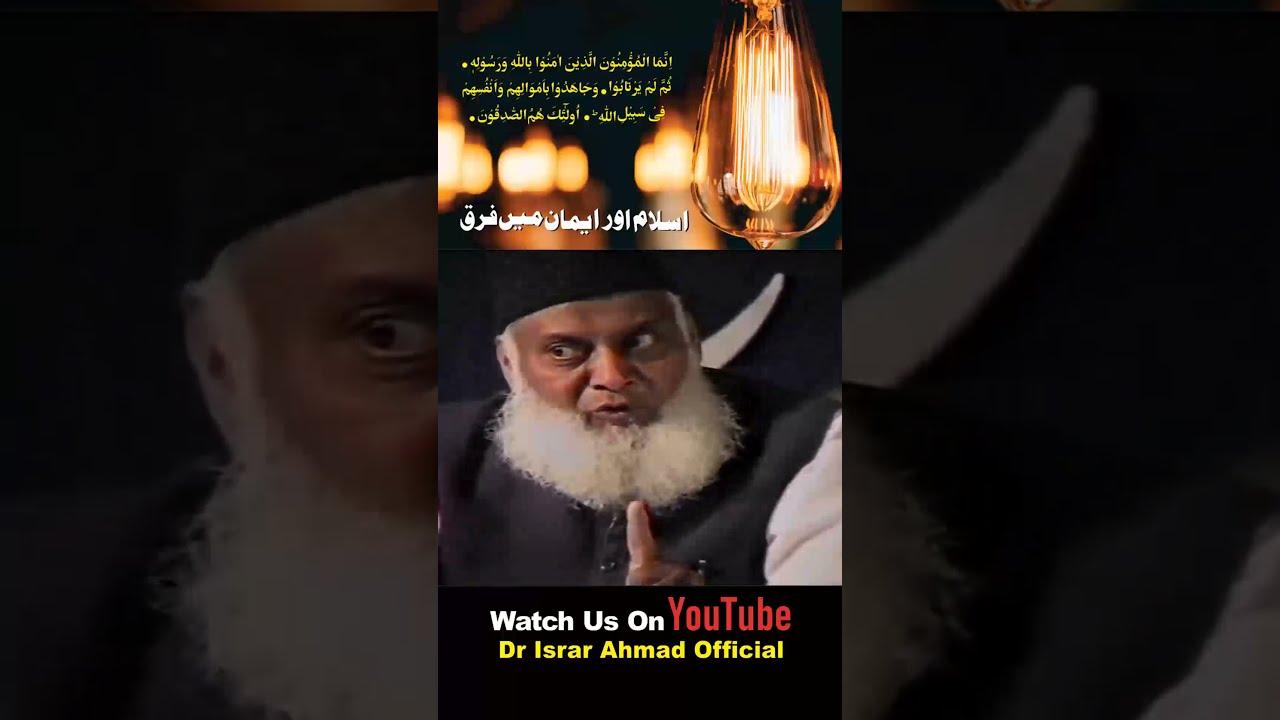
This lecture explores the distinction between Islam and Iman (faith). The speaker clarifies that simply professing Islam is insufficient; true faith requires the internalization of belief within the heart. The Quranic verse from Surah Al-Hujurat, chapter 49, verse 14, highlights the difference between outward submission and genuine belief. The speaker elaborates on the verse in Surah Al-Saf, chapter 6, verse 10, which emphasizes the need for a faith free from doubt and supported by striving in the path of Allah with wealth and life. The lecture emphasizes that a complete faith is demonstrated through both belief and action, and that true believers continuously strive to deepen their connection with Allah.
108

This supplication, recited by Prophet Moses (peace be upon him), seeks divine assistance in fulfilling the challenging task of delivering a message. It requests an expansion of the heart, facilitation of affairs, and removal of speech impediments. The prayer emphasizes the importance of clear communication to ensure the message is understood by all. This dua is essential for anyone involved in da’wah or conveying a message, as it addresses the core need for effective and understandable articulation.
42

The Quran’s resounding verses jolted people from their slumber and roused those lost in worldly pleasures. The verses of Surah Al-Asr emphasize humanity’s inherent loss and the impending accountability. The approaching Day of Judgement finds people heedless and turning away. These powerful pronouncements caused widespread upheaval and a sense of urgency throughout Arabia, compelling a reckoning with spiritual realities.
40

Dr. Israr Ahmad discusses the pervasive influence of materialism and self-interest within society and the spiritual elite. He contrasts genuine spiritual leadership, exemplified by the prophetic tradition of Moses, with the often-superficial authority of religious scholars. He argues that true spiritual power manifests as transformative action, while a lack of inner conviction results in ineffective leadership. The lecture highlights the dangers of outward displays of piety masking inner corruption and the importance of aligning actions with sincere belief. He references Iqbal’s poetry to emphasize the pursuit of spiritual fulfillment and the search for genuine guidance.
43
