ショーツ
Islam is founded upon five pillars: the declaration of faith (belief in one God and the prophethood of Muhammad), the performance of prayer, the giving of charity (Zakat), fasting during Ramadan, and pilgrimage to Mecca for those who are able. These five pillars constitute the core of Islamic practice and belief, forming the foundation upon which the religion stands.

73

This lecture emphasizes that the Quran is a manifestation of Allah’s grace and mercy, offering guidance in this world and reward in the hereafter. It surpasses all worldly possessions – wealth, property, business ventures, and luxurious homes – in value. The Quran provides true joy and is a source of ultimate contentment, offering a path to spiritual fulfillment far beyond material gain. It is a complete guide for life, providing both worldly direction and eternal reward.
44

The advent of Muhammad ﷺ brought a complete transformation to all aspects of life. Existing beliefs, ideologies, individual personalities, and moral codes were fundamentally altered. Daily routines, social structures, political systems, and societal norms underwent a radical change. A nation previously characterized by widespread illiteracy became a beacon of knowledge and learning, becoming an educator for the world. It absorbed and developed sciences from both the East and West, disseminating them globally. This profound revolution dwarfs any other historical upheaval, including the French Revolution, in its scope and impact.
47

The Quran provides guidance on two primary levels: intellectual and practical. It addresses fundamental philosophical questions concerning the nature of existence, life, truth, and morality—exploring concepts such as the universe, the meaning of life, knowledge, right and wrong, good and evil. Simultaneously, the Quran offers a comprehensive system of practical directives governing individual and collective life, encompassing religious obligations, ethical guidelines, economic principles, and social norms. This dual approach provides both intellectual understanding and actionable guidance for humanity.
47
Dr. Israr Ahmad discusses the pervasive influence of materialism and self-interest within society and the spiritual elite. He contrasts genuine spiritual leadership, exemplified by the prophetic tradition of Moses, with the often-superficial authority of religious scholars. He argues that true spiritual power manifests as transformative action, while a lack of inner conviction results in ineffective leadership. The lecture highlights the dangers of outward displays of piety masking inner corruption and the importance of aligning actions with sincere belief. He references Iqbal’s poetry to emphasize the pursuit of spiritual fulfillment and the search for genuine guidance.
43
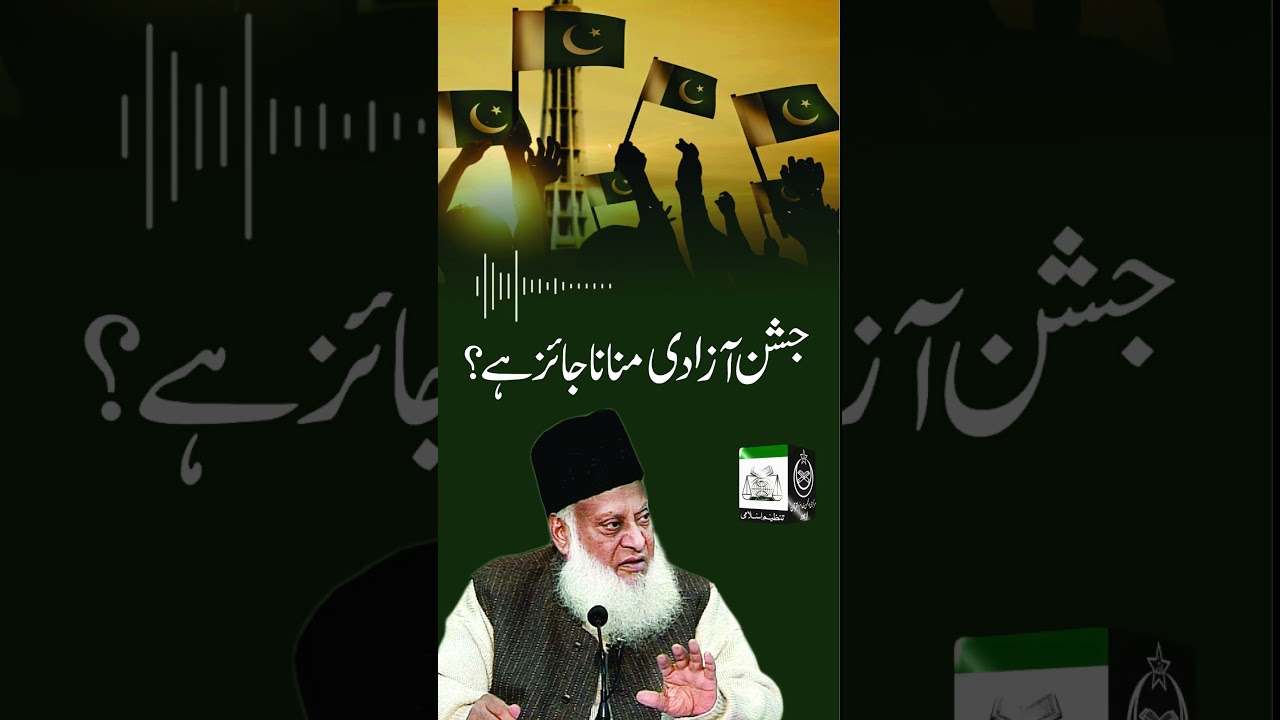
The speaker asserts that Pakistan remains systemically and politically subservient to non-Islamic forces, questioning the validity of celebrating independence in such circumstances. He contrasts true Islamic observances – Eid al-Fitr and Eid al-Adha – with celebrations he deems extraneous. He emphasizes that freedom is a significant blessing, yet one that has been largely unappreciated. The speaker urges repentance, seeking forgiveness, and dedicating one’s life to establishing Islam within Pakistan as a genuine expression of gratitude to God for the gift of independence.
67
