Kurze Hose
This lecture explores the concept of aligning one’s life entirely with the will of God. It emphasizes that true devotion involves surrendering all aspects of existence – prayer, sacrifice, life, and death – to the divine. The speaker argues that when life is dedicated to God, it transcends earthly pursuits and becomes a source of spiritual strength. Material means and worldly endeavors should become secondary to this divine connection, and individuals should strive for a life of complete submission and purpose. The ultimate goal is to have one's heart filled with reverence for God.

51
The speaker discusses the permissibility and desirability of conducting nikah ceremonies in mosques. Initially, the idea was met with some resistance, but convincing arguments were presented. He emphasizes a tradition from the Prophet Muhammad encouraging publicizing nikah and performing it in mosques, citing a narration from Jami’ al-Tirmidhi. While some scholars interpret the directive as not obligatory but rather recommended, the speaker questions why one would abandon a practice favored by the Prophet. He highlights that the nikah ceremonies of the Prophet’s daughters were also held in mosques and appeals to community leaders to embrace this practice, motivated by love for the Prophet.
75
This lecture details the events leading up to the creation of Pakistan. It highlights Jinnah’s initial stance of a ten-year unified India with three zones, the opposition from Gandhi who believed Pakistan’s formation depended solely on his consent, and the British government’s animosity towards Italy. The lecture also recounts Maulana Hussain Ahmed Madani’s prediction, made during Ramadan 1946, that the decision for Pakistan's establishment had been finalized within the Majlis-e-A'la. It emphasizes the historical context and key figures involved in the Pakistan Movement.
67
Dr. Israr Ahmad explains that a lack of compassion and empathy leads to a deprivation of future blessings. True spirituality isn't solely defined by worship or asceticism, but by genuine concern for others' suffering. A shared experience of pain—empathy—connects individuals. Those who witness the pain of others but fail to offer assistance, despite having the capacity to do so, forfeit divine favor. The lecture stresses the importance of mutual support and shared sorrow within a community.
76
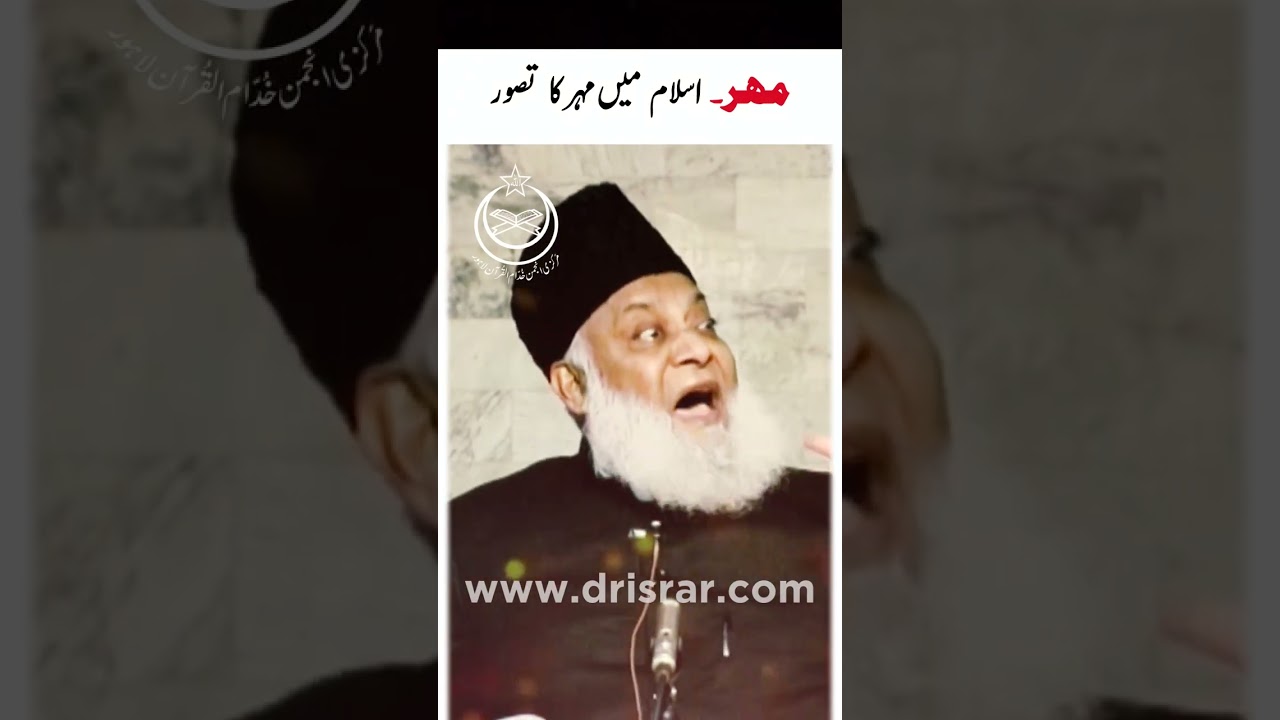
Islamic principles dictate that the financial responsibility for a wedding lies with the groom’s family, not the bride’s. Marriage is a necessity for both men and women, completing each other’s lives. The mahr, or dower, is paid by the groom to the bride, symbolizing his commitment and responsibility. It is not a price for the bride, nor a purchase, but a token of commitment and a recognition of her value. Mahr can be determined in various forms, including goods, services, or the commitment to teach the bride Quran. It represents the man's capability to fulfill his obligations and the woman’s acceptance of this commitment.
87
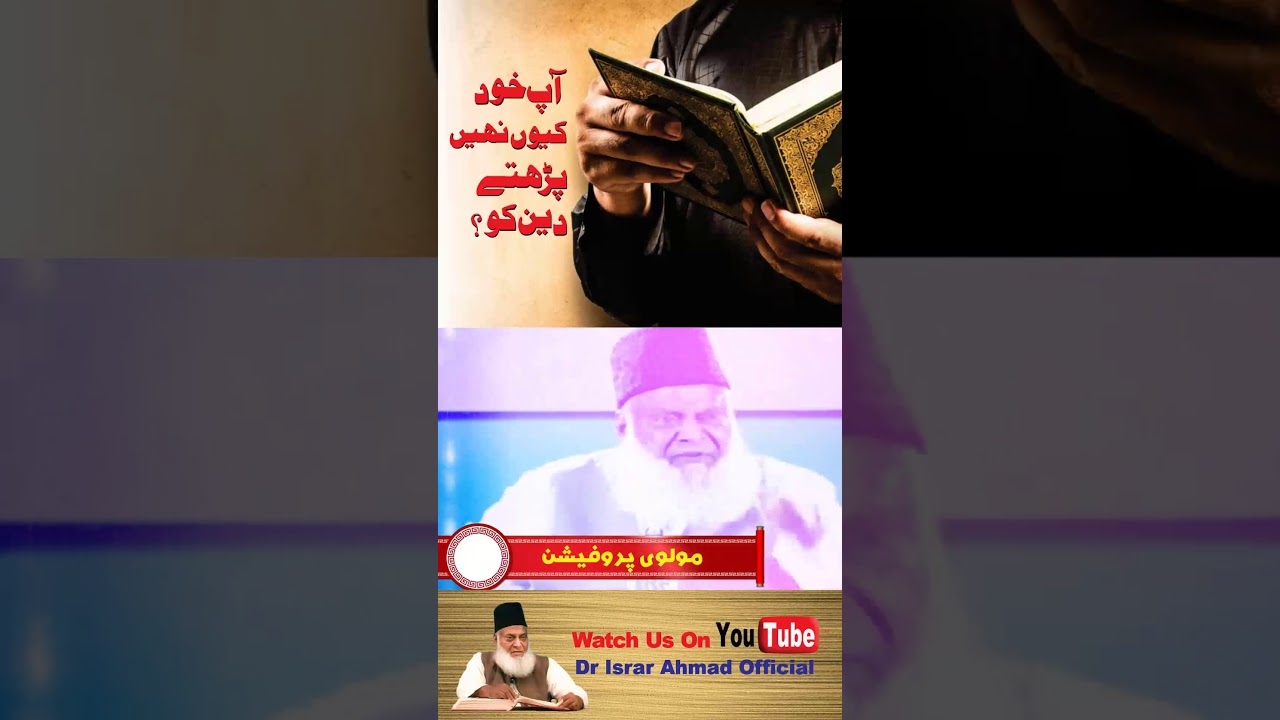
This lecture addresses the importance of individual engagement with religious teachings and self-reflection. It critiques the professionalization of religious roles, arguing that every Muslim should be capable of leading prayers, performing marriage ceremonies, and conducting funeral rites. The speaker emphasizes that religious knowledge and practice should not be limited to a select few, but accessible to all Muslims. The core message urges listeners to examine their own faith and commitment to religious principles instead of criticizing religious scholars.
228
