Quần short
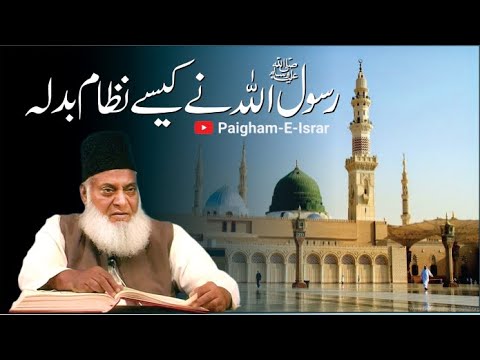
Dr. Israr Ahmad discusses the true nature of revolution as exemplified by the life of the Prophet Muhammad (peace be upon him). He emphasizes that genuine change doesn’t come through mere promises or superficial reforms, but through a comprehensive process of spiritual purification (tazkiya), organization, and unwavering commitment to establishing justice. He explains that this involves a disciplined, morally upright society prepared to challenge oppressive systems and establish a just order, guided by divine principles. He highlights the historical attempts at reform and the necessity of a strong, dedicated leadership committed to implementing Islamic principles in all aspects of life. The lecture also touches on the difference between implementing Sharia at a micro and macro level, and the historical precedent of Sharia being implemented for over a thousand years.

61
This lecture discusses the destructive nature of arrogance (takabbur) and its prohibition in Islam. It highlights that even a grain-sized amount of pride can prevent entry into paradise. God considers arrogance as a garment fit only for Him, and engaging in it is akin to stripping away His covering. The speaker emphasizes the importance of humility and recognizing one's limitations as essential qualities for spiritual growth and attaining divine favor. The lecture draws upon Quranic verses and prophetic traditions to illustrate the severity of arrogance and its consequences.
58
Allama Iqbal eloquently states that a Muslim's life is defined by adherence to a constitutional framework – the Quran. This framework sustains the Muslim community, analogous to the body sustained by the soul. Just as a body ceases to function without a soul, the community’s vitality depends on the Quran. The Quran is the heart of the Muslim community, a guiding force and connection to God. Without this divine connection, existence is meaningless; the community is merely dust without a guiding light. The Quran is the rope of God, providing strength and direction. A life devoid of this connection lacks purpose and substance.
59
This lecture explains that Allah is all-powerful and supreme over everything. Human capability, however, is limited and borrowed. The power granted to humans is not inherent but a gift from Allah, making it temporary and finite. This distinction is central to understanding the concept of *shirk* (associating partners with Allah). Allah’s existence is eternal and limitless, while created beings, including human abilities, are contingent, temporary, and limited. True power resides solely with Allah.
56
This lecture discusses the true essence of *a’etiqaaf* (seclusion in a mosque for worship), emphasizing it as the peak of devotion during Ramadan. The speaker clarifies that *a’etiqaaf* is not a social gathering or a time for frivolous activities like card games. It's a period for intense personal connection with God through solitude, contemplation, Quran recitation, remembrance of God, and voluntary prayers. The lecture stresses that the purpose of *a’etiqaaf* is to attain closeness to God, not to socialize with people, and highlights its significance as the culmination of Ramadan's spiritual journey.
46
This lecture explains how the Quran served as the instrument of a profound revolution, fundamentally altering beliefs, values, and perspectives. Before, life was considered the greatest blessing; now, martyrdom is the highest aspiration. This transformation occurred not through worldly gains, but through adherence to the Quranic command to resist disbelief and engage in a great struggle, as stated in Surah Al-Furqan. The Quran reshaped the mindset of people, prioritizing spiritual strength over material possessions.
73
