Quần short
Worship should ideally be performed for the pleasure of God, though seeking salvation from hell and entry into paradise is also commendable. While avoiding punishment and attaining heaven are positive goals, prioritizing God’s pleasure is superior. It is not wrong to ask for protection from hell and request paradise, as the Prophet Muhammad (peace be upon him) himself made these supplications. However, the ultimate aim should be to seek God’s approval above all else.

60
The Prophet Muhammad’s life exemplified a perfect balance between fulfilling obligations to people and devotion to God. He showed immense love and attention to his wives, ensuring their emotional well-being and rights were always met. Simultaneously, at the call to prayer, he would immediately and completely devote himself to worship, appearing as if unaware of his surroundings. This demonstrates a harmonious integration of worldly responsibilities and spiritual pursuits, highlighting the importance of both aspects of a balanced life. His behavior showed complete dedication to both rights of God and rights of people, a perfect example for all believers.
59
The lecture clarifies the true essence of charity (Sadaqat) and obligatory alms (Zakat) in Islam. It emphasizes that Zakat isn’t merely about giving cash but applies to all forms of trade and wealth. True charity must be performed sincerely, without seeking recognition or reward. Ostentatious displays of piety are considered a form of polytheism. The speaker stresses that Zakat is a pillar of Islam, a foundation for economic justice, and a means to support vulnerable communities. Sincere giving, performed privately and for the sake of God alone, is the only act that earns divine acceptance.
103

The verse from Surah Ma'idah highlights Satan’s primary tactic: sowing discord and animosity between people. This disruption extends to fracturing familial and marital bonds, leading to the disintegration of entire social structures. A hadith recounts Satan praising a demon for successfully creating strife between a husband and wife, recognizing its devastating impact on the family unit and, consequently, society. The creation of enmity and discord is presented as Satan's most effective weapon against humanity and its social cohesion.
68
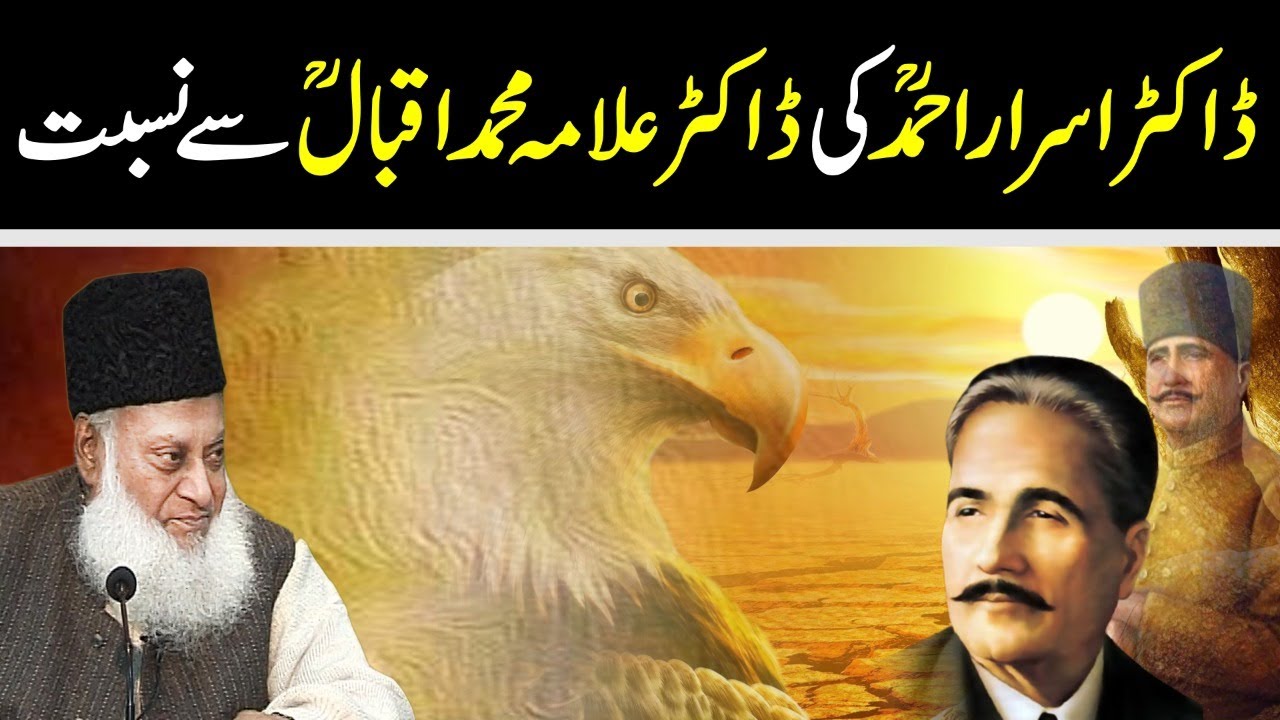
Dr. Israr Ahmad discusses Allama Iqbal’s vision for the Muslim Ummah, his early exposure to Islamic teachings, and the connection between his poetry and the Quran. He details the establishment of an organization fulfilling Iqbal’s dream of combining Quranic study with modern education, and the principles behind the founding of an organization dedicated to practicing Muslims committed to Quranic principles. He also explains the reasons behind the failure of the establishment of Jamaat-e-Islami and the founding of Tanzeem-e-Islami. Dr. Ahmad emphasizes the importance of prioritizing faith and practice over political engagement and adhering to a system based on commitment rather than elections. He shares his personal connection with Iqbal’s legacy and his commitment to continuing his work.
87

Dr. Israr Ahmad warns of a time when the Muslim community will be left with only the name of Islam, and the Quran will be reduced to its calligraphy and letters. He emphasizes a divine guarantee for the preservation of the Uthmani script. He predicts a proliferation of mosques that are devoid of guidance, and describes scholars who will be the worst of people, fostering discord and conflict. These scholars will be the source and destination of fitna (discord), promoting sectarianism and exacerbating differences among Muslims. He observes that a vast majority of contemporary religious leaders exhibit these characteristics.
84
