Korte broek

Worship should ideally be performed for the pleasure of God, though seeking salvation from hell and entry into paradise is also commendable. While avoiding punishment and attaining heaven are positive goals, prioritizing God’s pleasure is superior. It is not wrong to ask for protection from hell and request paradise, as the Prophet Muhammad (peace be upon him) himself made these supplications. However, the ultimate aim should be to seek God’s approval above all else.

60
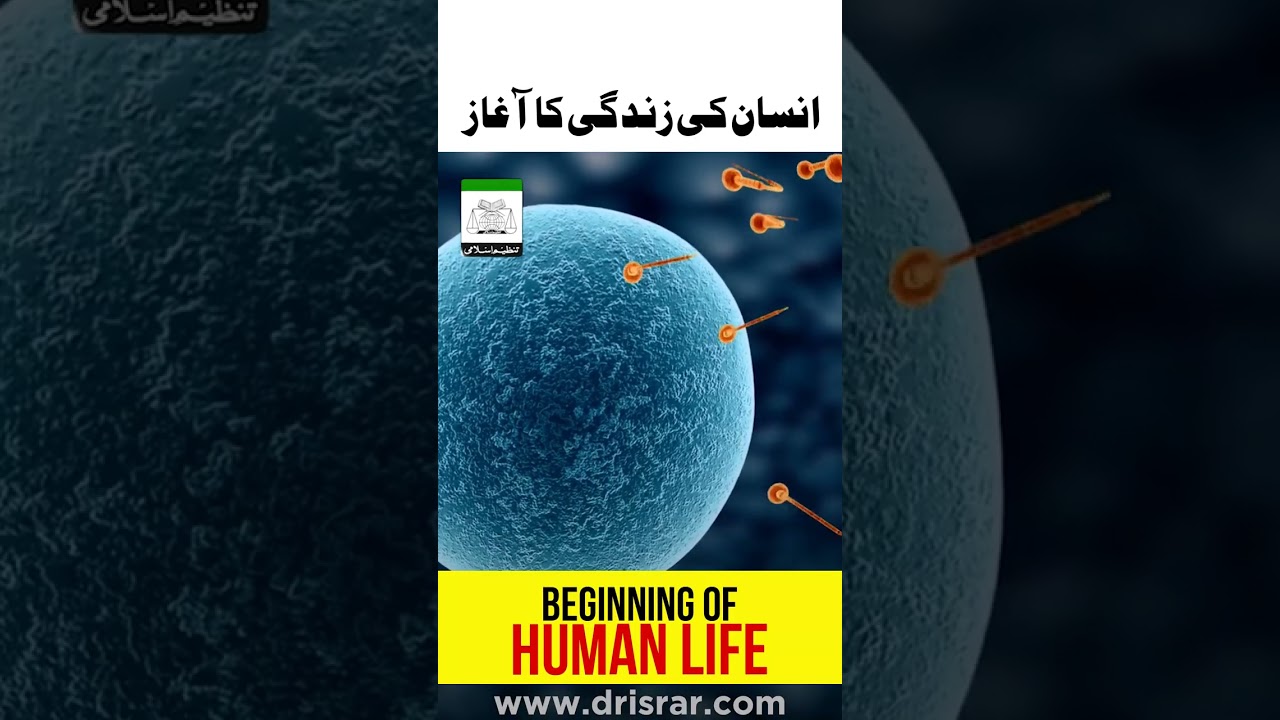
Modern microscopic observation confirms the Quranic description of human origins as detailed in Surah Qiyamah. The verse referencing the initial state as ‘nutfa’ (a drop) aligns with scientific understanding of fertilization. Microscopic analysis reveals the active, living spermatozoa originating from the male contribution, demonstrating life’s commencement at conception. The video elucidates that life does not begin 120 days after fertilization, but from the very beginning, supporting the Quranic account.
60

This lecture addresses the dangers of linguistic and cultural biases, clarifying that regional, ethnic, and linguistic identities are not inherently sinful. It emphasizes that every culture and language has a right to flourish, provided any elements conflicting with Islamic teachings are removed. The lecture highlights the unique status of the Arabic language not due to its speakers, but because it is the language of the Quran and the sayings of the Prophet Muhammad, making its study essential for direct understanding of religious texts. It cautions against exclusionary attitudes based on language or culture, likening such behavior to a useless tool.
63
Every conscious human being has a purpose, an ideal, or an inspiration in life. They strive to achieve this ideal through effort and perseverance. A person without purpose is akin to an animal, living solely on instinct and fulfilling basic needs like eating and reproduction. Animals exist based on instinct, lacking a higher purpose. Such a life is considered base. The Quran emphasizes that a life devoid of purpose is animalistic. True humanity lies in having a defined goal and striving towards it.
78

Surah Al-Ikhlas is considered the most important surah in the Quran due to its comprehensive articulation of Tawhid (the Oneness of God). While comprising only four verses, it’s equivalent to one-third of the Quran in significance. This is because the foundation of Islam is Tawhid, and Surah Al-Ikhlas encapsulates this concept in its purest form, making it the core root of the faith. Dr. Israr Ahmad explains this foundational concept with clarity and depth.
55

The Quran offers two levels of comprehension: understanding its lessons (tazkir bil Quran) and deeply reflecting upon it (tadabbur bil Quran). Tazkir bil Quran involves deriving moral and practical guidance. Tadabbur requires consistent contemplation and deeper analysis. Achieving success necessitates mastering both levels, as the principles derived from Tazkir form the logical foundation for the insights gained through Tadabbur. Understanding these levels leads to personal transformation, emphasizing the importance of faith, righteous deeds, truthfulness, and compassion. Those who embrace these principles avoid loss and attain spiritual fulfillment.
52
