短裤
Musab bin Umar, a young man raised in luxury, faced ostracism when he refused to renounce his faith after his father’s death. His mother, unable to defy her brother, the head of the family, was forced to comply with the uncle’s decree that Musab forfeit his inheritance and leave the house. The uncle, angered by Musab's adherence to his father’s religion, demanded he relinquish all property acquired through his father's wealth. Musab accepted the exile, even removing the clothes he wore, which were purchased with that wealth, before leaving his home. This demonstrates a powerful commitment to belief and principle.

64
The lecture clarifies that elections are a mechanism for operating a system, not for changing it. Participation in elections does not challenge the existing framework but functions within it. The speaker emphasizes that elections serve to run a system, rather than to fundamentally alter it, drawing a distinction between operational participation and systemic change.
123
This lecture discusses the extension of the principles of Hajj beyond the physical pilgrimage. It explains how the reverence associated with specific locations in Hajj, and the importance of sacrifice within the Hajj rituals, are mirrored in the universal practice of offering sacrifice. The speaker highlights how participation in sacrifice, even when unable to physically perform Hajj, allows Muslims worldwide to share in a core tenet of the pilgrimage. Similarities between the restrictions observed during Ihram and the spirit of sacrifice are drawn, emphasizing the broader application of Hajj’s principles to the entire Muslim community.
70
The lecture discusses the true meaning of *hijrat* (migration) as defined by the Prophet Muhammad (peace be upon him). It emphasizes that genuine migration isn't merely physical relocation, but abandoning everything displeasing to God. This includes renouncing interest-based transactions, making firm decisions to adhere to righteous conduct, prioritizing modesty and honor within the home, and consistently striving for moral and spiritual purification. The speaker underscores the importance of immediate action and resolute commitment to these principles as the essence of true migration.
100
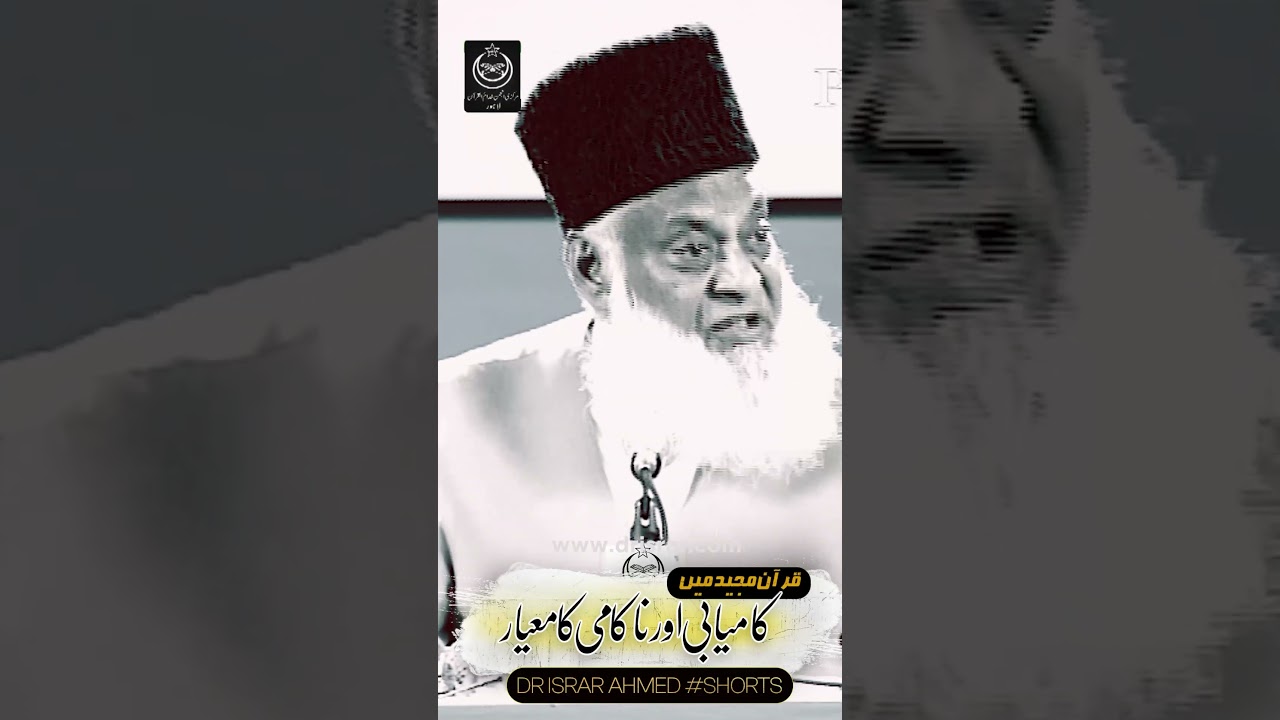
This lecture clarifies that true success isn't measured by wealth, possessions, or business expansion. Instead, it's achieved through four core principles: faith (iman), righteous deeds (amal-e-saleh), encouraging truthfulness (tawasib-ul-haq), and patience (tawasib-e-sabr). The speaker argues that conventional definitions of success are fundamentally flawed and that these four elements are the genuine determinants of a fulfilling life. This lecture highlights a contrast between worldly perceptions of success and the Islamic perspective, offering a pathway to genuine achievement.
54
This lecture explores the concept of aligning one’s life entirely with the will of God. It emphasizes that true devotion involves surrendering all aspects of existence – prayer, sacrifice, life, and death – to the divine. The speaker argues that when life is dedicated to God, it transcends earthly pursuits and becomes a source of spiritual strength. Material means and worldly endeavors should become secondary to this divine connection, and individuals should strive for a life of complete submission and purpose. The ultimate goal is to have one's heart filled with reverence for God.
51
