Şort
The title ‘Siddeeq’ is reserved for those who unequivocally affirmed the truth of the Prophet Muhammad (peace be upon him). Abu Bakr stood out as unique; unlike others who hesitated or pondered before accepting the message, he affirmed it instantly and without a moment’s doubt. This immediate and complete acceptance earned him the title ‘Siddeeq-e-Akbar’ – the greatest of the truthful.

75
This lecture details the fundamental tenets of faith in Islam. It covers belief in Allah, the prophets, the final prophet Muhammad (peace be upon him), revealed scriptures including the Quran, the Day of Judgment, accountability, life after death, Paradise, and Hell. The discussion highlights the extensive treatment of these topics within the Quran, particularly in its earlier Meccan verses.
74
This lecture clarifies the permissibility of continuing to eat and drink until the white thread of dawn becomes distinctly separate from the black thread of night. It addresses excessive caution observed by some regarding the timing of *suhoor*, emphasizing that one can complete their meal even after the call to prayer. The speaker explains that the period of fasting begins at sunset and ends with the start of a new day, and that strict adherence to precise timing isn’t necessary, citing the Prophet’s allowance for finishing a drink even after the *azaan*. The emphasis is on the blessing in consuming the pre-dawn meal and avoiding unnecessary rigidity in its observance.
65
Dr. Israr Ahmad discusses the historical context of Islam’s arrival in the Mewat region, an area initially lacking formal religious education and practice. He explains how early conversions were often superficial, lacking deep understanding of Islamic rituals. The speaker details the common practice of validating marriages through symbolic acts—exchanging garments and circling each other—to ensure the commitment was genuine, rather than merely a verbal agreement. This ensured a true bond was established, solidifying the marriage contract beyond a simple recitation.
78
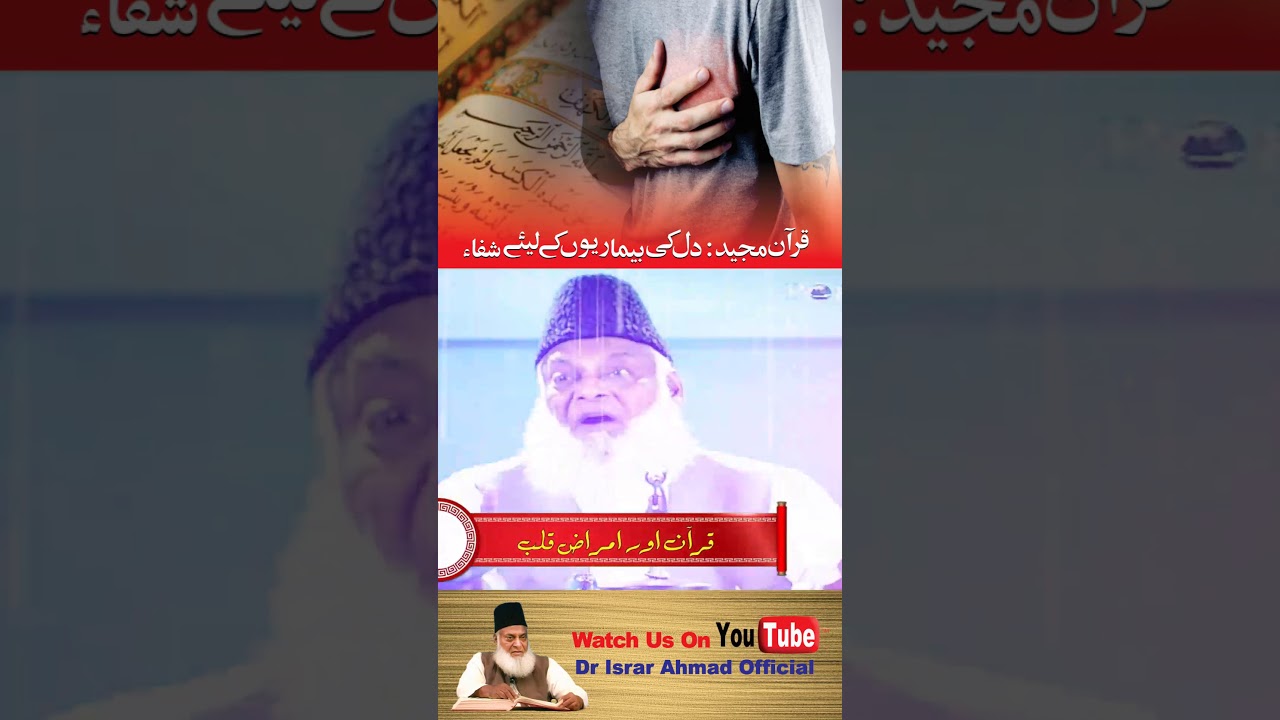
The Quran is presented as the ultimate source of clarity and healing for the heart. It eradicates spiritual diseases such as arrogance, envy, materialism, the pursuit of worldly status, and the desire for fame. The Quran’s wisdom illuminates the heart, replacing these negative traits with spiritual purity and understanding. It is a complete remedy for inner turmoil and a guide to a righteous life. The Quran's light dispels darkness and fosters a connection with the Divine.
284
This lecture addresses the issue of institutionalized begging and contrasts it with genuine charitable giving rooted in Islamic teachings. It argues that simply giving small amounts of money to beggars perpetuates the problem instead of empowering them. The speaker emphasizes the importance of supporting institutions that rehabilitate and enable individuals to become self-sufficient. Giving to those in need is obligatory, but it should be done in a way that preserves their dignity and fosters independence. The lecture cautions against dismissing or humiliating those who ask for help, suggesting that even those who appear well-off may have legitimate needs. The core message is that true charity involves empowering individuals to stand on their own feet, not simply providing temporary relief.
62
