Kurze Hose

This lecture asserts that establishing human rule over others constitutes the greatest form of associating partners with God (shirk) in the history of humankind. It argues that contemporary society, in its collective assertion of self-governance, has replaced God as its ultimate authority. The speaker contends that true devotion will only be possible when a system of governance based on divine law is established, replacing current systems that operate independently of God's commands. This involves rejecting secular courts and parliaments, and instead submitting to a system where justice is derived solely from God’s decree. The current practice of worship combined with obedience to man-made laws is considered a form of hypocrisy and rebellion.

67

True justice originates from God. The inherent system He established is fundamentally just. As loyal servants, it is our responsibility to uphold and implement this divine system. This requires a firm and unwavering stance for justice, utilizing all available resources and strength. This is not merely a response to societal turmoil, but a demand of our devotion to God. It necessitates standing as witnesses to His faith, embodying justice and fairness in all actions, and actively championing equitable principles.
59

Umar bin Abd Wud, a renowned Arab warrior and skilled horseman, challenged the Muslims during a siege. He fearlessly crossed the trench surrounding Medina, seeking a worthy opponent. Hazrat Ali (RA) stepped forward, offering Umar bin Abd Wud three opportunities to make a request before engaging in combat. Umar initially demanded the acceptance of Islam, then asked for safe passage, both of which Ali refused. Finally, Umar challenged Ali to a duel. Ali accepted, ultimately defeating and killing Umar bin Abd Wud, demonstrating courage and faith.
48
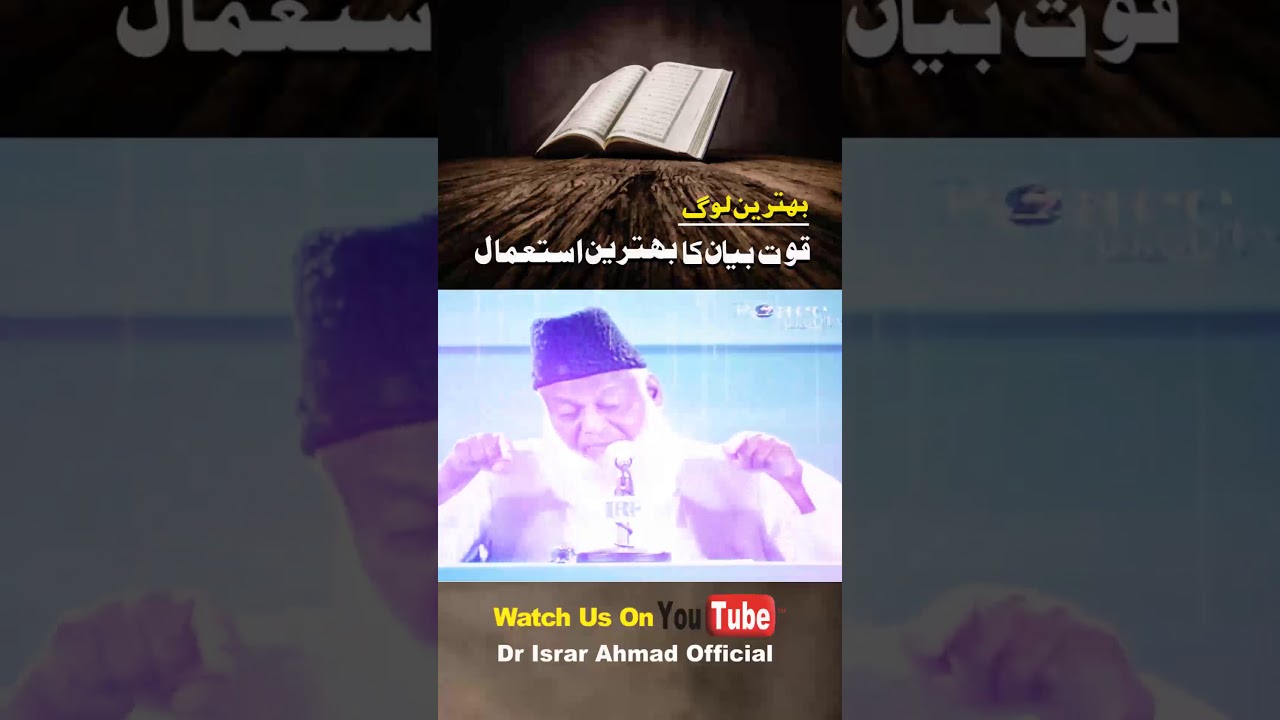
This lecture emphasizes dedicating one’s God-given eloquence and knowledge solely to the explanation and propagation of the Quran. It cautions against utilizing these gifts for personal financial gain or worldly pursuits. The speaker highlights that the best among people are those who learn and teach the Quran, understanding and conveying its message to others. True benefit lies in seeking and sharing religious knowledge.
389

This lecture discusses the destructive nature of arrogance (takabbur) and its prohibition in Islam. It highlights that even a grain-sized amount of pride can prevent entry into paradise. God considers arrogance as a garment fit only for Him, and engaging in it is akin to stripping away His covering. The speaker emphasizes the importance of humility and recognizing one's limitations as essential qualities for spiritual growth and attaining divine favor. The lecture draws upon Quranic verses and prophetic traditions to illustrate the severity of arrogance and its consequences.
67

Goodness is fundamentally linked to faith, not merely action. True goodness originates from an internal state of belief. Every act has both an external manifestation and an internal motivation. The core of a good deed lies in the intention behind it—the desire to please God and attain His blessings. Faith fosters both positive motivation to do good and negative motivation to avoid evil. Love for God and the fear of His punishment drive righteous behavior. Belief in the afterlife—heaven and hell—further strengthens these motivations, prompting individuals to seek reward and avoid condemnation. Thus, faith is the driving force behind genuine goodness and moral conduct.
60
