Shorts

This lecture explores the limits of human understanding regarding the unseen world (Ghaib) and the afterlife. It emphasizes that certain aspects of these realms, such as the exact nature of punishment or what occurs after death, are beyond our complete comprehension. The speaker stresses the importance of accepting what has been revealed in the Quran and Sunnah regarding these matters through faith, rather than attempting to delve into details that are intentionally concealed. The lecture clarifies that belief in the unseen is a condition for benefiting from the guidance of the Quran, and highlights the experience of the deceased hearing the sounds of those departing after burial, as mentioned in Hadith. True understanding will only be revealed in the afterlife.

47

This lecture clarifies the obligation of Hajj for those who possess the means. It explains that Hajj is a debt owed to God, becoming obligatory when one has the physical and financial capacity to perform it, including provisions for travel, accommodation, and sustenance. Delaying Hajj after fulfilling these conditions constitutes a significant sin. The discussion emphasizes fulfilling the rituals and offering sacrifice as integral parts of the pilgrimage.
55
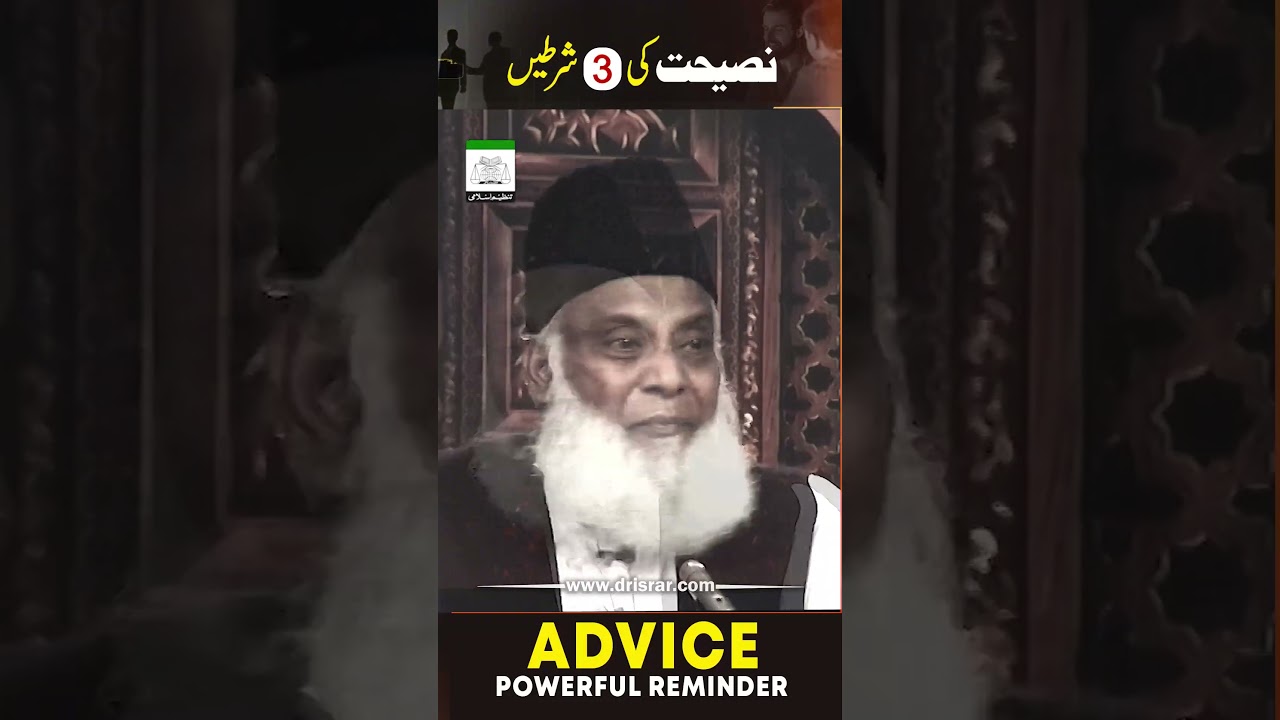
True well-wishing stems from sincerity and a genuine desire for another’s betterment. It requires approaching someone lost in ignorance or error with compassion, not arrogance or intellectual superiority. Effective guidance involves embodying the principles you preach; hypocrisy renders your message ineffective. Genuine concern means prioritizing the other person’s well-being and acting with consistency between words and deeds. Those who command good but fail to practice it themselves contradict their own message and discredit their efforts. True guidance requires internalizing the principles you advocate.
58

The speaker describes a massive gathering of people traveling towards a destination, likely a religious event, emphasizing the unified message of monotheism (Tauheed) expressed by the participants. The continuous flow of vehicles and the sheer number of attendees highlight the scale of the event and the profound impact of the shared belief. The speaker recounts witnessing this procession firsthand, noting the unbroken line of lights stretching for miles.
41

True prayer transcends ritual; it’s a direct communion with God achieved when the soul awakens. This lecture emphasizes that merely performing the actions of prayer—recitation and physical movements—is insufficient. Real connection occurs when one feels present before God, experiencing a sense of humility and closeness akin to placing one’s head in God’s lap. If the soul is dormant, oppressed, or dead, genuine prayer cannot occur, regardless of adherence to schedules or outward displays of devotion. Awakening the soul and establishing direct communication with God is the essence of achieving the spiritual elevation that prayer promises.
62

This lecture explores the concept of trials and tribulations as a test of one’s faith. It explains that difficulties and hardships are not merely punishments, but crucial tests to reveal the purity of belief. Just as gold is tested by fire to determine its authenticity, individuals are tested through adversity to expose genuine faith from mere claims. The lecture emphasizes that true believers are revealed through their resilience and steadfastness in the face of hardship, while those with insincere beliefs are exposed. The core message is that trials refine faith and distinguish the sincere from the hypocritical.
50
