Quần short
Humanity, universally, is in loss. Salvation is achieved through four essential conditions: faith, righteous deeds, advocating truth, and encouraging good conduct. These are not merely recommendations, but fundamental requirements for achieving deliverance. Without fulfilling these conditions, true salvation remains unattainable. This lecture details these prerequisites for spiritual success and a meaningful life.

227

This lecture details the Islamic guidelines for Muslim women’s clothing. It emphasizes loose-fitting garments that do not reveal the body’s contours, ensuring modesty and preventing undue attention. The discussion covers the importance of covering the head and neck, and maintaining a humble demeanor to safeguard against unwanted gazes, even from male family members. The goal is to uphold Islamic values of modesty and respect.
122
The Quran states that this world will flourish through the blessing of *tawheed* (oneness of God). The purpose of Muhammad’s (peace be upon him) prophethood was to serve as a bearer of glad tidings and a warning to all of humanity. The completion of the illumination of *tawheed* and the fulfillment of its purpose remain ongoing tasks. This lecture emphasizes the enduring relevance of this message and the continuing need to strive for its realization.
208

The human soul inherently possesses two crucial elements: divine knowledge ('ma'rifat-e-Rabbani') and divine love ('mohabbat-e-Rabbani'). These are present as a radiant light and inner warmth, often obscured by layers of heedlessness, desire, ego, and pride. These obscuring layers deepen with increased indulgence in worldly desires or the development of arrogance, concealing the soul's innate connection to the divine. Removing these layers reveals the glowing ember of spiritual awareness and affection already within.
56
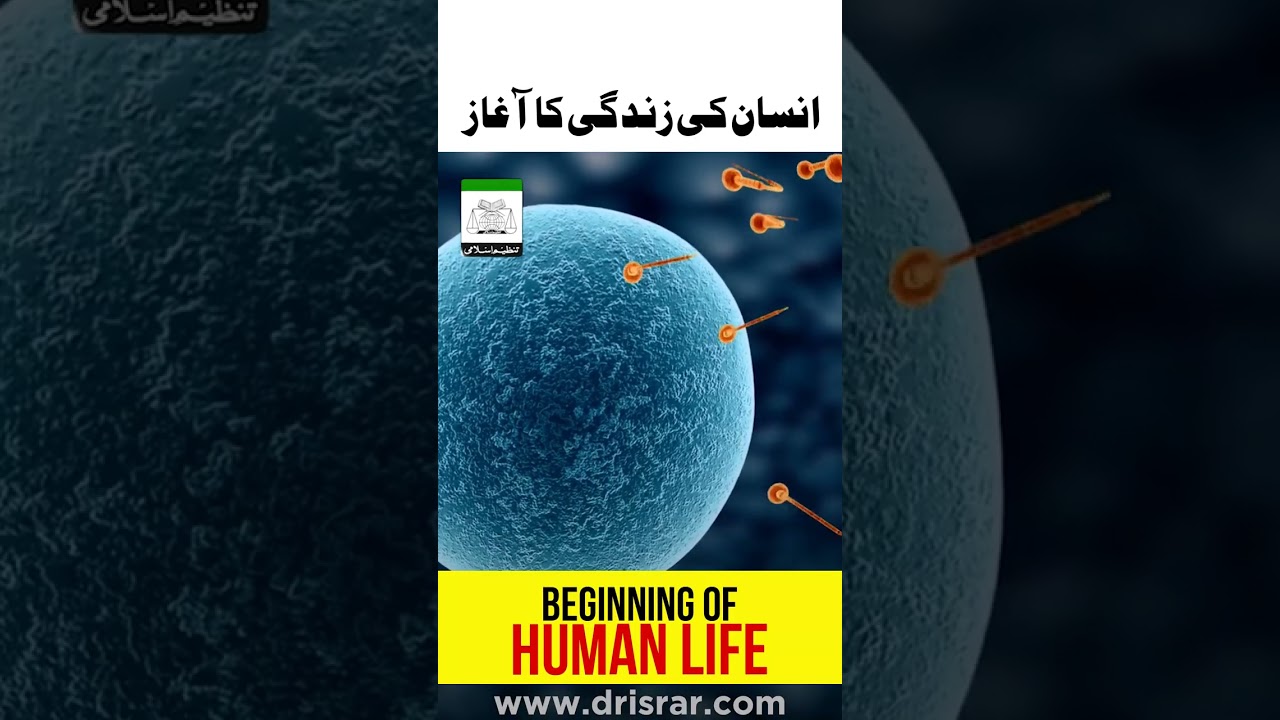
Modern microscopic observation confirms the Quranic description of human origins as detailed in Surah Qiyamah. The verse referencing the initial state as ‘nutfa’ (a drop) aligns with scientific understanding of fertilization. Microscopic analysis reveals the active, living spermatozoa originating from the male contribution, demonstrating life’s commencement at conception. The video elucidates that life does not begin 120 days after fertilization, but from the very beginning, supporting the Quranic account.
68
Dr. Israr Ahmad clarifies that the practice of collective Quran recitation for reward (sawab) is an innovation not found in Islamic tradition. True Quran recitation involves individual or attentive listening to a skilled reciter. He condemns the practice of dividing the Quran amongst multiple people to read portions as disrespectful and a form of mockery towards the scripture. The proper way to engage with the Quran is through personal recitation and focused, reverent listening.
73
