Calção

This lecture emphasizes that true religious devotion requires personal piety and the practical implementation of faith within one’s own life and sphere of influence. The speaker cautions against merely constructing physical structures like mosques without concurrent self-improvement and organized, constructive action. He warns that disorganized groups can cause disruption and impede meaningful progress. The core message is that establishing faith within oneself and one’s immediate surroundings is the foundational step before attempting wider religious work.

68

Many misconceptions exist regarding remembrance of God. A primary error is conflating *zikr* (remembrance) with the *means* of remembrance. *Zikr* is the presence of God within the heart – maintaining a connection through remembrance, love, and attachment. Simply repeating phrases like “Subhan Allah” is a *means* of remembrance, but not *zikr* itself. True *zikr* requires focused attention and presence; if the mind is preoccupied with worldly concerns while reciting, the benefit of remembrance is lost. The act itself is a tool; the connection with God is the essence.
46

This lecture emphasizes that prayer (dua) is the core of worship. God hears and responds to every sincere call, irrespective of the supplicant’s location or posture. God accepts prayers offered from any place, whether at home or elsewhere, and responds to those who turn to Him with devotion. The essence of faith lies in maintaining a constant connection with God through heartfelt supplication.
25
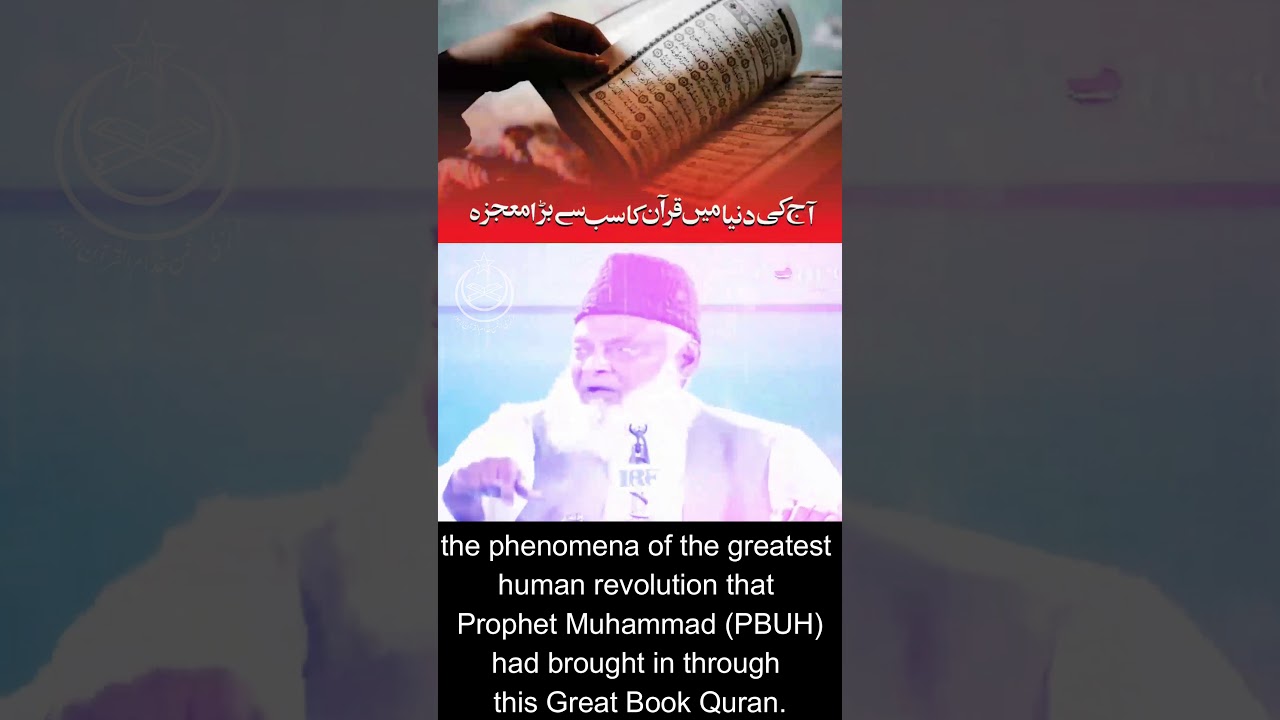
The Quran is presented as the primary miracle of the Prophet Muhammad (peace be upon him). Its greatest miracle in the modern world is its power to instigate a monumental revolution in human history, establishing a just system. This transformation occurred entirely through the message of the Quran, and its continued invitation is through its verses.
104

This lecture discusses the fundamental belief that adhering to the principles of Islam in this world will secure salvation in the afterlife. It emphasizes that recognizing God through innate disposition and reason, accepting the Prophet’s call, and living a life of faith establishes one as among the most honorable of humanity. The speaker argues that a sincere connection with the divine, established through both intuition and intellect, guarantees a reserved place in Paradise.
64

Hazrat Ali (RA) narrates that the Prophet Muhammad (peace be upon him) foretold of a great tribulation (fitna). When asked about the means of salvation, the Prophet (peace be upon him) stated that the Quran is the source of guidance. It contains accounts of those who came before and those who will come after, and holds the solutions to all disputes and differences.
71
