短裤

The Quran fundamentally transforms an individual's worldview. Before encountering the Quran, a person might perceive the universe as a random, self-operating system driven by mindless matter. Afterwards, they recognize the existence of a single God – Allah – who is all-powerful, all-knowing, the Sustainer, and the Creator and Director of the universe. This realization shifts perspective from accidental creation to purposeful design and divine governance.

58

This lecture clarifies the Islamic principle regarding social, cultural, and regional traditions. It asserts that Islam allows the adoption of customs not conflicting with the Quran and Sunnah. The speaker emphasizes that adherence to practices solely because the Prophet Muhammad and his companions followed them is not obligatory. Practices are permissible if they align with Islamic teachings; otherwise, they remain optional. The core message is flexibility within the bounds of faith, acknowledging cultural variations while prioritizing religious guidance.
79

This lecture elucidates the concept of *shirk* (associating partners with God) as stemming from the belief that entities other than Allah possess the power to grant benefit or inflict harm. It explains how seeking fulfillment of needs or protection from adversity from anyone or anything besides Allah constitutes a fundamental act of disbelief. The lecture emphasizes that true reliance and hope should be placed solely in Allah, as attributing power to creation is a grave sin. It highlights the subtle ways *shirk* manifests in daily life and urges listeners to purify their intentions and place their trust entirely in the Divine. The core argument centers on the inherent powerlessness of creation and the absolute sovereignty of Allah.
71
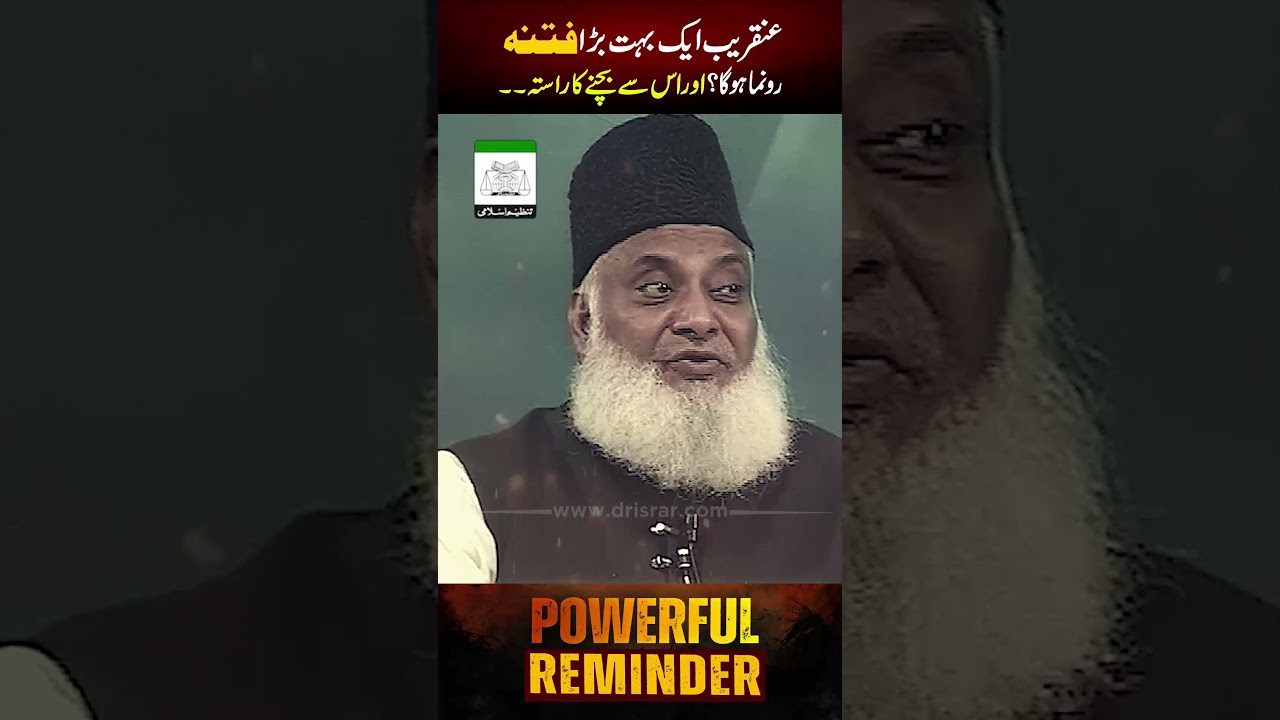
Hazrat Ali (RA) narrates that the Prophet Muhammad (peace be upon him) foretold of a great tribulation (fitna). When asked about the means of salvation, the Prophet (peace be upon him) stated that the Quran is the source of guidance. It contains accounts of those who came before and those who will come after, and holds the solutions to all disputes and differences.
71

Umar bin Abd Wud, a renowned Arab warrior and skilled horseman, challenged the Muslims during a siege. He fearlessly crossed the trench surrounding Medina, seeking a worthy opponent. Hazrat Ali (RA) stepped forward, offering Umar bin Abd Wud three opportunities to make a request before engaging in combat. Umar initially demanded the acceptance of Islam, then asked for safe passage, both of which Ali refused. Finally, Umar challenged Ali to a duel. Ali accepted, ultimately defeating and killing Umar bin Abd Wud, demonstrating courage and faith.
48

This lecture discusses the subtle forms of *shirk* (associating partners with God) that arise from prioritizing personal desires (*nafs*) over divine guidance. It explains how attachment to wealth and material possessions can become a form of idolatry, even while outwardly professing faith. The speaker emphasizes that true *tawheed* (monotheism) demands complete submission and obedience to God alone, rejecting any form of worship or devotion directed towards worldly things. The dangers of prioritizing wealth over ethical boundaries are highlighted, comparing this to the idolatry found in other religions. The core message is a call to purify worship and ensure that all actions are solely for the pleasure of God.
60
