Korte broek
This lecture addresses the challenges of raising children in a materialistic world. It clarifies that not all spouses and children are supportive, and some may lead one astray. The core message emphasizes that true success lies in nurturing children with Islamic values, providing them with a good education through lawful means, and avoiding compromise on principles for their sake. It warns against prioritizing children’s worldly desires over one’s own spiritual well-being and highlights that sacrificing integrity for their happiness is detrimental. The speaker stresses that the greatest misfortune is to ruin one’s afterlife while trying to build a good life for one's children.

94

This lecture emphasizes that true faith (iman) is distinct from deeds (amal/actions). Worldly recognition as a leader, warrior, scholar, or philanthropist holds no weight on the Day of Judgement. Accountability rests solely on the sincerity of one’s faith and the quality of their deeds. The speaker warns that even those celebrated in the world may face severe consequences in the afterlife if their actions did not align with genuine belief. Ultimately, worldly achievements are irrelevant; only a righteous heart and sincere devotion to God matter.
68
This lecture asserts that the ultimate right is the sovereignty of God, and its implementation is essential. Resistance to this divine right is considered rebellion. The speaker critiques secularism and popular sovereignty, arguing they contradict the fundamental right of God’s rule. True teaching of right involves facing resistance, while compromise and agreements that cause no harm are insufficient. The lecture emphasizes the importance of upholding God’s sovereignty even in the face of opposition.
56
This lecture explores the concept of true faith as demonstrated through submission to authority in resolving disputes. It uses the analogy of interwoven tree branches—a ‘shajarah’—to illustrate how disagreements arise between people. Genuine believers will not fully embrace faith until they accept arbitration and judgment from a designated authority, even when their personal claims conflict. The lecture emphasizes that resolving conflicts through proper channels, and accepting the outcome, is a fundamental aspect of faith. The analogy highlights that intertwined issues require external resolution, just as branches need pruning to allow growth.
74
Parents deserve kindness and respect as a natural obligation for their nurturing, especially a mother’s sacrifices. However, obedience to parents does not extend to accepting commands that contradict faith or morality. While good conduct, service, and respect are essential, adherence should be to the path of righteousness, not blind obedience. The core principle is honoring parents while remaining steadfast in one’s faith and ethical principles. True respect lies in guiding them towards the right path, not following them into wrongdoing.
55
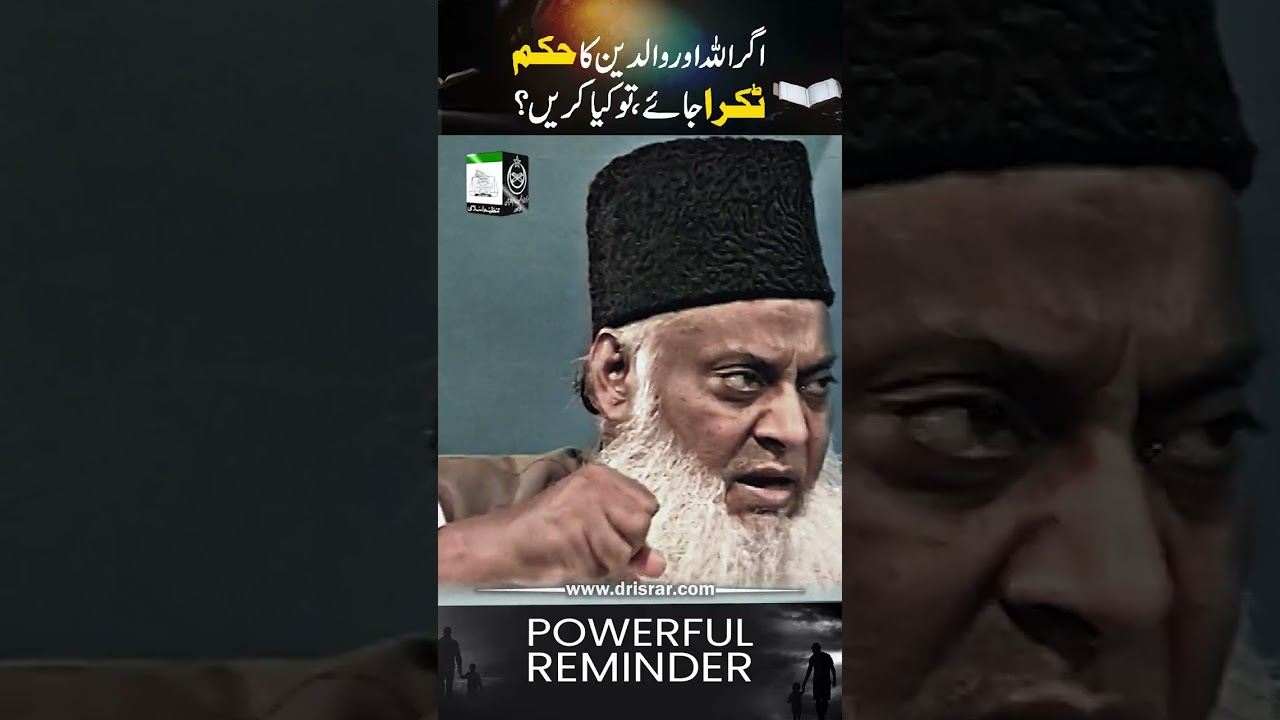
This lecture addresses the complex situation when parental demands conflict with divine commands in Islam. It clarifies that while parents hold a significant position of respect and obedience immediately after God, God’s commands take precedence. The speaker emphasizes that a son or daughter should respectfully but firmly explain their limitations, drawing parallels to the example of Prophet Ibrahim (Abraham), and avoid yielding to demands that involve disobedience to God. Maintaining respectful communication and soft persuasion are encouraged, but unwavering adherence to God’s commands is paramount.
51
