Şort
True faith is deeply rooted conviction in the heart—belief in God, His attributes, His presence and knowledge, life after death, accountability, reward and punishment, Paradise and Hell, angels, divine revelation, scriptures, prophets, messengers, and the finality of the prophethood of Muhammad, peace be upon him. This conviction is the foundation of a meaningful life.

45
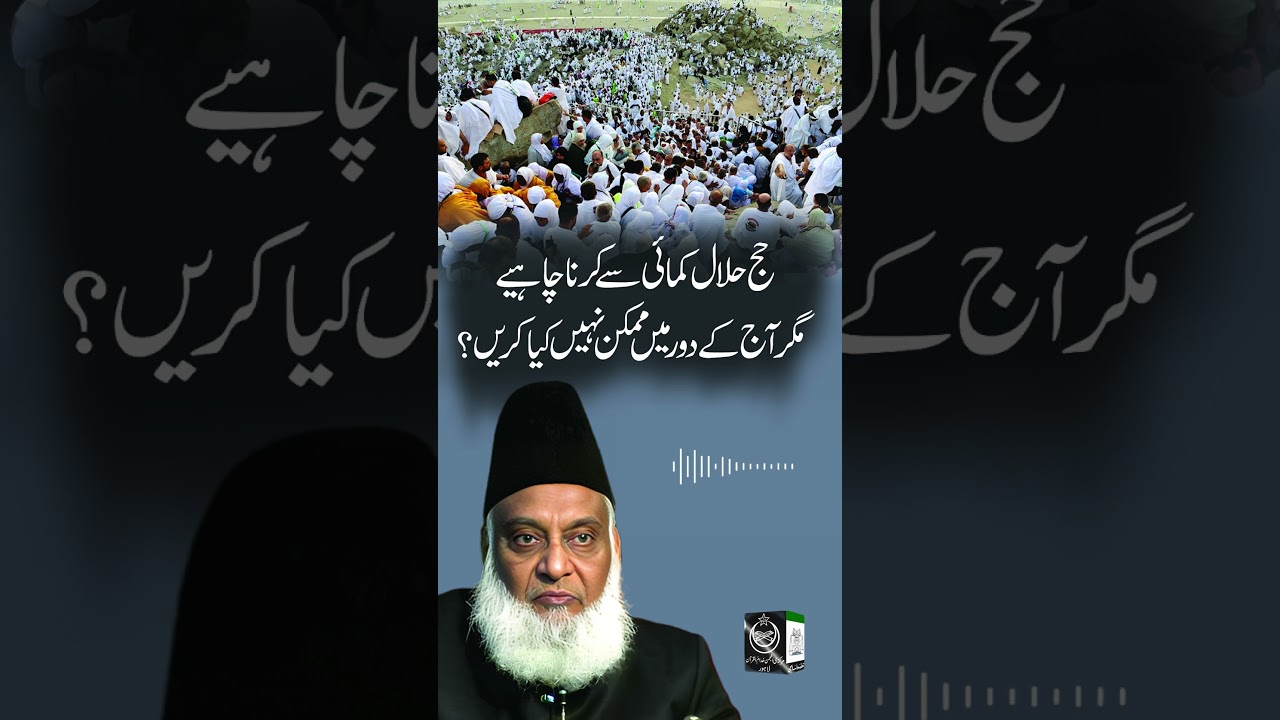
Performing Hajj and other religious obligations requires wealth earned through lawful means. Acquiring purely halal income is challenging in modern times due to pervasive indirect involvement with interest. Ambient interest exists in the air we breathe and the food we consume, which is considered a general impurity and doesn’t necessarily invalidate a transaction. Direct involvement, such as taking loans with interest to build homes or businesses, or depositing money to earn interest, is unequivocally forbidden. However, unintentional mistakes are forgivable, as God is Merciful and Pardoning. Focusing on acquiring halal income and avoiding strictly prohibited actions is paramount.
64

Supplication (du'a) should be directed solely to Allah. Seeking help from anyone other than Allah – be it prophets, messengers, angels, saints, or any created being – nullifies the act of worship. While seeking physical assistance within the natural laws of the world is permissible, requesting the unseen or miraculous from anyone besides Allah is strictly forbidden. True supplication involves asking Allah alone for all needs, both material and spiritual. Seeking aid from others in worldly matters is different from asking for the impossible or supernatural from anyone besides the Creator.
69
This lecture explains that the night of Decree (Laylat al-Qadr) is when the measures and destinies for the upcoming year are determined. While these decrees exist within Allah's eternal knowledge, the specifics of their manifestation – events, circumstances, and incidents – are communicated to the angels for execution. This process occurs annually, mirroring a budgetary session where yearly affairs are assigned. The lecture highlights that Allah's ancient knowledge encompasses all that will occur, and the angels are tasked with bringing these divine decisions to fruition.
65

This lecture explores the historical development and varying scholarly opinions regarding the Taraweeh prayer. It details how the Prophet Muhammad (peace be upon him) practiced Taraweeh, focusing on the practice of eight rak'ats followed by Tahajjud. The discussion highlights the practice established during the Caliphate of Umar ibn al-Khattab, which introduced twenty rak'ats performed immediately after Isha prayer with a single Imam. The lecture clarifies that the four major schools of Sunni Islamic jurisprudence – Hanafi, Maliki, Shafi'i, and Hanbali – concur with the practice established by Umar. It also addresses the differing views of the Ahl-e-Hadith, who maintain the original practice of eight rak'ats. The lecture emphasizes the importance of adhering to the Sunnah of the Prophet and the rightly guided Caliphs, as well as the scholarly consensus on the practice of twenty rak'ats, which is observed in the two holy mosques of Mecca and Medina. The lecture also acknowledges Ahmad ibn Hanbal as a prominent scholar and the importance of his Musnad.
122

The speaker reflects on a lifetime of acquiring knowledge – philosophy, Eastern and Western learning – and realizes its inadequacy without divine connection. He describes this knowledge as a fruitless palm tree, devoid of benefit. He expresses a desire to move beyond intellectual understanding to experience divine madness, passion, and a consuming love for God, seeking a spiritual awakening after resolving life’s complexities.
61
