Shorts
This lecture explains that accountability in the hereafter is based on inherent human faculties: intellect, discernment, the capacity for good and evil, divine knowledge within the soul, and the love of God. Even those who never received a prophetic message will be judged based on these innate qualities. God has provided humanity with the tools for moral reasoning and spiritual awakening, and this internal guidance forms the basis of divine judgment. The sending of prophets and scriptures served to complete the argument and provide clear guidance, making the test of life easier. The soul possesses inherent knowledge of and love for God, which is awakened by divine revelation.

69
This lecture explores the concept of reward in relation to individual capacity and inherent difficulties. It highlights that a single act of goodness, achieved despite significant internal obstacles, can be more valuable in the eyes of God than numerous acts performed with ease. The lecture emphasizes that Divine assessment considers the effort and struggle behind an action, not merely its quantity. It suggests that genuine achievement lies in overcoming personal limitations to perform even a small good deed. The relative ease with which some individuals accomplish good deeds does not diminish the importance of striving for goodness despite personal challenges.
54
This excerpt details a poignant scene from the Battle of Uhud. Following intense fighting and significant casualties, a water carrier arrives to offer relief to the wounded. The narrative focuses on the selfless prioritization of others, even in extreme pain and distress. Multiple injured soldiers call out for water, but the carrier is repeatedly directed to serve those more critically wounded. The story culminates in the tragic passing of the water carrier himself, highlighting the immense sacrifice and the fragility of life during battle. It underscores themes of compassion, selflessness, and the acceptance of fate in the face of mortality.
62
The Quran describes a day of immense hardship, 'Yaum-e-Farar,' where individuals will prioritize self-preservation above all else. On this day, familial and societal bonds will dissolve as people flee from loved ones—siblings, parents, spouses, and children—driven by intense fear and a desperate desire for personal salvation. The text highlights the complete breakdown of relationships and the overwhelming self-interest that will characterize this day of reckoning, where individuals will solely focus on escaping divine punishment.
98

The Prophet Muhammad (peace be upon him) stated that some individuals, despite lacking worldly access or social standing, hold a high status in the eyes of God. Even a casual oath uttered by them is honored by Allah. The Prophet (peace be upon him) highlighted the exceptional status of companions like Abu Huraira and Abu Dharr, equating observing Abu Dharr with witnessing the arrival of Jesus (peace be upon him). These individuals represent the truly successful and blessed.
73
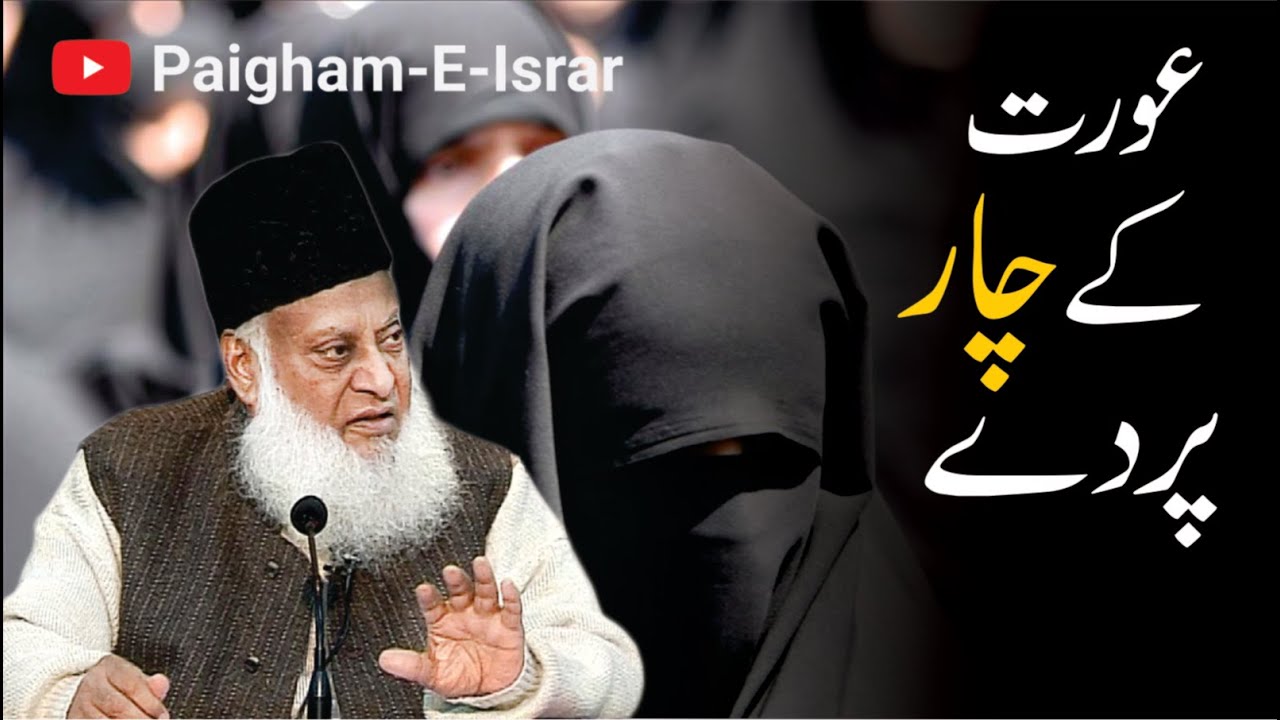
This lecture details the four levels of modesty (pardah) prescribed in Islam. The first level involves segregation of genders in social settings. The second concerns appropriate attire when leaving the home, evolving from the jilbab to the burqa for increased ease and protection. The third level restricts access to the home to only close male relatives (mahram). Finally, the fourth level mandates covering the entire body even before mahram relatives, leaving only the face, hands, and feet exposed. The speaker emphasizes that these principles are being eroded in modern times, representing a deliberate attack on Islamic teachings.
75
