מִכְנָסַיִים קְצָרִים

The Prophet Muhammad (peace be upon him) was asked about the most excellent form of *jihad*. He responded that the greatest *jihad* is the struggle against one’s own base desires (*nafs*) in obedience to God. This involves suppressing harmful inclinations, humbling oneself before God, and striving for spiritual purification. This internal struggle is superior to fighting in the path of God.

253

The capacity to receive and benefit from divine knowledge, specifically the Quran, is directly proportional to one’s mental capacity. Just as a small bucket can only hold a limited amount of water from a vast ocean, a limited mind can only absorb a fraction of the Quran’s wisdom. Expanding mental capacity through the study of sciences, philosophy, and logic is essential to fully grasp the Quran’s teachings. A broad and sharp mind is more receptive to understanding the subtleties and depths of divine knowledge. Continuous learning and intellectual exploration are vital for maximizing one’s capacity to benefit from the Quran's guidance and wisdom.
57

This lecture explores the profound connection between the Quran and spiritual well-being. It emphasizes that true guidance and divine mercy are attained not merely through ritualistic prayer, but through a heart cleansed of spiritual ailments and fully receptive to the Quran's message. The speaker highlights the Quran as an immense blessing and a source of joy, urging listeners to find celebration in its teachings rather than worldly possessions. The core message stresses that genuine happiness lies in recognizing and appreciating the Quran's unique value, surpassing all material wealth.
64
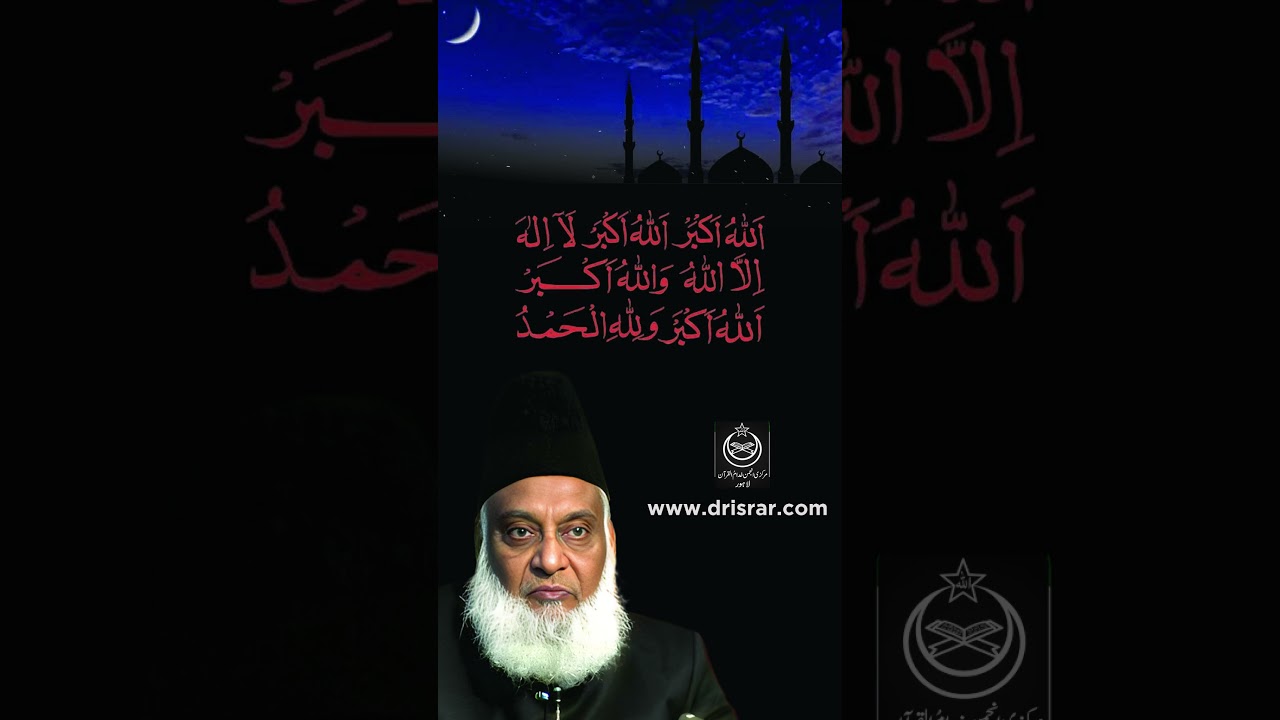
This lecture focuses on the profound meaning and spiritual significance of the phrase "Allah Akbar." Dr. Israr Ahmad elaborates on its implications for a believer’s life, emphasizing its connection to gratitude, humility, and the recognition of God’s greatness. He explains how the consistent remembrance of God through this declaration can transform one’s perspective and lead to inner peace. The discourse underscores the importance of aligning one’s actions with the acknowledgment of God’s supreme power and mercy, fostering a deeper spiritual connection and a life guided by faith.
63

Iqbal critically analyzes modern ideologies, identifying secularism and nationalism as significant threats—forms of idolatry—to Islamic faith and societal values. He posits that prioritizing the nation-state over faith creates a new form of worship, eclipsing the divine. Iqbal warns that materialism, prevalent in contemporary civilization, further exacerbates this spiritual crisis. He emphasizes the strength of Islam and calls for a return to its principles, urging Muslims to resist these destructive ideologies and uphold their faith. He views the current age as marked by intense emotional fervor and the corruption of religious values.
62

This lecture details the events leading up to the creation of Pakistan. It highlights Jinnah’s initial stance of a ten-year unified India with three zones, the opposition from Gandhi who believed Pakistan’s formation depended solely on his consent, and the British government’s animosity towards Italy. The lecture also recounts Maulana Hussain Ahmed Madani’s prediction, made during Ramadan 1946, that the decision for Pakistan's establishment had been finalized within the Majlis-e-A'la. It emphasizes the historical context and key figures involved in the Pakistan Movement.
67
