Shorts
The Prophet Muhammad (peace be upon him) was asked about the most excellent form of *jihad*. He responded that the greatest *jihad* is the struggle against one’s own base desires (*nafs*) in obedience to God. This involves suppressing harmful inclinations, humbling oneself before God, and striving for spiritual purification. This internal struggle is superior to fighting in the path of God.

253
This lecture discusses the plight of women, particularly in Western societies, highlighting the burdens they bear – pregnancy, childbirth, and financial responsibility. It critiques the objectification of women and questions the values of Western civilization, suggesting a concerning trend of exploitation and disregard for their dignity. The speaker emphasizes the need to understand and respect women's true worth and role in society.
430
This lecture explores the divine protection of scriptures. It questions why, if God protected the Torah and Gospel, alterations still occurred. The argument centers on the unique preservation of the Quran, asserting that human intervention cannot corrupt its original form. The Quran's protection is explicitly stated in scripture, contrasting with the perceived lack of such protection for previous texts. Human translations and interpretations are acknowledged as sources of potential distortion, while the Quran itself remains inviolable.
50
This lecture clarifies the permissibility of continuing to eat and drink until the white thread of dawn becomes distinctly separate from the black thread of night. It addresses excessive caution observed by some regarding the timing of *suhoor*, emphasizing that one can complete their meal even after the call to prayer. The speaker explains that the period of fasting begins at sunset and ends with the start of a new day, and that strict adherence to precise timing isn’t necessary, citing the Prophet’s allowance for finishing a drink even after the *azaan*. The emphasis is on the blessing in consuming the pre-dawn meal and avoiding unnecessary rigidity in its observance.
65
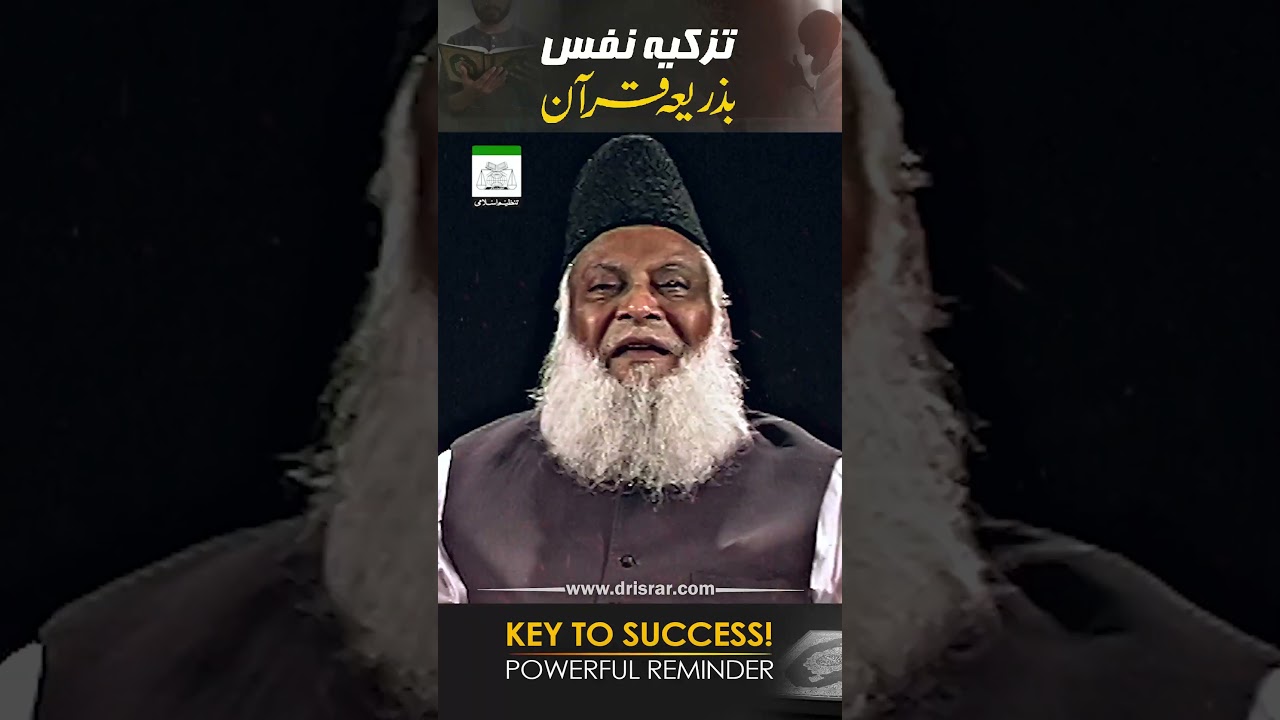
The process of self-purification involves internalizing the Quran – understanding it with your intellect, reflecting upon it in your thoughts, and illuminating your heart with its guidance. This inner illumination dispels darkness and washes away impurities, much like leaves falling from trees in autumn. Faith, once established, generates an inner light that permeates the entire being. This requires controlling base instincts, detaching from worldly desires like wealth and power, and purifying one’s character from vices. The Quran is the primary source for achieving this purification.
78
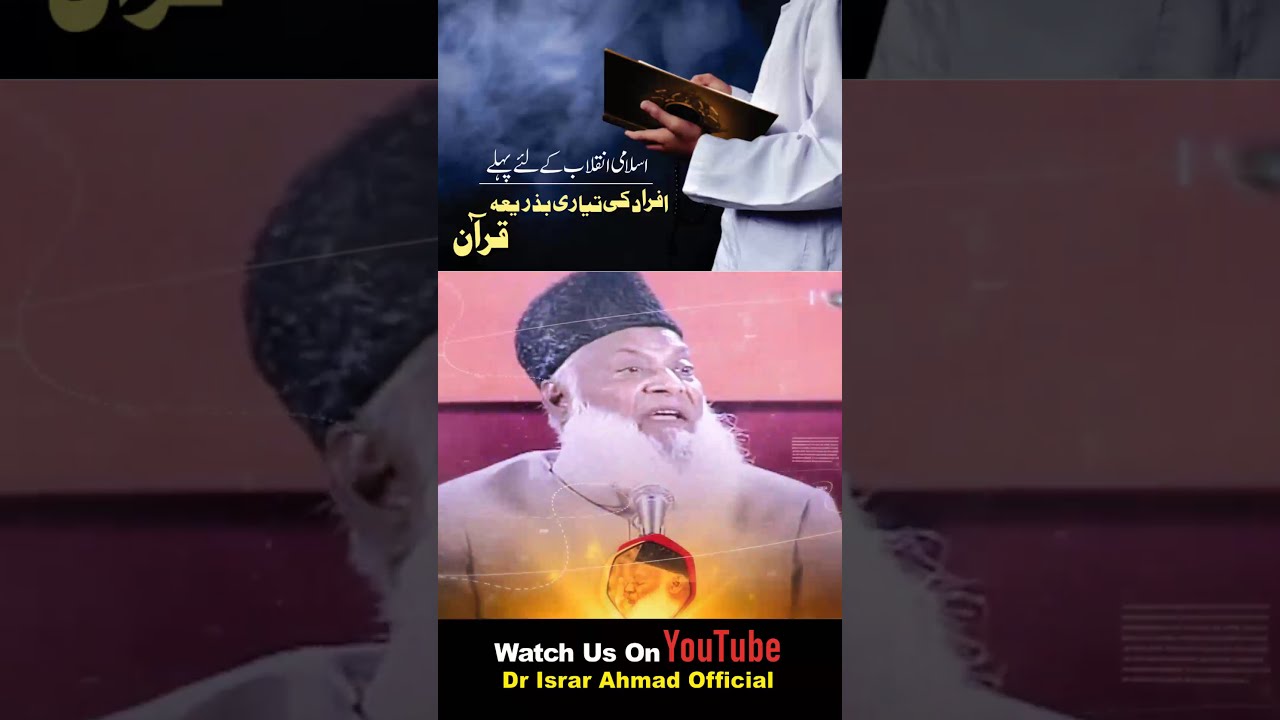
Dr. Israr Ahmad emphasizes the pivotal role of the individual in shaping the destiny of nations. He asserts that a nation's fate rests in the hands of its people, with each individual acting as a guiding star for the community. True progress stems from individual piety, devotion, and sincerity of purpose – working solely for the pleasure of God and striving for success in the afterlife. This lecture stresses the importance of solidifying individual character before uniting for collective advancement, with the Quran as the essential binding force.
88
