Corti

This lecture details three elements that lead to salvation and three that lead to destruction. Salvation is achieved through fear of God in both private and public, speaking the truth regardless of anger or pleasure, and fulfilling one’s obligations. Destruction stems from following one's desires, excessive love of wealth, and self-admiration. Self-regard is presented as the most dangerous of these destructive traits, hindering spiritual progress and distancing one from divine guidance.

74
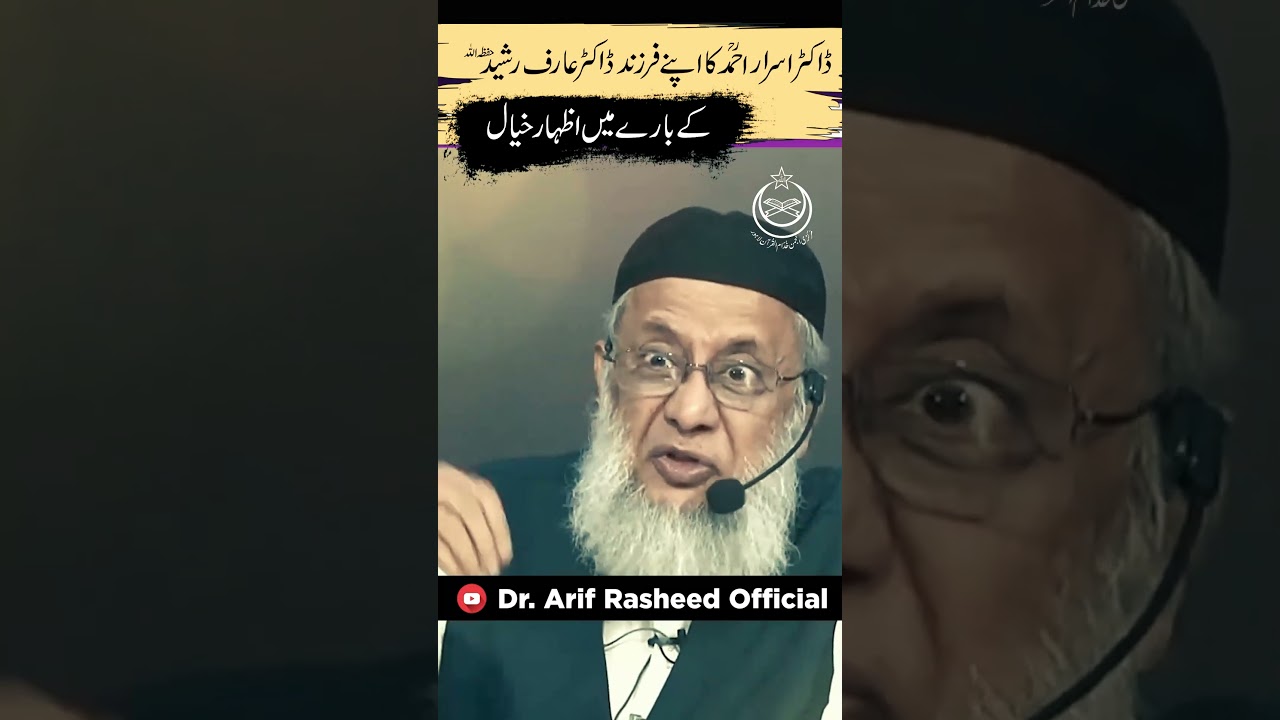
Dr. Israr Ahmad discusses the succession of Dr. Arif Rashid, highlighting their shared background in medicine and a long-standing relationship spanning decades. He notes Dr. Rashid’s similar voice and demeanor, expressing hope that he will fulfill the responsibilities of his new position. Dr. Ahmad recalls Dr. Rashid attending his lectures since childhood, beginning in 1965, and the deep impact of those lessons on his formative years. He believes Dr. Rashid carries the essence of his teachings and thought processes.
70
This lecture discusses the necessity of establishing a system of leadership based on fundamental Islamic principles, particularly in the context of modern times. The speaker argues that while the prophetic era has ended, the need for guidance and just governance remains. He emphasizes the importance of adhering to core Islamic tenets while adapting detailed structures to the demands of the present age. The lecture stresses the need for a leader to resolve disputes and maintain unity within the community, drawing parallels to the practice of appointing an ameer during journeys. The speaker identifies as a fundamentalist, meaning one who upholds Islamic principles, while acknowledging room for differing interpretations in detailed matters.
54
The lecture addresses the permissibility of naming someone 'Akbar'. It clarifies that the name 'Akbar' in itself does not equate to the name of God, as 'Allah Akbar' is a specific phrase denoting God’s greatness. The name 'Akbar' becomes associated with God only when prefixed with 'Al-' (the definite article). Therefore, using 'Akbar' as a personal name is permissible, as it does not inherently invoke the divine name without the necessary prefix.
90
Many of Dr. Israr Ahmad’s educated friends and acquaintances advised him to deposit his retirement funds in fixed-rate Defense Savings Certificates, believing it to be the most beneficial solution. He disagreed. This lecture explains the impermissibility of interest, even when deposited in seemingly permissible schemes. They have fixed their money and are consuming the profit, believing it to be permissible, which he identifies as a significant error. The profit derived is direct interest – *haram* – and not a permissible form of trade or investment.
67
Many misconceptions exist regarding remembrance of God. A primary error is conflating *zikr* (remembrance) with the *means* of remembrance. *Zikr* is the presence of God within the heart – maintaining a connection through remembrance, love, and attachment. Simply repeating phrases like “Subhan Allah” is a *means* of remembrance, but not *zikr* itself. True *zikr* requires focused attention and presence; if the mind is preoccupied with worldly concerns while reciting, the benefit of remembrance is lost. The act itself is a tool; the connection with God is the essence.
46
