السراويل القصيرة

This lecture explains that accountability for evil deeds is direct and proportionate to the harm caused. Conversely, the acceptance of good deeds is contingent upon faith—belief in God, the Day of Judgement, angels, scriptures, and prophets. Giving to relatives, orphans, and the needy are also emphasized as integral aspects of righteous conduct. True piety isn’t merely outward displays of devotion, but sincere belief and action rooted in faith. The core message stresses that actions are judged based on intention and belief.

61

This lecture clarifies that humanity’s fundamental need is not material wealth or political power, but divine guidance. Humans are inherently equipped with the capacity to discern between right and wrong, good and evil, through the innate knowledge instilled within their souls. While individuals possess the ability to self-assess and find answers within their own hearts, external factors like forgetfulness, personal desires, and spiritual rust can obscure this innate knowledge. This lecture emphasizes the importance of seeking and maintaining a connection with this inner guidance.
54
This lecture emphasizes the significance of fulfilling commitments within societal and Islamic frameworks. Agreements, whether formal contracts like employment or social contracts like marriage, establish mutual obligations and trust. The speaker highlights that upholding one's promise is a fundamental aspect of faith, as individuals will be held accountable by God for their commitments. Every agreement is witnessed by God, and failure to fulfill a promise is considered a serious matter. The lecture underscores that maintaining integrity and fulfilling promises is essential for a righteous life.
45
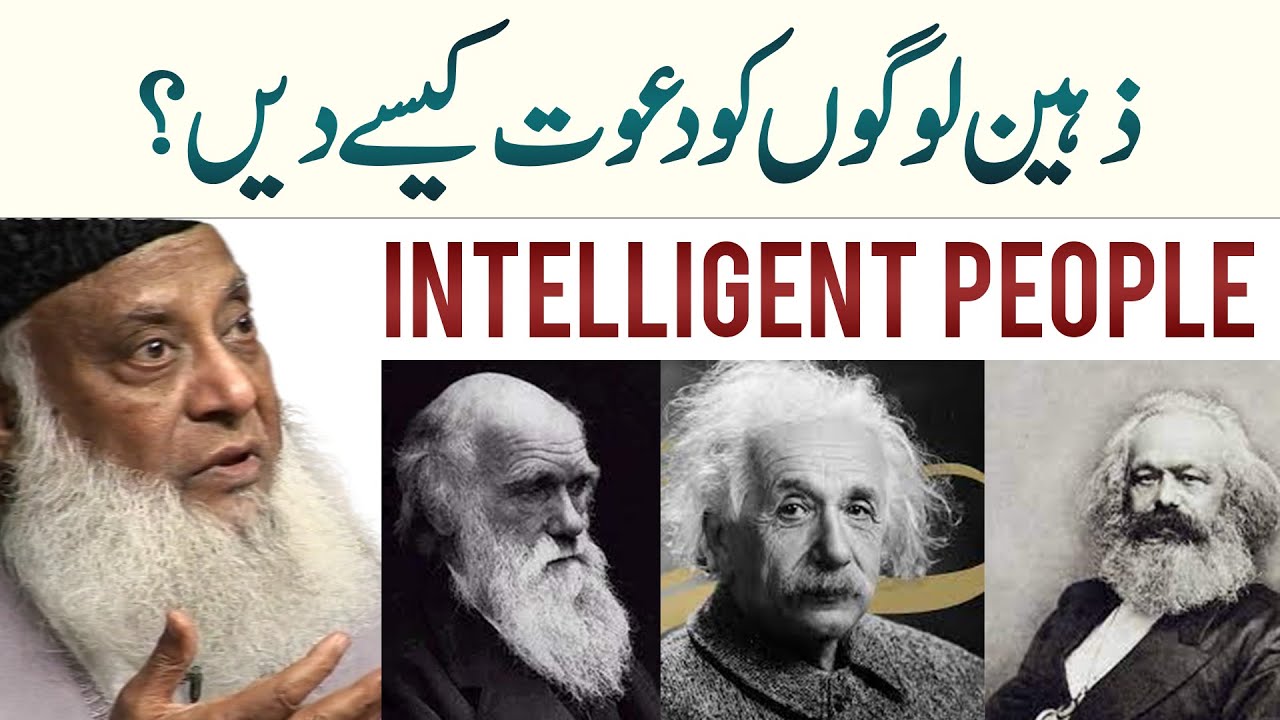
The lecture addresses the necessity of clearing the mind of conflicting ideologies, specifically Darwinian evolution and other Western philosophies, before accepting Islamic teachings. The speaker emphasizes that preconceived notions and intellectual impurities act as barriers to true understanding of religious concepts like the story of Adam and Iblis. He critiques the influence of thinkers such as Darwin, Freud, Marx, Adler, Bertrand Russell, and Sartre on contemporary thought, asserting that these philosophies obstruct a clear reception of Islamic principles. The speaker highlights the importance of intellectual purification to facilitate genuine faith and understanding.
60

Dr. Israr Ahmad explains that God desires ease, not hardship, for his followers. The lecture addresses a misguided perception of piety where individuals stubbornly adhere to fasting even in conditions of extreme physical strain, such as during travel or illness. This rigid adherence, he argues, stems from a flawed understanding of religious obligation and fosters extremism. True faith, according to Dr. Ahmad, prioritizes ease and practicality, aligning with God’s desire for simplicity. The lecture highlights the importance of balancing religious observance with physical well-being and common sense.
76

Establishing a connection with the Quran fosters mental and intellectual harmony, unifying purpose. A community (Ummah) is defined by a shared objective. Today, the Muslim Ummah exists as a collective striving for a common goal. While the ideal of a unified Muslim Ummah, extending from India to the shores of the Nile, remains a vision, the reality is that a truly cohesive Muslim community does not currently exist. This lecture explores the concept of Ummah, its historical aspirations, and its present fragmented state.
98
