السراويل القصيرة
This lecture explains the concept of *tasbeeh* – the glorification of God – as inherent in the very fabric of creation. It clarifies that *tasbeeh* isn't limited to verbal recitation but encompasses the perfect and sustained existence of all things, free from imperfection or need. The lecture draws parallels between the act of floating or orbiting – maintaining a fixed course – and the continuous glorification of God by the universe. Every element, from planets to particles, testifies to the Creator’s perfection and power. The universe operates flawlessly, demonstrating divine knowledge, wisdom, and omnipotence. True *tasbeeh* is the silent testimony of creation to its perfect Creator, a being free from all flaws, weakness, and dependence.

64
This lecture explores the life of Syeda Fatima, the beloved daughter of the Prophet Muhammad (peace be upon him). It details her hardships, including physical strain from household chores and the challenges faced by early Muslims. The discussion emphasizes her devotion, piety, and the sacrifices she made for her father and the nascent Muslim community. It also addresses a poignant moment where she questions the disparity in worldly possessions, highlighting her spiritual focus despite material needs. The lecture concludes with a reflection on the immense love and respect the Prophet held for his daughter and the practice of reciting specific praises after each prayer.
57

The Quran possesses two levels of understanding. The first is a surface-level comprehension, readily accessible like oil floating on water after a tanker leak. This represents the primary lessons and wisdom directly present within the text. The deeper level, however, is immeasurable, akin to the depths of the ocean, requiring profound exploration to fully grasp its complexities. Just as measuring the ocean's depths is a challenge, so too is comprehending the full extent of the Quran’s wisdom.
44
Human personality is comprised of two essential aspects: knowledge and thought, and action and character. These two are inextricably linked; a person’s beliefs and ideas manifest in their actions, ethics, and dealings. Correct action stems from sound thinking; flawed foundations lead to flawed outcomes. Limited thought results in limited action and character. A skewed initial approach inevitably leads to a distorted final result.
44
This lecture discusses the dire situation facing Pakistan, emphasizing the need for national repentance and a return to Islamic principles. The speaker warns of impending threats from external forces, particularly India, and the demands for Pakistan to dismantle its nuclear program. He argues that true strength lies in establishing a society based on the teachings of Muhammad. The speaker stresses that divine help is still available, but only through sincere repentance and a commitment to implementing Islamic values. The ultimate goal is to establish a just and righteous society guided by the principles of Islam.
55
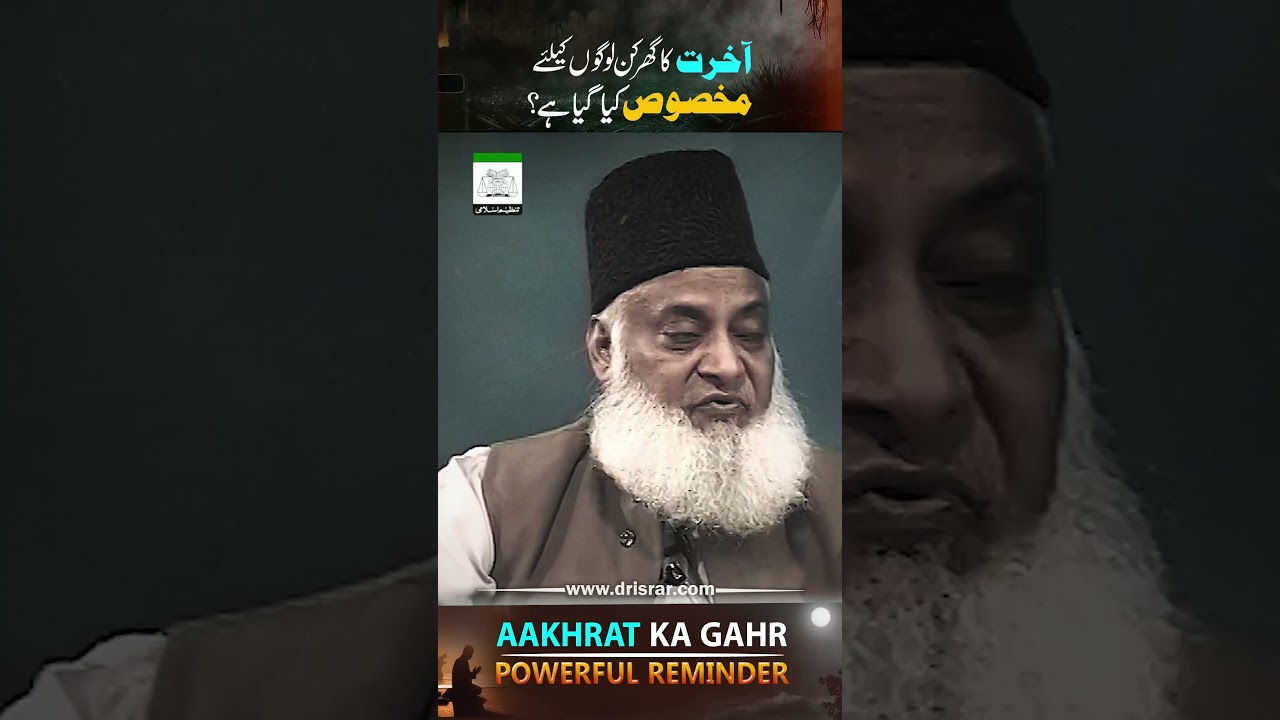
This lecture clarifies that the ultimate abode, the Hereafter, is reserved for those who abstain from seeking power, dominance, or causing corruption on Earth. It emphasizes that this eternal reward is specifically for the righteous—those who prioritize piety and abstain from worldly ambitions. The lecture highlights the promise of lasting peace, prosperity, and fulfillment in the Hereafter for those who live a life of devotion and righteousness, and that ultimate success and well-being are reserved for the God-conscious.
58
