Corti
The Quran states that this world will flourish through the blessing of *tawheed* (oneness of God). The purpose of Muhammad’s (peace be upon him) prophethood was to serve as a bearer of glad tidings and a warning to all of humanity. The completion of the illumination of *tawheed* and the fulfillment of its purpose remain ongoing tasks. This lecture emphasizes the enduring relevance of this message and the continuing need to strive for its realization.

208
This excerpt emphasizes the Quran as a profound blessing and healing from Allah. It highlights the Quran as a source of guidance, mercy, and a testament to Allah’s grace. The text stresses that true joy should stem from possessing this divine gift, as it surpasses all worldly possessions. It’s a reminder to cherish and internalize the Quran's message for lasting happiness and spiritual fulfillment.
63

The Quran was revealed over a period of twenty-two years, equivalent to approximately 610-632 CE. The initial revelations were short verses, with many of the shortest surahs appearing first. The revelation occurred gradually, piece by piece. The commonly stated twenty-three-year period refers to the lunar calendar, while modern understanding often relies on the solar calendar.
78
Dr. Israr Ahmad explains that the greatest form of *jihad* is the struggle against one’s own base desires (*jihad e nafs*), achieved by dedicating oneself to God. This internal struggle protects against worldly temptations that constantly demand attention and resources. He contrasts this with physical *jihad* – fighting in the path of God – which, while important, is considered a lesser form of struggle. The constant internal demands of the *nafs* are portrayed as a relentless pursuit of material possessions and immediate gratification. Overcoming these internal pressures constitutes the superior *jihad*.
60
This lecture explores the concept of pure existence, arguing that ultimate reality transcends material comprehension. It posits that the truly knowing – the mystics and the wise – ultimately arrive at the understanding that ‘just being’ is fundamental. The material world is a construct, while the perception of the Divine is a matter of subjective experience. This reality is beyond human grasp, accessible only through profound contemplation and spiritual insight. The lecture emphasizes the limitations of rational understanding when confronting the infinite nature of existence.
86
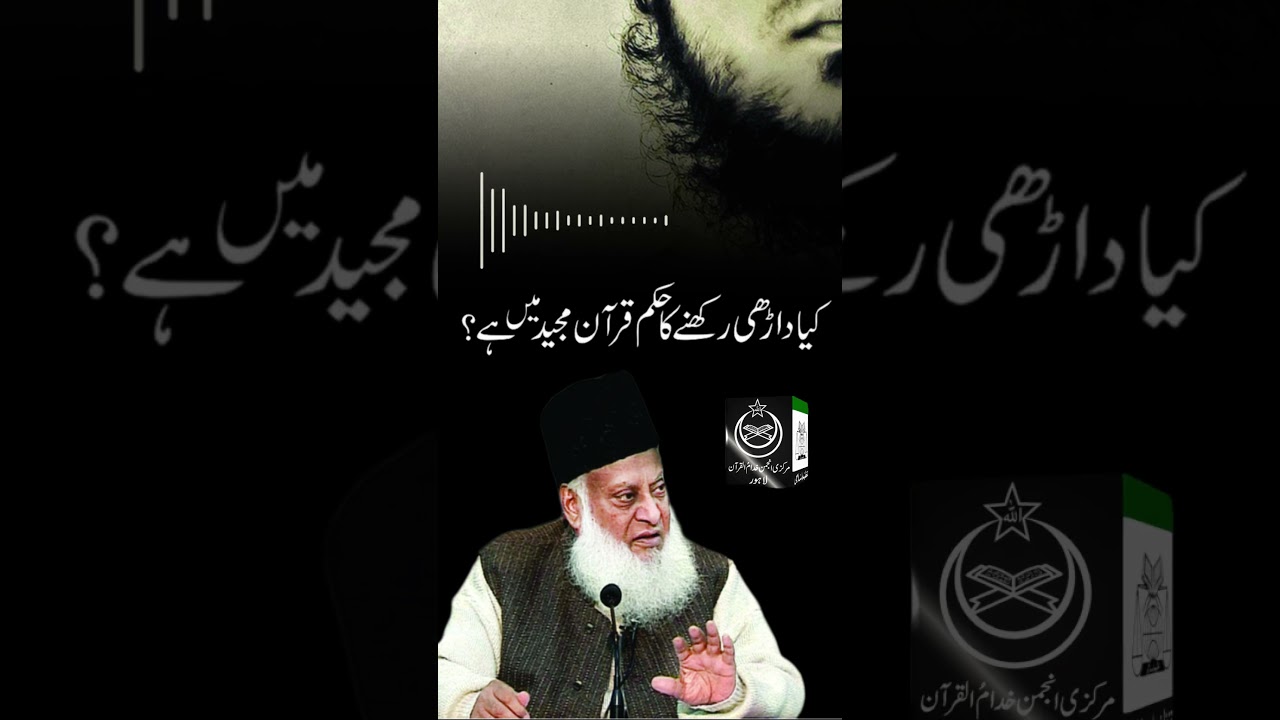
The Quran does not contain a direct command regarding beards. However, the Quran mentions the beard of Pharaoh, which Moses grasped. The practice of maintaining a beard is considered a tradition (Sunnah) of all prophets, and strongly emphasized by the Prophet Muhammad. While not a mandatory obligation (fard) in the Quran, it is a confirmed Sunnah (Sunnat-e-Muakkadah) and, according to some scholars, approaches the level of a religious obligation (wajib). Following this confirmed Sunnah is recommended, though not considered a mandatory religious duty.
70
