শর্টস
This lecture discusses the acceptance of repentance (tawbah) in extreme circumstances, such as terminal illness or imminent death. It clarifies that the door of repentance remains open until the final moments of life, but genuine repentance requires sincere, heartfelt emotion, not merely ritualistic recitation. The speaker emphasizes that denying someone the opportunity for repentance is inappropriate, as the Prophet Muhammad (peace be upon him) indicated its availability until death. The discussion also touches on the consequence of entering a state of unconsciousness, suggesting it may preclude the opportunity for repentance.

59
Humanity represents a unique composite existence, embodying both animalistic and spiritual dimensions. This lecture elucidates the multifaceted nature of humankind, highlighting its inherent duality. The human being is a blend of earthly instincts and divine potential, a ‘concoction’ of both the physical and the ethereal. Understanding this complex interplay is crucial to grasping the deeper wisdom embedded within the Quranic verses. Without recognizing this fundamental truth, the profound and intricate layers of Quranic teachings remain inaccessible.
37
Hazrat Abu Bakr, may Allah be pleased with him, frequently expressed a profound anxiety about the Day of Judgement. He wished he could be a bird, free from accountability, or a blade of grass, consumed and finished. This sentiment echoes a verse in Surah Al-Imran where disbelievers express a wish to be dust rather than face judgement. The lecture highlights the tragic reality of human existence when disconnected from faith, emphasizing the immense responsibility and potential loss inherent in being human.
62
Religion, or *deen*, is a timeless system of life, consistent throughout the ages with prophets like Noah, Abraham, Moses, Jesus, and Muhammad. *Shariat* (law) is a variable component that adapts to specific eras. True religion is a just system, a framework for social justice. Lasting positive results require the implementation of this just system, not merely the enforcement of laws. Both religious principles and Islamic law are essential for societal betterment.
47
This lecture discusses the two central acts of worship in Ramadan: fasting during the day and standing in prayer (Tahajjud) at night. Fasting is obligatory, while Tahajjud, although highly encouraged and rewarded, is not compulsory. The speaker explains that while the Prophet Muhammad (peace be upon him) observed Tahajjud as a regular practice akin to an obligation, it remains optional for the general Muslim population. Those who perform Tahajjud will receive a high status with Allah. The emphasis is on voluntary devotion and the blessings within Ramadan’s nights.
64
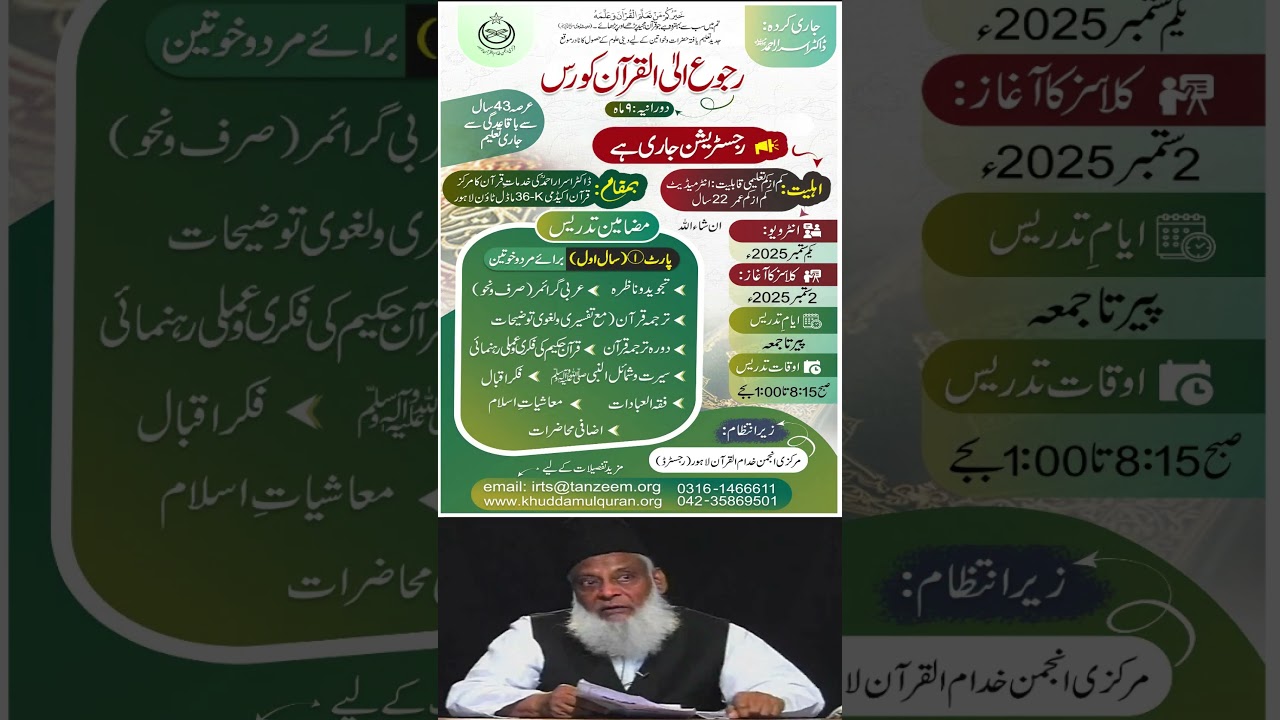
This lecture emphasizes the importance of learning Arabic to understand the Quran. It addresses the paradox of educated individuals lacking religious literacy, highlighting the financial strain families endure to provide education that doesn’t prioritize foundational Islamic knowledge. The speaker urges parents to invest in their children’s spiritual development by prioritizing Arabic and Quranic studies, framing it as a continuous charitable act. He appeals to prioritize this education, even amidst financial hardship, as a legacy of faith and understanding for future generations. The lecture stresses the value of dedicating nine months to learning Arabic and comprehending the Quran's message.
63
