Shorts
Taqwa, often translated as piety or God-consciousness, is fundamentally about safeguarding oneself from disobedience to God. It encompasses avoiding prohibited acts, adhering to divine commands, and shielding oneself from God’s wrath and the consequences of wrongdoing in this life and the hereafter. This involves a consistent, lifelong effort to protect oneself from anything that displeases God, fostering a constant awareness of divine judgment. It's a proactive approach to avoiding sin and seeking God's favor.

46
This lecture explores the lasting consequences of our actions, both good and bad, extending beyond our lifetime. It emphasizes that righteous offspring benefit society and contribute to ongoing religious service, while poorly raised children spread negativity, for which we are accountable. All deeds, visible and hidden, are known to God, and ultimately, all matters return to Him. The speaker highlights that the effects of our actions continue even after death, impacting future generations and our ultimate reckoning.
57
The soul is the center of our existence, distinct from the body. While the body originates from the earth, remains for a time, and ultimately returns to it, the soul is eternal and originates from, and returns to, God. Death involves the separation of the soul from the body; the soul itself does not die but transitions. The act of ‘ قبض’ (taking/receiving) relates to the body, not the soul. The soul’s journey is one of return to its divine source, a concept encapsulated in the phrase ‘Inna lillahi wa ilayhi raji’un.’
67
Sheikh Abdul Qadir Jilani emphasized that true power and provision come solely from Allah. Nothing possesses inherent efficacy; fire cannot burn, water cannot drown, poison cannot kill, or anything benefit without Allah’s will. Reliance should be placed entirely on Allah, not on worldly means or intermediaries. The lecture stresses complete trust in Allah for all needs and outcomes.
58
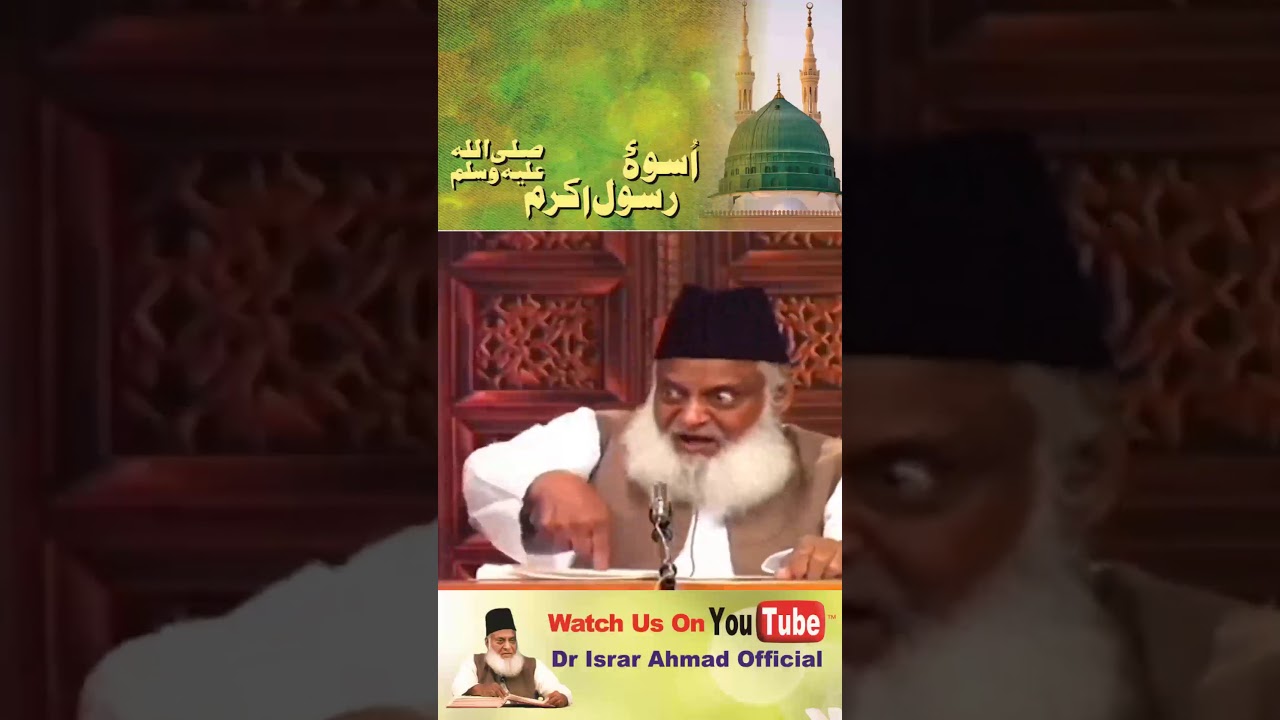
This lecture clarifies the true meaning of ‘Uswa-e-Hasana’ (the excellent example) as revealed in the Quran, specifically during the Battle of the Trenches. It moves beyond superficial interpretations like simply growing one's beard or raising trousers above the ankles. The core of the prophetic example lies in actively confronting falsehood, even at the cost of life and possessions. True adherence to the Prophet's way is demonstrated through unwavering struggle against evil, not merely through ritualistic observance of religious practices while remaining complacent in the face of injustice. It challenges the notion of a comfortable faith and emphasizes the proactive struggle against falsehood as the essence of the prophetic example.
107

The speaker clarifies the distinction between legitimate leasing (ijara) and purchases financed through interest (riba). Leasing involves renting an asset for a specified period, with the renter paying a monthly fee and covering operational costs. In contrast, an interest-based purchase involves financing the full price of an asset over time, accruing interest on the outstanding amount. The speaker emphasizes that financing a purchase with interest, even if labeled differently, constitutes riba and is prohibited. Legitimate leasing does not involve any form of interest or profit on the asset itself, only a rental fee for its use. The discussion highlights that changing the label of an interest-based transaction does not alter its fundamentally prohibited nature.
71
