Calção
A true believer's purpose is to proclaim the greatness of their Lord. This isn’t merely reciting ‘Allahu Akbar,’ but understanding and embodying the declaration of God’s supremacy and uniqueness. The continuous remembrance of God, whether through glorification or worship, permeates all of creation – from the expanse of the universe to the smallest particle. This constant declaration of divine greatness, and the fulfillment of it through action, is what defines a righteous life. Failing to align words with deeds invites divine displeasure. The video explores this concept with reference to the verse highlighting the severity of hypocrisy.

52

God dispatched messengers with clear miracles and revealed scriptures, including the ‘Mizan’ (scale of justice), to establish justice among people. The purpose of prophets, messengers, and the revelation of books is fundamentally to guide humanity toward equitable conduct and a just society. This lecture explores the divine rationale behind these actions and their impact on human existence.
40
Human beings inherently seek to reassure their conscience, even those seemingly immersed in wrongdoing. This lecture explores the universal need to perform some act of goodness, offering a psychological solace amidst a life potentially dominated by negativity. The poet’s verse highlights how a continuous self-deception—finding justification in minor acts while overlooking greater failings—is essential for sustaining life, allowing individuals to cope with their inherent imperfections. The pursuit of goodness, however small, serves as a vital mechanism for maintaining psychological equilibrium.
62
This lecture details three elements that lead to salvation and three that lead to destruction. Salvation is achieved through fear of God in both private and public, speaking the truth regardless of anger or pleasure, and fulfilling one’s obligations. Destruction stems from following one's desires, excessive love of wealth, and self-admiration. The most destructive of these is a bloated ego and considering oneself superior.
46
The Prophet Muhammad (peace be upon him) emphasized that fulfilling Zakat is not merely about giving a fixed portion of wealth. It is an acknowledgement that Allah has a right in our possessions beyond just the obligatory Zakat. The Quran highlights spending on relatives, orphans, the needy, travelers, and freeing slaves as acts of righteousness. Zakat is a pillar of Islam, akin to prayer in strengthening faith. The ability to spend in the path of Allah is sustained through the practice of Zakat as an act of worship. It is not simply about wealth redistribution, but about purifying one's soul and fostering spiritual growth.
108
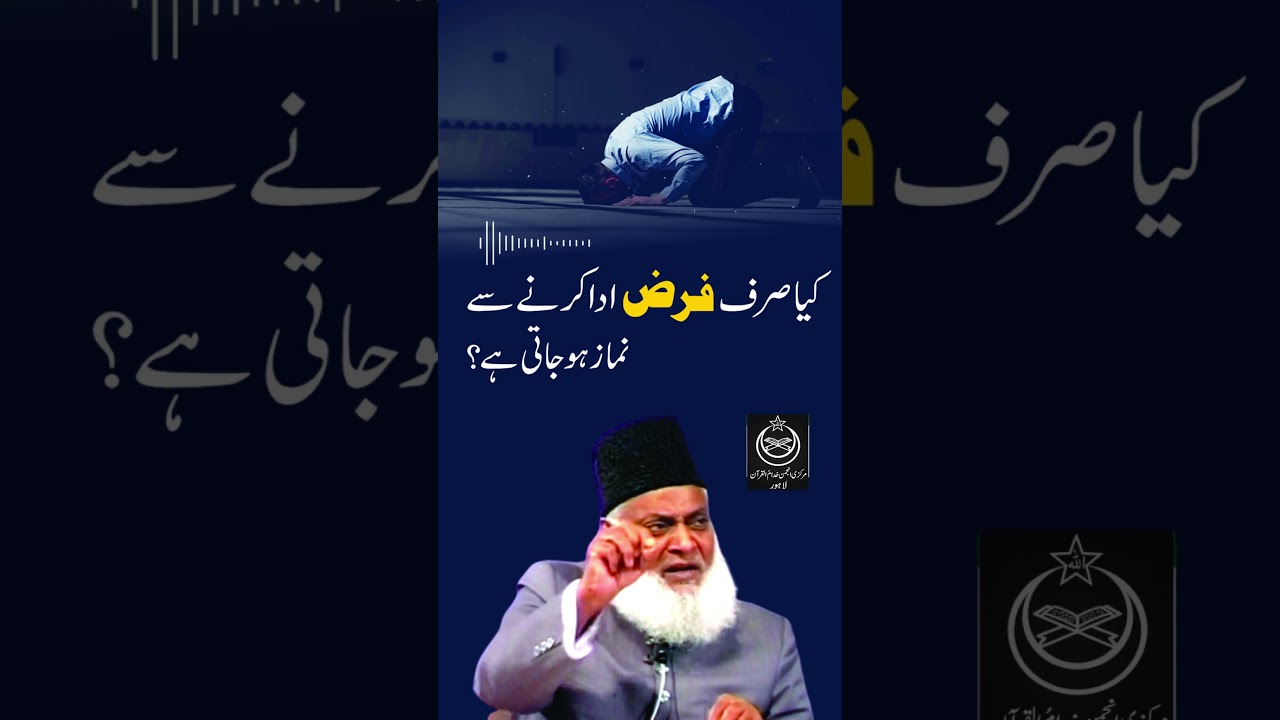
This lecture clarifies that fulfilling obligatory prayers is the minimum requirement for prayer. While fulfilling obligations is essential, incorporating voluntary prayers (sunnah and nafl) adds depth to one's spiritual practice. The speaker categorizes these voluntary acts based on their emphasis by the Prophet Muhammad, differentiating between those regularly practiced (sunnah mu’akkadah), those practiced occasionally (sunnah ghair mu’akkadah), and other optional prayers (nawafil). It’s recommended to participate in these supplementary prayers to the extent possible, aligning with the guidance of the Prophet and within the bounds of one’s time.
156
