Shorts
This lecture explores the negative characteristics of arrogance and miserliness, highlighting their spiritual and societal harms. It details how pride often stems from a fear of losing wealth and status, leading to stinginess and discouraging generosity. The lecture further explains how individuals consumed by these traits not only hoard their possessions but also encourage others to do the same, fearing criticism for spending. Ultimately, it warns of the severe consequences awaiting those who persist in these behaviors, emphasizing the importance of humility and generosity as virtues pleasing to God.

52
This lecture discusses the application of *purdah* (modesty/seclusion) within a joint family system. Dr. Israr Ahmad explains that while strict adherence to *purdah* as practiced between separate households isn't possible, certain guidelines can be followed. These include avoiding direct face-to-face interaction between a younger brother's wife and her husband’s elder brother, maintaining distance, and ensuring privacy during work or activities where unrelated men may be present. The discussion uses an example of a woman working while maintaining *purdah* from male relatives and outsiders.
83

This lecture explores the spiritual state of having one’s heart opened by God for Islam, contrasting it with the darkness of spiritual hardness. It highlights that divine guidance illuminates the heart, providing inner understanding and a connection with God. Those who reject this guidance and whose hearts become hardened against remembrance of God face destruction and are clearly astray. The lecture emphasizes that a receptive heart is essential for faith and spiritual growth, while a hardened heart leads to misguidance and ultimate loss.
80
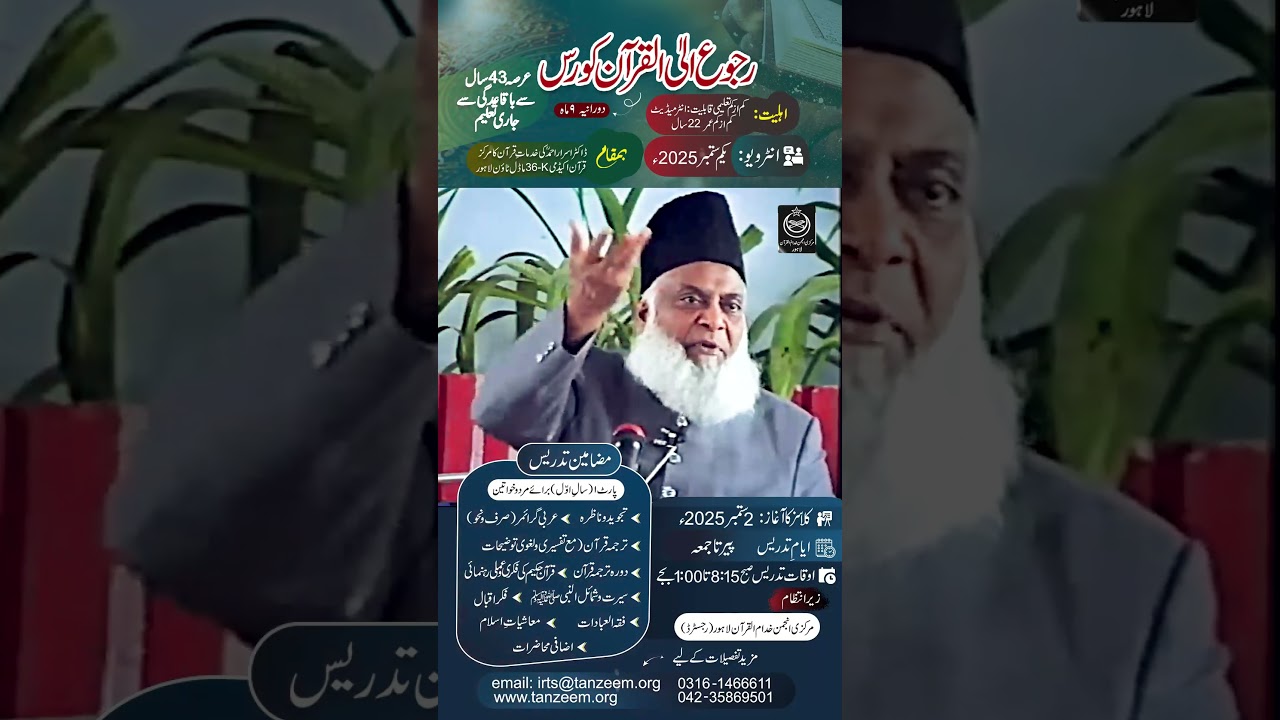
This lecture emphasizes the necessity of personal repentance (tawbah) and its expansion into a collective movement. It urges listeners to prioritize learning Arabic to properly understand and convey the Quran, as the primary medium for inviting others to the faith. The speaker stresses the urgency of life, the potential for unforeseen circumstances, and the importance of dedicating time to religious education and the preparation of a dedicated group (da'i) committed to spreading the message of Islam. He shares his life's dedication to Quranic study, teaching, and the organization of a committed group, viewing this as a vital struggle for the faith. The ultimate goal is the growth of a movement devoted to upholding and propagating Islamic principles.
58

The gathering of a nation within the ‘Houses of God’ – primarily mosques, but extending to any place where the remembrance of God occurs – is a source of divine tranquility. Those assembled recite and contemplate the Quran, leading to the descent of divine peace, God's mercy, and the encirclement by angels. God takes pride in these devoted individuals, acknowledging their pursuit of understanding His word. This highlights the special status of those who gather solely to comprehend divine revelation.
81

The Quran emphasizes the husband's role as a protector and provider within marriage, requiring the wife’s obedience unless the command involves sin. It highlights that righteous wives are obedient to their husbands, but obedience is not required in matters of disobedience to God. Husbands are responsible for guiding their wives towards righteousness and maintaining a just and loving relationship. This lecture clarifies the rights and responsibilities within a marital bond, emphasizing the importance of mutual respect and adherence to divine guidance.
121
