السراويل القصيرة
This lecture clarifies the significance of Shab-e-Barat based on authentic hadith. It explains that the Prophet Muhammad (peace be upon him) would visit the Baqi graveyard to seek forgiveness for the deceased. The speaker emphasizes that while night-long worship is virtuous, celebrating with fireworks and imitating Diwali practices are not part of Islamic tradition. Fasting on the 15th of Sha'ban is also discussed, linking it to the Prophet’s regular practice of fasting on the 13th, 14th, and 15th of each lunar month. The core message is to focus on sincere worship, seeking forgiveness, and remembering the deceased.

77
This lecture explores the concept of trials and tribulations in Islam, emphasizing that faith is not simply declared but proven through hardship. The speaker discusses how difficulties serve as a test to distinguish sincere believers from those who merely claim belief. The discussion references verses from Surah Al-Baqarah, Surah Al-Imran, and Surah At-Tawbah, highlighting the importance of enduring trials with patience and steadfastness. It explains that true faith is demonstrated through facing adversity and remaining firm in one's beliefs, rather than expecting exemption from challenges. The core message is that tests are not punishments, but opportunities to strengthen one’s faith and purify the soul.
70
The text addresses the question of resurrection and the origin of life, arguing that if a creator initially fashioned existence from humble beginnings, replicating that creation is demonstrably easier the second time. It posits that the initial act of creation is the most challenging, while subsequent iterations are simplified. The argument extends to all of creation—from scientists like Einstein and Newton to prophets and saints—all originating from the same source and thus potentially recreatable.
44
This lecture emphasizes the importance of dying in a state of submission to God. It cautions against the dangers of dying while disobeying divine commands, highlighting that repentance may not always be possible before death. The speaker uses examples of individuals who died in states of disobedience, such as intoxication, to illustrate the gravity of the situation. The ultimate message is to live a life of constant vigilance and obedience, ensuring that death finds one in a state of faith and submission. Every moment should be guarded against transgression, and a life dedicated to God’s commands is essential for a peaceful and accepted death.
64
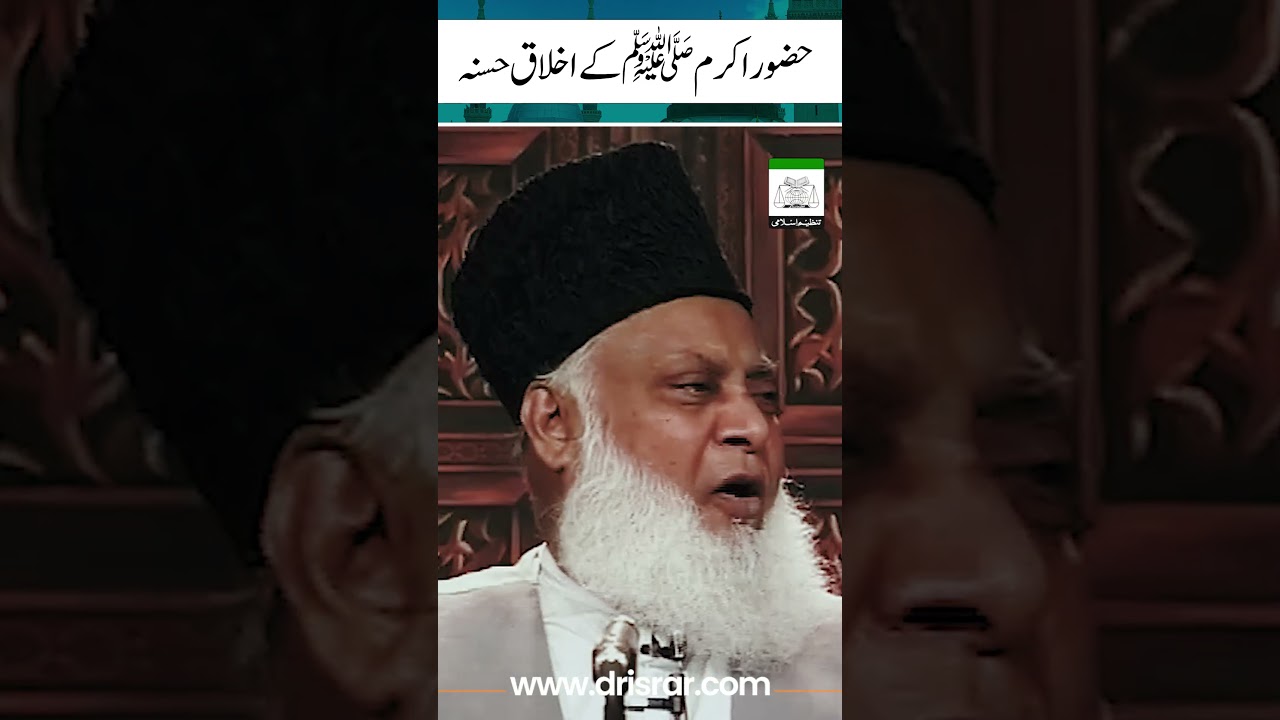
Dr. Israr Ahmad discusses the Prophet Muhammad’s (peace be upon him) remarkable humility and integration with his companions. He emphasizes the Prophet’s deliberate choice to present himself as an ordinary human being, eschewing any display of special status or privilege. The Prophet actively discouraged people from standing upon his arrival and mingled freely with his followers, sitting among them without distinction. This demonstrated a profound commitment to equality and accessibility, fostering a sense of unity and brotherhood among the early Muslim community. The speaker highlights that the Prophet’s approach was a conscious effort to remove barriers between himself and his companions, encouraging genuine connection and spiritual growth.
39

Allah tests nations with hardship to make them receptive to guidance. When people are comfortable, they are less likely to listen to truth. Divine strategy involves initial difficulty, followed by respite if they still refuse to heed the message. This pattern continues until a point of no return, after which blessings are withdrawn permanently. The lecture urges listeners to reflect on this cycle and to make the most of opportunities for positive change before it’s too late. It’s a warning against complacency and a call to embrace guidance while it’s available.
60
