Shorts

Dr. Israr Ahmad discusses a common misconception regarding fasting during travel. He clarifies that rigidly adhering to a fast while severely weakened or during hardship is not a virtuous act but a form of self-inflicted extremism. The lecture highlights an incident during a military expedition where those observing fasts collapsed from exhaustion while others efficiently established camp. He explains that such rigid adherence stems from a flawed understanding of piety and can lead to harmful, self-destructive behavior. The key message is that religious observance should not cause undue hardship or compromise one’s ability to fulfill responsibilities, and that flexibility is essential when circumstances demand it.

99

This lecture emphasizes a direct relationship with God, negating the need for intermediaries. It highlights the importance of constant remembrance and sincere connection through reflection and contemplation. The speaker stresses that God is always accessible and responsive to those who earnestly seek Him. The lecture encourages listeners to move beyond ritualistic practices and cultivate a deep, personal connection with the Divine. It urges constant awareness of God’s presence in every moment, emphasizing that every moment could be one’s last. The speaker draws a parallel to Iqbal's philosophy, advocating for the removal of barriers between the Creator and creation and urging a direct connection unmediated by dogma or external structures.
46
This lecture explains the unique significance of Ramadan. It highlights that Ramadan is a time when Allah makes it easier to perform good deeds and more difficult to indulge in evil. The month offers open doors to divine mercy and encourages individuals to progress on the path of righteousness. It is a call to seize the opportunities for spiritual growth and avoid falling short of the blessings available during this sacred month. The lecture emphasizes that Ramadan facilitates advancement for those inclined towards goodness and creates obstacles for those inclined towards evil.
82
Human existence is defined by aspiration and purpose. Every individual has an ideal or a driving force. Those solely focused on basic needs – eating, procreating, and raising children – live on a purely instinctual level, akin to animals. True humanity lies in defining a higher purpose, particularly the love and devotion to God. This lecture emphasizes that the ultimate purpose of life is to seek and love God, making Him the sole objective and desire. Living and dying should be dedicated to this pursuit.
57
This lecture focuses on the profound meaning and spiritual significance of the phrase "Allah Akbar." Dr. Israr Ahmad elaborates on its implications for a believer’s life, emphasizing its connection to gratitude, humility, and the recognition of God’s greatness. He explains how the consistent remembrance of God through this declaration can transform one’s perspective and lead to inner peace. The discourse underscores the importance of aligning one’s actions with the acknowledgment of God’s supreme power and mercy, fostering a deeper spiritual connection and a life guided by faith.
63
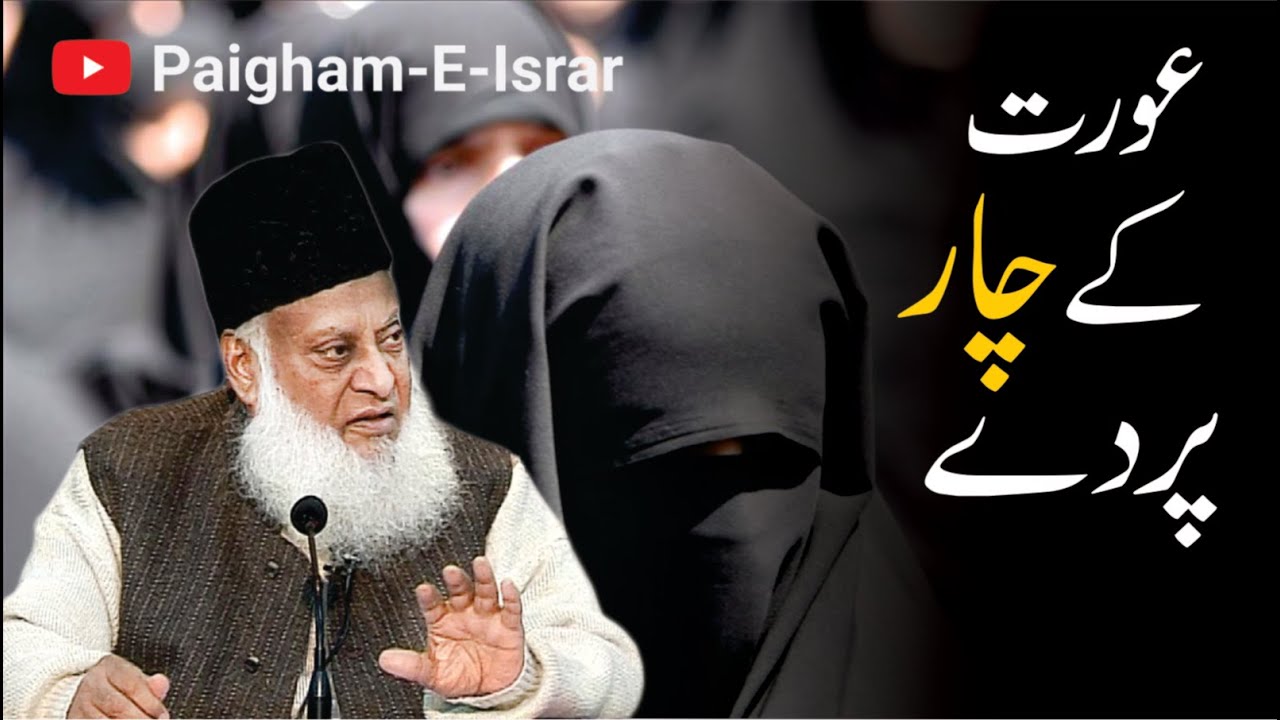
This lecture details the four levels of modesty (pardah) prescribed in Islam. The first level involves segregation of genders in social settings. The second concerns appropriate attire when leaving the home, evolving from the jilbab to the burqa for increased ease and protection. The third level restricts access to the home to only close male relatives (mahram). Finally, the fourth level mandates covering the entire body even before mahram relatives, leaving only the face, hands, and feet exposed. The speaker emphasizes that these principles are being eroded in modern times, representing a deliberate attack on Islamic teachings.
75
