מִכְנָסַיִים קְצָרִים
This lecture explores the concept of *talaawat* beyond mere recitation, emphasizing its true meaning as actively following the Quran's guidance. The speaker explains how beginners often rely on physical aids like fingers to maintain focus while reading. True *talaawat*, however, involves making the Quran one’s leader, adhering to its principles, and seeking its light. This entails complete submission and following its path, as expressed in the prayer for the Quran to be an Imam, a source of light, guidance, and mercy.

53
Parents deserve kindness and respect as a natural obligation for their nurturing, especially a mother’s sacrifices. However, obedience to parents does not extend to accepting commands that contradict faith or morality. While good conduct, service, and respect are essential, adherence should be to the path of righteousness, not blind obedience. The core principle is honoring parents while remaining steadfast in one’s faith and ethical principles. True respect lies in guiding them towards the right path, not following them into wrongdoing.
63
This lecture addresses the importance of individual engagement with religious teachings and self-reflection. It critiques the professionalization of religious roles, arguing that every Muslim should be capable of leading prayers, performing marriage ceremonies, and conducting funeral rites. The speaker emphasizes that religious knowledge and practice should not be limited to a select few, but accessible to all Muslims. The core message urges listeners to examine their own faith and commitment to religious principles instead of criticizing religious scholars.
228

This lecture explores the historical development and varying scholarly opinions regarding the Taraweeh prayer. It details how the Prophet Muhammad (peace be upon him) practiced Taraweeh, focusing on the practice of eight rak'ats followed by Tahajjud. The discussion highlights the practice established during the Caliphate of Umar ibn al-Khattab, which introduced twenty rak'ats performed immediately after Isha prayer with a single Imam. The lecture clarifies that the four major schools of Sunni Islamic jurisprudence – Hanafi, Maliki, Shafi'i, and Hanbali – concur with the practice established by Umar. It also addresses the differing views of the Ahl-e-Hadith, who maintain the original practice of eight rak'ats. The lecture emphasizes the importance of adhering to the Sunnah of the Prophet and the rightly guided Caliphs, as well as the scholarly consensus on the practice of twenty rak'ats, which is observed in the two holy mosques of Mecca and Medina. The lecture also acknowledges Ahmad ibn Hanbal as a prominent scholar and the importance of his Musnad.
122
This lecture details the events leading up to the creation of Pakistan. It highlights Jinnah’s initial stance of a ten-year unified India with three zones, the opposition from Gandhi who believed Pakistan’s formation depended solely on his consent, and the British government’s animosity towards Italy. The lecture also recounts Maulana Hussain Ahmed Madani’s prediction, made during Ramadan 1946, that the decision for Pakistan's establishment had been finalized within the Majlis-e-A'la. It emphasizes the historical context and key figures involved in the Pakistan Movement.
67
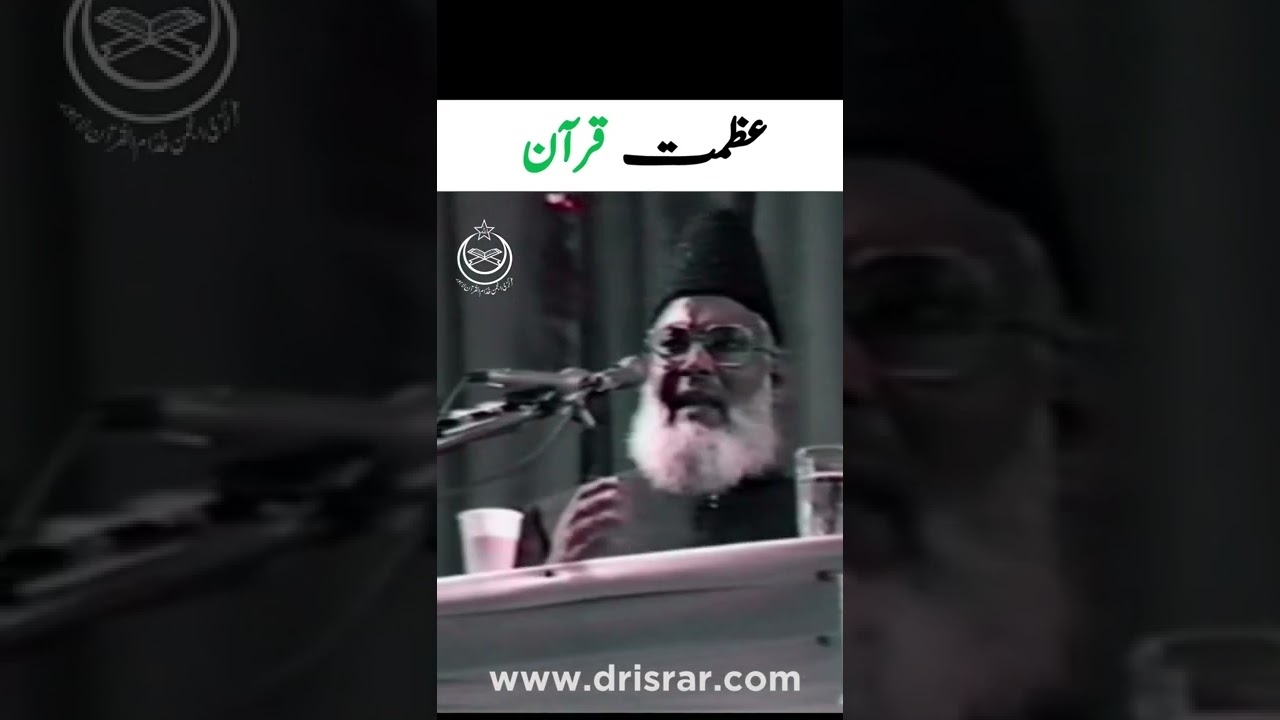
The Quran fundamentally transforms an individual's worldview. Before encountering the Quran, a person might perceive the universe as a random, self-operating system driven by mindless matter. Afterwards, they recognize the existence of a single God – Allah – who is all-powerful, all-knowing, the Sustainer, and the Creator and Director of the universe. This realization shifts perspective from accidental creation to purposeful design and divine governance.
58
