Shorts
Human existence begins with a call to prayer at birth and concludes with a prayer upon death, differing only in the formalities of the *adhan* and *iqamat*. The time between these two prayers mirrors the brevity of worldly life. This lecture explores the concept that life is essentially the interval between the initial announcement of existence and the final prayer offered at its conclusion, emphasizing the transient nature of earthly existence and the importance of preparing for the afterlife. The formalities observed at birth and death—the *adhan* and *iqamat* at birth and the funeral prayer without them at death—highlight the fundamental transition between these two states.

58
The lecture discusses the origins of Islam, emphasizing its initial state of being foreign and unfamiliar. It highlights how Allah granted Islam dominance and power, but warns of a potential return to its original state of isolation if individuals distance themselves from its principles. The speaker congratulates those who remain connected to Islam, despite facing potential alienation and lack of support from their surroundings. The message underscores the importance of remaining steadfast in faith to avoid becoming outcasts.
60
This lecture emphasizes accountability for the faculties of sight, hearing, and intellect. Individuals will be questioned about how they utilized these gifts. It highlights the importance of observing the universe, acquiring knowledge, and employing reason. Neglecting these capabilities will be subject to divine questioning. The message underscores the responsibility humans bear in utilizing their inherent cognitive and sensory abilities for understanding and reflection.
43
Dr. Israr Ahmad explains that indirect interest (andariki sood) permeates modern life, extending beyond direct loans to encompass nearly all commodities due to interest-based funding at various stages of production. He argues that even consuming basic necessities like wheat involves participating in a system fueled by interest. The only atonement for this unavoidable involvement is a dedicated effort to transform the existing system into one that eradicates interest completely. He stresses that escaping the pervasive influence of indirect interest is impossible without systemic change.
80
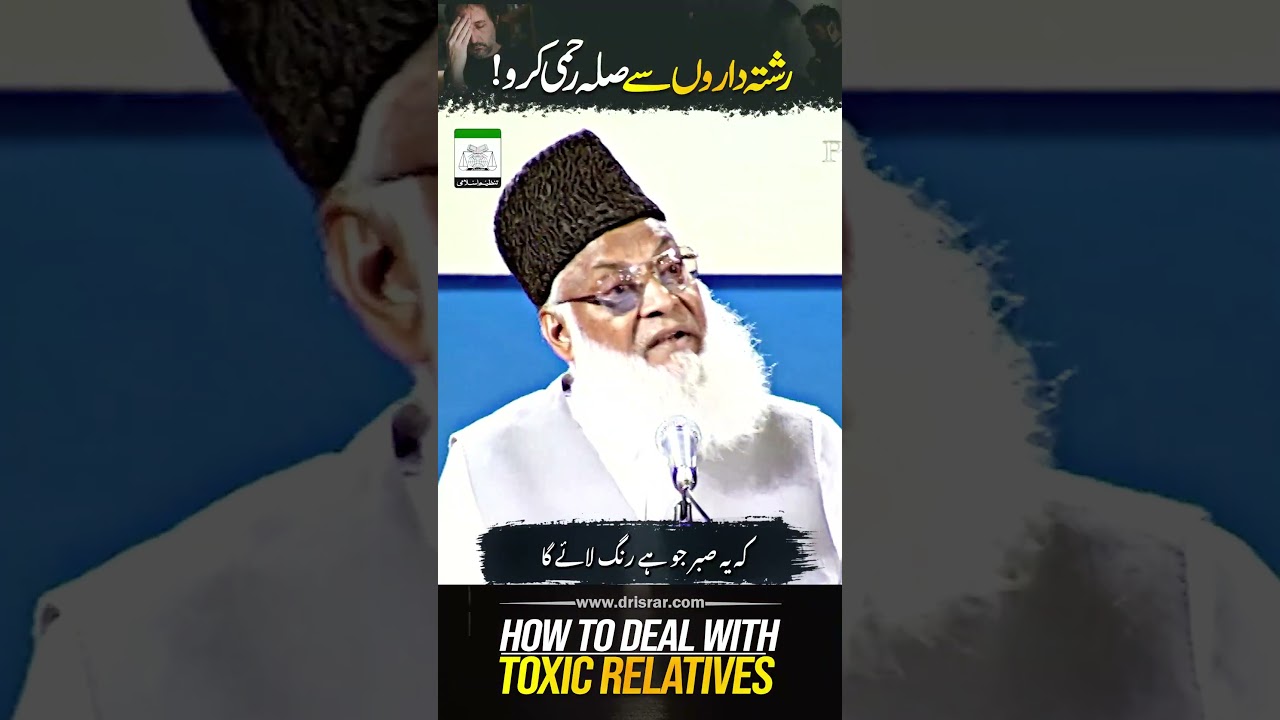
This lecture emphasizes the immense reward for exercising patience with difficult relatives. It asserts that enduring their misbehavior with forbearance will yield double the reward. The lecture clarifies that the good deeds earned through patience will be transferred to those who wronged you, while their sins will be deducted from your account on the Day of Judgment. Therefore, one should not abandon fulfilling their familial obligations and should actively resist the urge to cut ties, even in the face of adversity.
55
This lecture clarifies the concept of *shirk* (associating partners with God) as a profound injustice. It explains that *shirk* manifests in two ways: diminishing God's supreme status to the level of creation, or elevating a creation to the level of God. Both forms are described as a grave transgression and a significant injustice, as they displace something from its rightful place.
58
