Shorts
This lecture emphasizes dedicating one’s God-given eloquence and knowledge solely to the explanation and propagation of the Quran. It cautions against utilizing these gifts for personal financial gain or worldly pursuits. The speaker highlights that the best among people are those who learn and teach the Quran, understanding and conveying its message to others. True benefit lies in seeking and sharing religious knowledge.

380
Historically, exploitative systems thrived where rulers demanded half of the agricultural yield from laborers, funding lavish lifestyles and standing armies to suppress dissent. This system, characterized by forced charity and religious manipulation, contrasted sharply with the Islamic concept of Zakat, intended for the welfare of the poor, not the enrichment of rulers. The lecture details how Islam eradicated this exploitative feudalism, replacing it with a system prioritizing social justice and equitable distribution of wealth.
52

This lecture explores the profound connection between the call to prayer (azan) at birth and the funeral prayer (salat-e-janaza) at death. It posits that life is an interval mirroring the time between the azan and iqamat preceding a prayer, and the prayer itself. The speaker draws a parallel between the commencement of life, marked by the azan, and its conclusion, represented by the funeral prayer, highlighting the transient nature of worldly existence. Life is presented as a brief pause between these two spiritual occurrences, emphasizing the temporary nature of this world.
41
The Quran does not contain a direct command regarding beards. However, the Quran mentions the beard of Pharaoh, which Moses grasped. The practice of maintaining a beard is considered a tradition (Sunnah) of all prophets, and strongly emphasized by the Prophet Muhammad. While not a mandatory obligation (fard) in the Quran, it is a confirmed Sunnah (Sunnat-e-Muakkadah) and, according to some scholars, approaches the level of a religious obligation (wajib). Following this confirmed Sunnah is recommended, though not considered a mandatory religious duty.
64
The Quran places significant emphasis on the observance of Salah (prayer) and Zakat (charity), repeatedly outlining their importance. While the verses detailing the complete regulations for fasting are concentrated in Surah Al-Baqarah, references to fasting are often limited to instances requiring expiation. Unlike fasting, the Quran consistently presents Salah and Zakat as independent, fundamental obligations. The repeated emphasis on these two pillars suggests their central role in Islamic practice and faith.
51
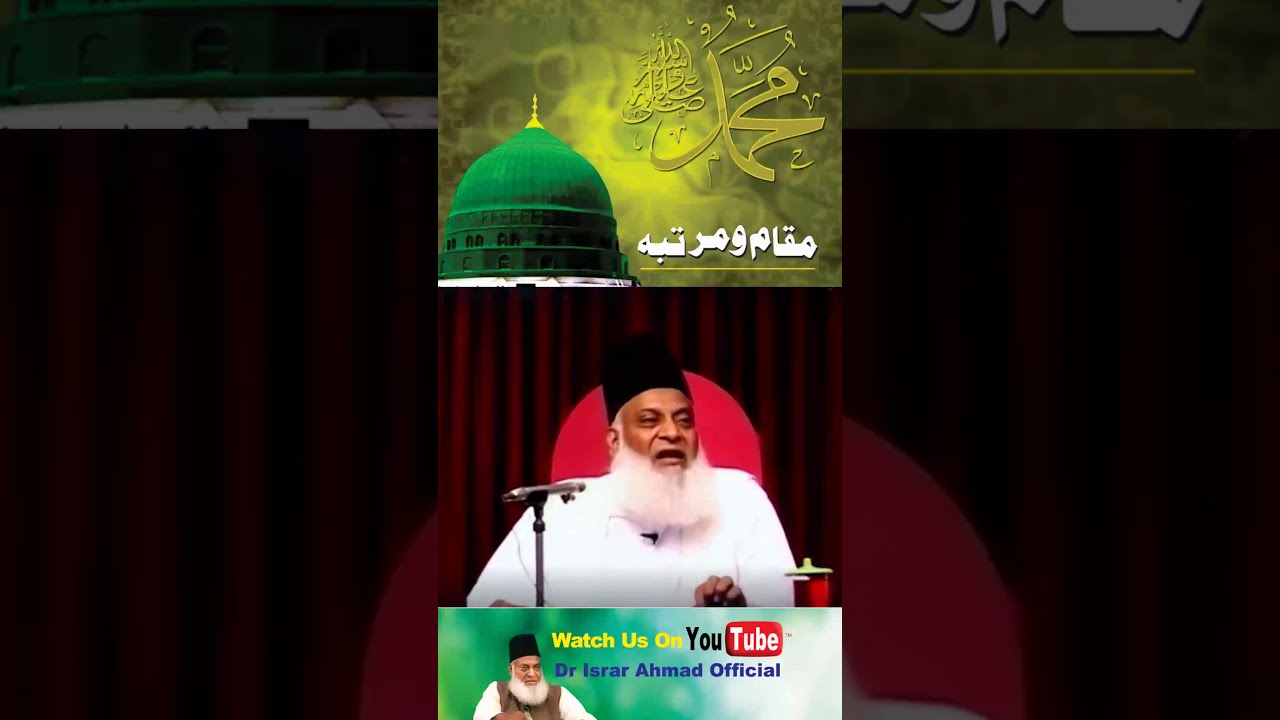
This lecture explains that determining the precise status of an expert in any field can only be done by someone superior in that same field. Applying this principle, no prophet can fully comprehend the elevated status of Prophet Muhammad ﷺ, as no one surpasses him. The lecture emphasizes that understanding the true rank of Prophet Muhammad ﷺ is beyond the capacity of any being, including other prophets, and is a matter of faith for the common person.
73
