निकर

This lecture discusses the significance of sacrificial animals in Islam, specifically during Hajj and Eid al-Adha. It explains that these animals represent symbols of devotion to God and foster a spiritual connection. The benefits derived from these animals, such as milk and other resources, are permissible, highlighting the inherent goodness and blessings within the act of sacrifice. The practice reinforces faith and strengthens the believer’s relationship with the Divine.

50

This lecture explores the profound roles of two significant women in Islamic history: Fatima bint al-Khattab, who profoundly influenced Umar ibn al-Khattab, and Fatima bint Muhammad, mother of Hasan and Hussein. It highlights how a Muslim woman can fully realize her potential within the boundaries of Islamic teachings, exemplifying strength, influence, and nurturing. The discussion emphasizes the unique contributions of these women and their lasting impact on Islamic society and the lives of believers.
51

This lecture discusses the fundamental belief that adhering to the principles of Islam in this world will secure salvation in the afterlife. It emphasizes that recognizing God through innate disposition and reason, accepting the Prophet’s call, and living a life of faith establishes one as among the most honorable of humanity. The speaker argues that a sincere connection with the divine, established through both intuition and intellect, guarantees a reserved place in Paradise.
54

This lecture explores the profound and ineffable status of Prophet Muhammad (peace be upon him). Dr. Israr Ahmad cautions against attempting to fully comprehend or articulate this status, emphasizing its transcendence of human understanding. He draws a parallel to a rural man’s limited worldview, represented by his highest reference point being a local land administrator, to illustrate the human inability to grasp divine realities. The speaker highlights that any attempt to define the Prophet’s status risks diminishing it, and true reverence lies in acknowledging its sacredness and submitting to divine knowledge.
66
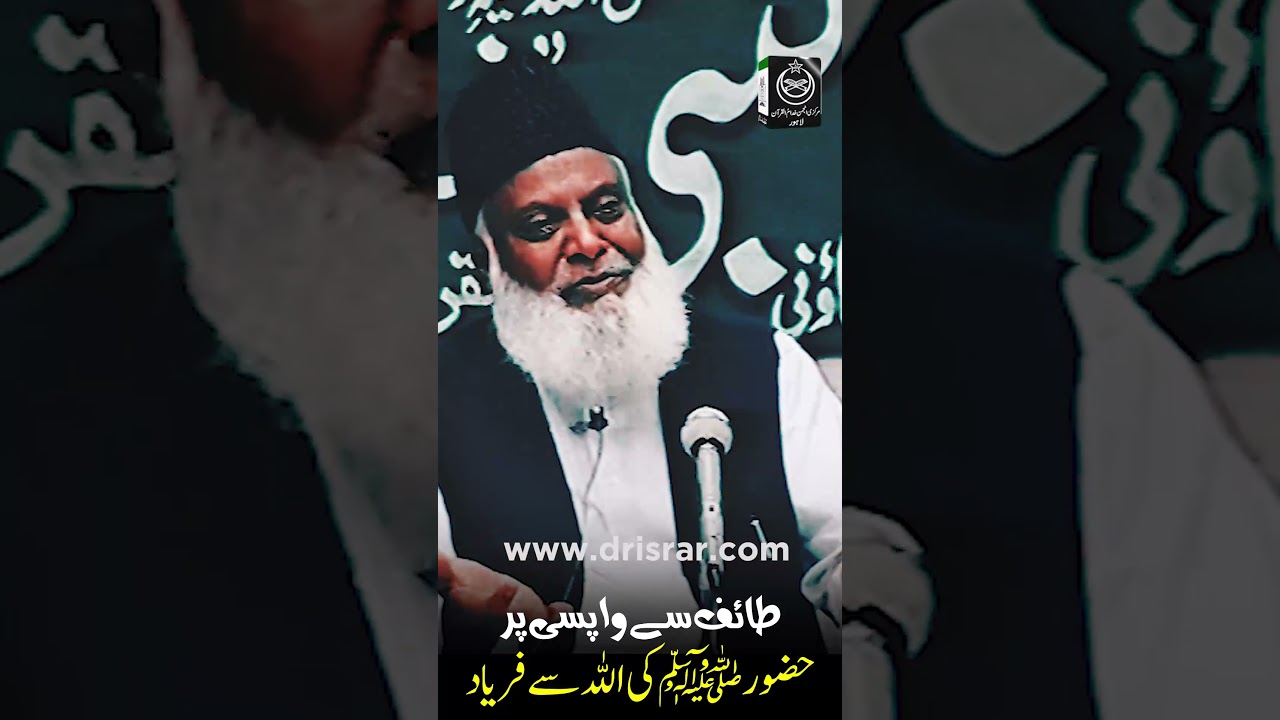
This lecture details a profound moment of supplication by the Prophet Muhammad (peace be upon him), expressing vulnerability and seeking divine assistance amidst adversity. The Prophet articulates his powerlessness, the humiliation faced, and the feeling of being abandoned to his enemies. He then humbly submits to God’s will, stating that he has no concern even if it means divine displeasure, as long as God’s decree is accepted. The lecture emphasizes complete surrender and trust in God's plan, even in the face of hardship and perceived injustice. It highlights the essence of *'ubudiyyat* (servitude) and accepting whatever comes from the Divine Source.
47

This lecture explains the collective responsibility of the Muslim community to propagate the message of Islam, building upon the prophetic mission. It emphasizes that after the finality of prophethood, this duty falls upon the entire Ummah. The core message is to first reconnect with faith and then extend its invitation to family, close relatives, and ultimately, all of humanity. The lecture highlights the importance of a collective strength within the Ummah to effectively convey the message and protect themselves and others from divine punishment. It stresses the need to prioritize personal and familial faith before extending outreach to a wider audience, echoing the Quranic instruction to warn close relatives first.
45
