শর্টস

The lecture emphasizes the importance of reciting the Quran with a beautiful voice. It states that those who do not attempt to recite the Quran melodiously are not considered among the believers, referencing a hadith encouraging beautification of Quranic recitation with one's voice. Utilizing a gifted voice during recitation enhances the Quran’s inherent beauty and provides a unique experience to the listener.

53

Effective training requires both encouragement and warning. Sometimes, firm discipline is necessary to correct behavior, while other times, positive reinforcement builds confidence and unlocks potential. The Quran utilizes both approaches – *tabshir* (giving glad tidings) and *anzar* (warning). Surah Al-Asr specifically highlights the consequences awaiting those who do not fulfill four conditions: faith, righteous deeds, advocating truth, and encouraging one another to uphold it. This lecture explores the balance between these methods and their importance in personal and societal development.
77

The Quran repeatedly emphasizes the core message delivered by prophets including Noah, Hud, Saleh, Lot, Shu'aib, Abraham, Moses, and Jesus: the singular worship of God. This lecture highlights that the fundamental purpose of humanity's creation, as stated in Surah Az-Zariyat, is to worship God. The prophets’ call consistently centers on the necessity of submitting to God’s will and recognizing His absolute sovereignty. The creation of both jinn and humankind was solely for the purpose of worship. This underscores a unified message throughout divine scripture: devotion to the one true God is the ultimate purpose of life.
66

This excerpt emphasizes the dangers of arrogance and pride. It highlights that boastful behavior and walking with conceit are displeasing to God. The passage explains that outward displays of power and attempts to assert dominance are ultimately futile and cannot elevate one to true greatness. True worth lies not in outward show, but in humility and recognizing one's limitations. This message reinforces similar teachings found in Surah Bani Israil, and underscores that material power and self-importance are insufficient to achieve spiritual elevation.
104

This lecture addresses the pervasive issue of interest (riba) and gambling (qimar) within Pakistan’s economic system, arguing they contradict the principles of Islam upon which the nation was founded. The speaker issues a strong condemnation of these practices, stating they undermine the entire fabric of society and jeopardize spiritual well-being. He warns that continued engagement with interest-based economics will lead to divine punishment. The lecture emphasizes that even seemingly harmless activities, if reliant on interest or gambling, contribute to a systemic problem. The speaker suggests that a return to Islamic principles is crucial for societal and individual salvation.
54
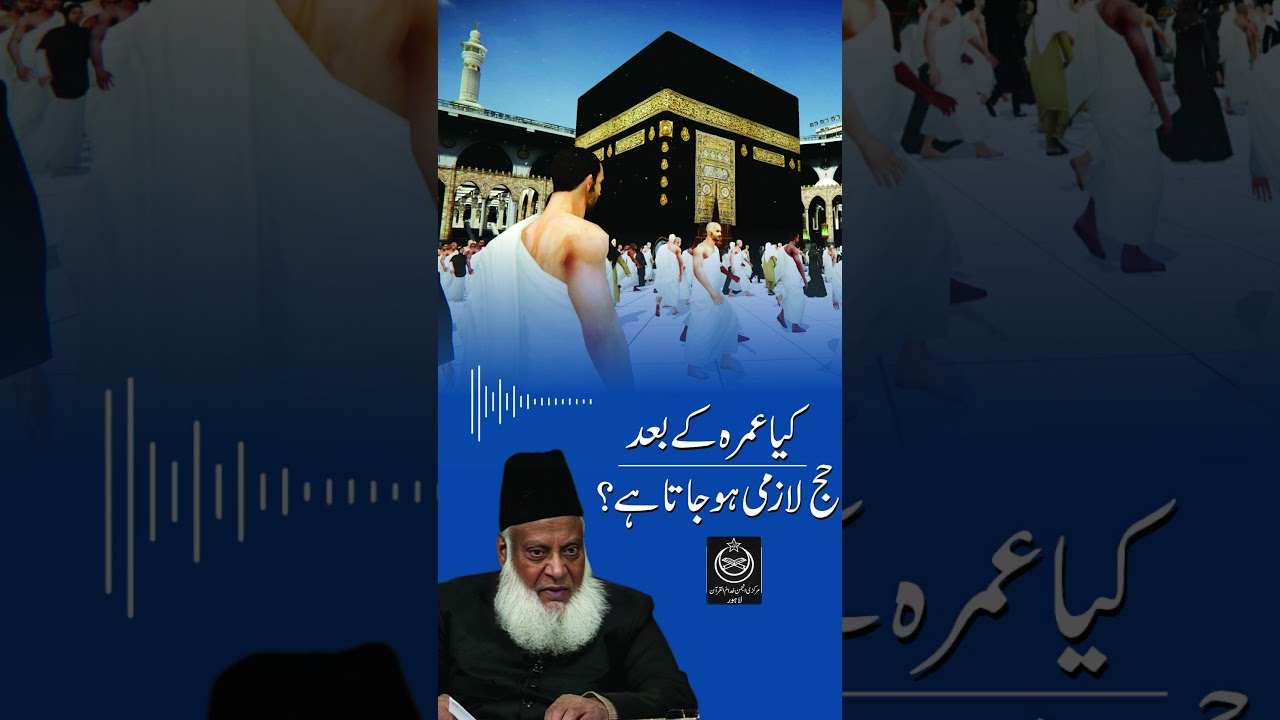
This lecture clarifies whether performing Umrah necessitates performing Hajj. It addresses the scenario of someone performing Umrah while on official government travel, funded by the state, and lacking the financial means for Hajj. The core point is that Umrah itself does not automatically make Hajj obligatory. However, if an individual possesses the financial capability, they should prioritize fulfilling the obligatory Hajj pilgrimage. The lecture emphasizes that if someone can afford to perform Hajj, it becomes an obligation upon them.
75
