Шорты
The Quran is unique among scriptures in its completely preserved text. Unlike other religious texts, the Quran's original form has been consistently maintained and memorized by generations of Muslims worldwide. This preservation isn't limited to written copies; a vast community of *huffaz* (memorizers) actively maintain the text through oral tradition, with even young children capable of correcting scholars. This consistent, multi-generational safeguarding represents a fundamental aspect of the Quran's significance, acknowledged even by those who do not believe in its divine origin. The Quran's textual integrity stands as an unparalleled phenomenon among religious books.

67

This lecture explains that seeking refuge in Allah is a natural human response to fear, mirroring a child's instinct to run to their mother for safety. The speaker draws a parallel between finding solace in a mother's embrace and finding guidance through connection with Allah. True guidance lies in clinging to Allah, as stated in the Quran, leading one to the straight path. The lecture emphasizes that Allah is the ultimate protector, supporter, and helper, offering strength and security. Connecting with Allah provides unwavering support and direction in life.
88
This lecture explains the concept of *istidraj*, a subtle form of divine punishment where a disbeliever experiences worldly success as a prelude to a harsher reckoning. It details how Allah allows those who reject His signs to accumulate blessings, not as a reward, but to increase their future condemnation. The lecture highlights the danger of mistaking worldly success for divine favor when one is actually straying from the truth. This deception leads individuals to believe they are on the right path while descending further into error. The process involves a gradual increase in sin, masked by apparent prosperity, until the person reaches a point of no return.
59
The text details the events of the Battle of Karbala. Twenty families from the Banu Hashim clan fought bravely alongside Imam Hussain, sacrificing their lives. The battle saw intense fighting, with many from the Banu Hashim martyred. A young child of Imam Hussain was also among the martyrs. All male members of Imam Hussain's household were killed except for his son, Ali Zayn al-Abidin, who was ill and unable to participate. This occurred in 61 AH, exactly fifty years after the passing of the Prophet Muhammad.
92
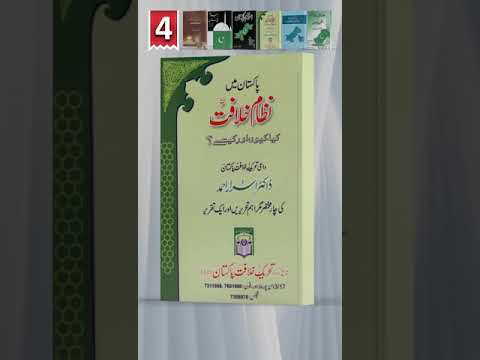
This collection of lectures by Dr. Israr Ahmad addresses critical questions about Pakistan’s history, ideology, and future. Topics include the legacy of the founder of Tanzeem-e-Islami, the viability of a caliphate system, the historical and political context of Islam in Pakistan, the factors contributing to Pakistan’s instability, and the reality of the Pakistan Ideology. The set also features Dr. Ahmad's analysis of Pakistan's political landscape from 1977 to 1987. Available for ₨1200 (originally ₨1900) from Maktaba Khuddam-ul-Quran, Lahore. Home delivery is free with cash on delivery. Order online at www.maktaba.com.pk or WhatsApp at 0301-1115348.
62
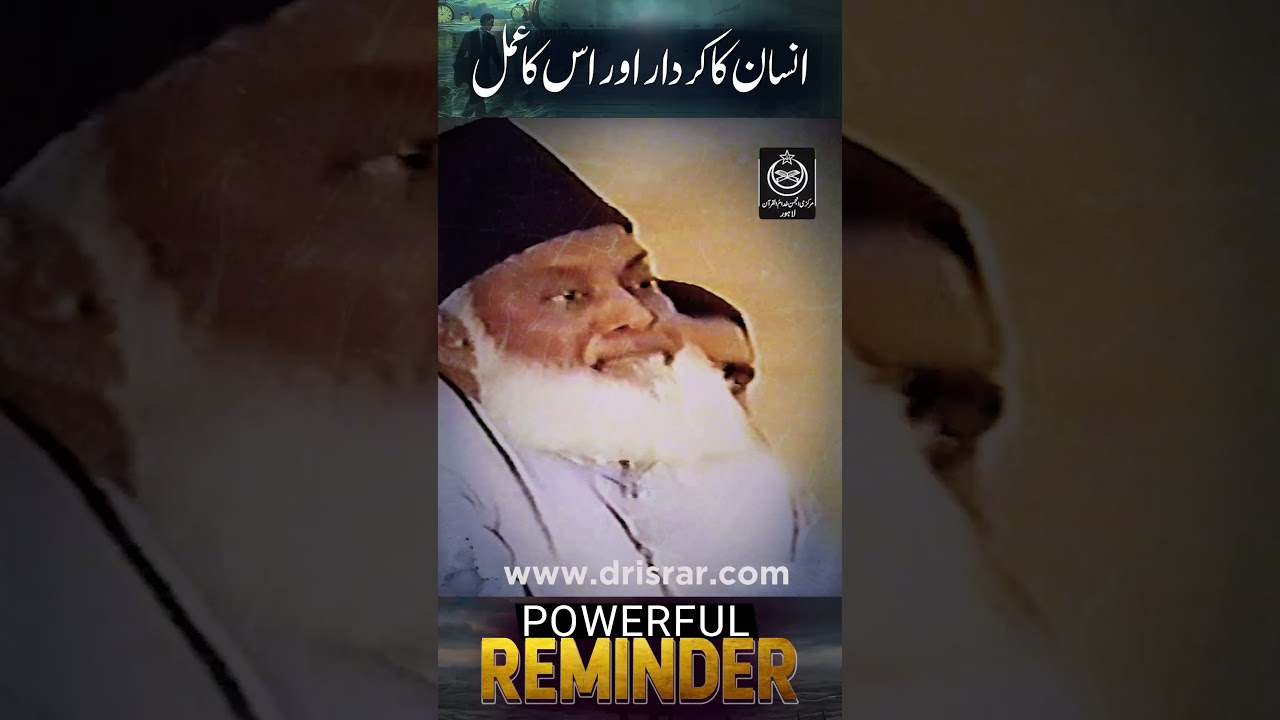
Human thought profoundly influences behavior, character, and deeds. Conversely, a person’s actions and character significantly shape their thinking. If knowledge and intellectual growth are not accompanied by corresponding action, a decline in character and thought can occur. A disconnect between intellectual understanding and practical application leads to stagnation and potentially a regression in personal development. Actions and character have a direct impact on one’s intellectual and spiritual progress.
68
