短裤
Human personality is comprised of two essential aspects: knowledge and thought, and action and character. These two are inextricably linked; a person’s beliefs and ideas manifest in their actions, ethics, and dealings. Correct action stems from sound thinking; flawed foundations lead to flawed outcomes. Limited thought results in limited action and character. A skewed initial approach inevitably leads to a distorted final result.

44
The core purpose of fasting is to turn towards God and engage in heartfelt supplication. This spiritual journey allows the human soul to ascend towards its origin. Throughout history, people have sought this connection through various practices, like seclusion and asceticism, driven by a deep longing for the Divine. The essence of this pursuit is a quest for God, a desire to find Him within oneself.
64
Humans are born equal, possessing inherent dignity regardless of race, ethnicity, gender, or social status. This equality is a fundamental principle, as highlighted by Allama Iqbal. Differences in status arise from acquired qualities like knowledge and piety, not from birth. True honor stems from devotion to God and righteous conduct, not from inherited characteristics. The Quran emphasizes that superiority is based on *taqwa* (piety), not on arbitrary distinctions like race or lineage. This concept rejects all forms of discrimination and promotes a society based on justice and merit.
69
This lecture emphasizes the transient nature of worldly life and the eternal significance of the Hereafter. It asserts that true life resides in the afterlife, urging listeners to prioritize preparation for it. The speaker highlights the fragility of existence, reminding viewers that death can occur unexpectedly. The discussion focuses on the importance of dedicating one's life to fulfilling either worldly needs or earning rewards for the afterlife, condemning actions devoid of these purposes as detrimental to faith. Ultimately, the message underscores the necessity of having unwavering belief in the ultimate reality of the afterlife.
119
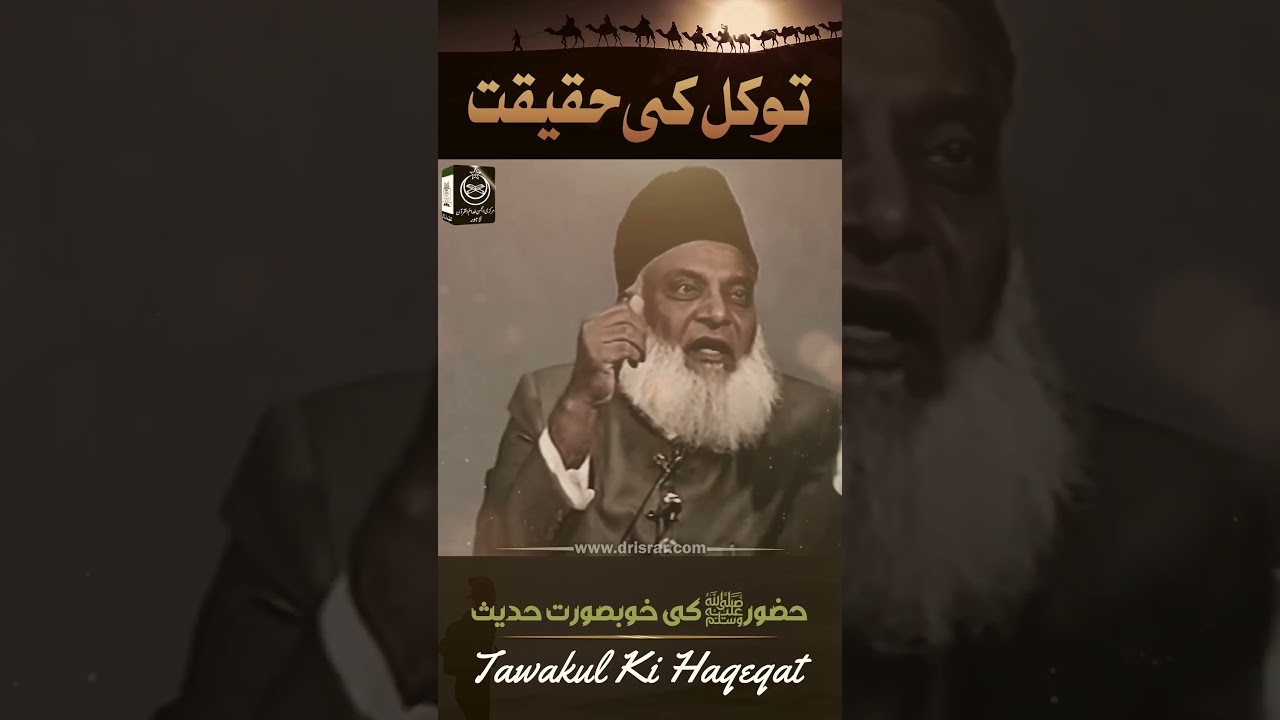
Dr. Israr Ahmad discusses the balance between intellect and emotion, emphasizing that while reason guides us in understanding goals and direction, it is passion that fuels action. He uses the analogy of an Arab Bedouin tying a rope to their camel’s leg to prevent escape, representing practical precautions. The Bedouin then ties the rope to their head to symbolize a commitment to a path, trusting in God after taking necessary steps. He illustrates this with the story of Prophet Ibrahim and the fire of Nimrod, highlighting that faith should not negate responsibility or practical measures. True devotion requires both action and reliance on a higher power, and prioritizing worldly survival over divine purpose is unacceptable.
57

The Quran repeatedly emphasizes the core message delivered by prophets including Noah, Hud, Saleh, Lot, Shu'aib, Abraham, Moses, and Jesus: the singular worship of God. This lecture highlights that the fundamental purpose of humanity's creation, as stated in Surah Az-Zariyat, is to worship God. The prophets’ call consistently centers on the necessity of submitting to God’s will and recognizing His absolute sovereignty. The creation of both jinn and humankind was solely for the purpose of worship. This underscores a unified message throughout divine scripture: devotion to the one true God is the ultimate purpose of life.
73
