ショーツ
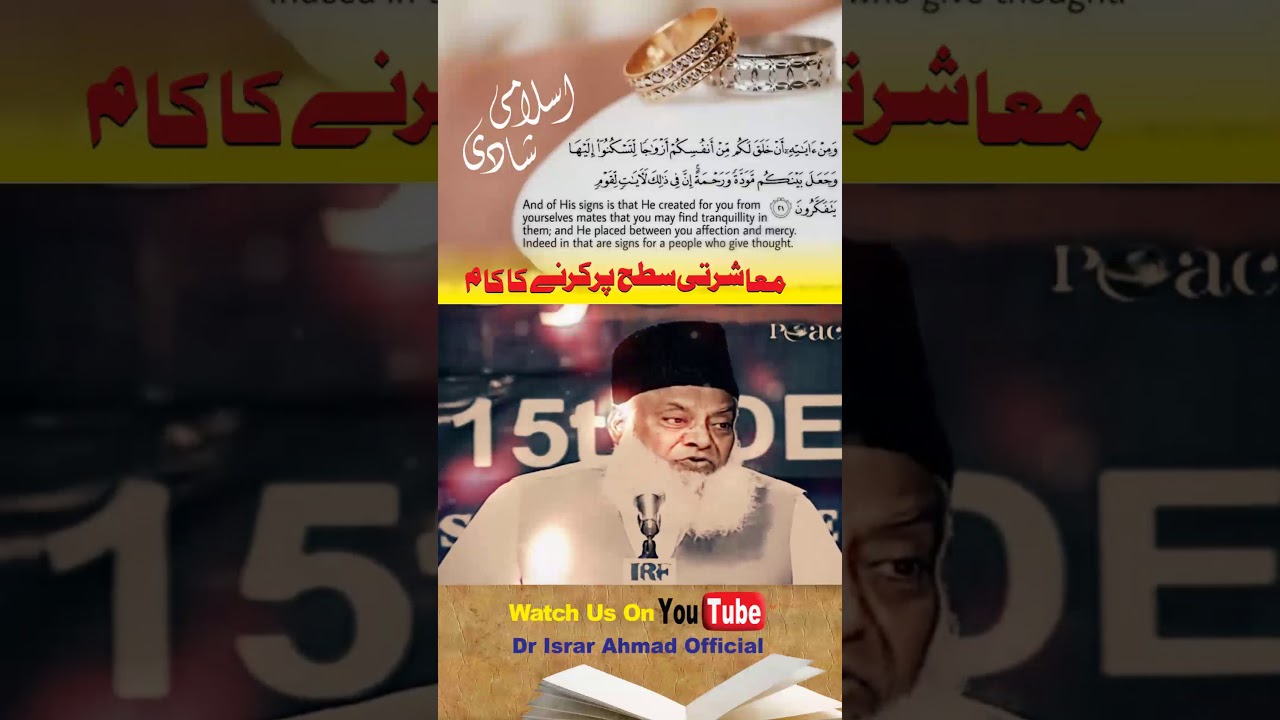
This lecture emphasizes adhering to the traditional Islamic method of marriage ceremonies, rooted in the practices of the Prophet Muhammad and his companions. It warns against incorporating innovations or customs not supported by authentic Islamic sources. The speaker stresses the importance of simplicity and rejecting practices that deviate from the established Sunnah, advocating for a return to the original, pure form of the marriage contract and celebration. Any social work related to marriage should align with these principles.

267
This lecture discusses the concept of personal allegiance (bayat) within a communal framework. It argues that a strong and cohesive group requires confidence in its leader, beyond mere adherence to a constitution or procedure. The speaker contends that while not forbidden, personal allegiance is less preferable to a system based on mutual trust and demonstrated leadership. He cites historical precedent and Quranic/hadith support for this position, contrasting it with a practice that emerged more recently. The core argument centers on the importance of genuine confidence in leadership for a functional and effective collective.
49
Dr. Israr Ahmad explains that contemporary Urdu utilizes easily understood vocabulary rooted in common usage. He points out that words like ‘Asr’ (era/time) and ‘Khassara’ (loss) are well-established in Urdu. The lecture emphasizes that even words with Arabic origins are integrated naturally into the language, demonstrated by terms like ‘Iman’ (faith) and ‘Wasi’at’ (breadth). The discussion highlights the seamless blend of Arabic and Urdu, making the language accessible and relatable.
53

This lecture explores the importance of constant remembrance of God and the Beloved. It emphasizes focusing on every moment as potentially the last, urging listeners to dedicate each breath to seeking forgiveness and offering supplications. The speaker highlights a lack of genuine attention to spiritual matters and encourages a profound shift in perspective, advocating for complete devotion and surrender to the Divine. The discussion draws a parallel to Iqbal’s call for dismantling obstacles to spiritual enlightenment, suggesting a rejection of superficiality and a commitment to inner transformation.
20

This lecture elucidates the concept of *shirk* (associating partners with God) as stemming from the belief that entities other than Allah possess the power to grant benefit or inflict harm. It explains how seeking fulfillment of needs or protection from adversity from anyone or anything besides Allah constitutes a fundamental act of disbelief. The lecture emphasizes that true reliance and hope should be placed solely in Allah, as attributing power to creation is a grave sin. It highlights the subtle ways *shirk* manifests in daily life and urges listeners to purify their intentions and place their trust entirely in the Divine. The core argument centers on the inherent powerlessness of creation and the absolute sovereignty of Allah.
60
This lecture emphasizes the religious obligation of every Muslim to strive for the establishment of the Caliphate system. It asserts that failing to do so constitutes a contradiction of faith and a disregard for divine law. The speaker criticizes a narrow focus on material possessions and worldly concerns, arguing that a true Muslim’s life should be dedicated to this essential struggle, regardless of whether their efforts are recognized or accepted by others. The lecture draws a parallel to the tireless work of past prophets, highlighting that persistent effort is key to success, even in the face of rejection.
67
