Shorts
True blessings lie not in possessions like health, wealth, or children, but in the guidance that accompanies them. Without divine direction, these are merely transient comforts. The greatest blessing is the Quran, the source of ultimate guidance and true well-being. Guidance transforms all aspects of life into genuine blessings, while its absence renders even apparent advantages meaningless. The essence of a fulfilling life rests on seeking and adhering to divine direction.

307

This lecture discusses the fundamental belief that adhering to the principles of Islam in this world will secure salvation in the afterlife. It emphasizes that recognizing God through innate disposition and reason, accepting the Prophet’s call, and living a life of faith establishes one as among the most honorable of humanity. The speaker argues that a sincere connection with the divine, established through both intuition and intellect, guarantees a reserved place in Paradise.
54
This lecture discusses the two central acts of worship in Ramadan: fasting during the day and standing in prayer (Tahajjud) at night. Fasting is obligatory, while Tahajjud, although highly encouraged and rewarded, is not compulsory. The speaker explains that while the Prophet Muhammad (peace be upon him) observed Tahajjud as a regular practice akin to an obligation, it remains optional for the general Muslim population. Those who perform Tahajjud will receive a high status with Allah. The emphasis is on voluntary devotion and the blessings within Ramadan’s nights.
64
The impulse for goodness, while seemingly pure, can ironically lead to negative outcomes if taken to extremes. This lecture explores how intense dedication to piety – exemplified by asceticism and world-renunciation – can, paradoxically, foster immoral behavior. Historical examples, specifically within Christian monasticism, reveal instances where monasteries, intended for spiritual devotion, became sites of illegitimate births and concealed transgressions. The speaker argues that unchecked enthusiasm for good intentions, devoid of balance and practical wisdom, can give rise to undesirable consequences.
53
This lecture clarifies the Islamic concept of *mahram* (permanently unmarriageable relatives). It explains that a *mahram* is someone with whom marriage is absolutely prohibited in any circumstance. The discussion details that a sister’s sister is a *mahram*, but if a wife passes away, marriage to her sister becomes permissible. Similarly, a brother’s wife (*bhabi*) is a *mahram*, but marriage is allowed after the brother's death. The core point is establishing who constitutes a permanent, unmarriageable relation versus a temporary one.
58
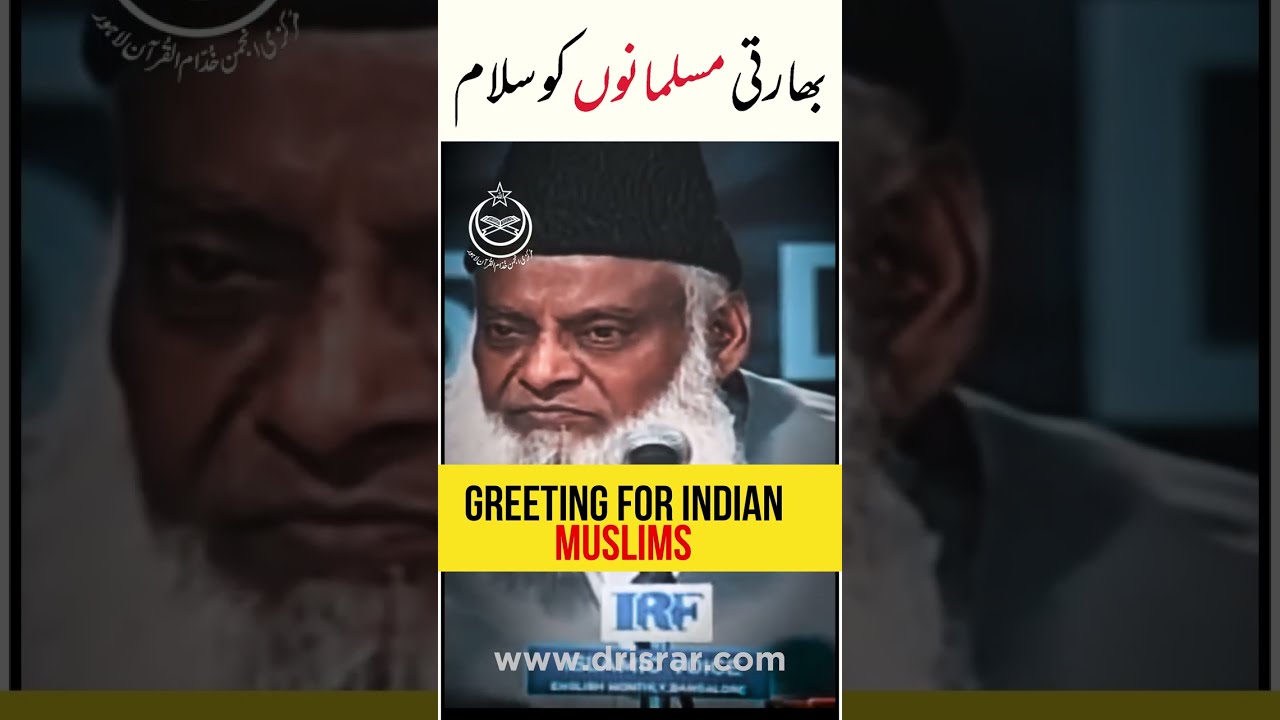
Dr. Israr Ahmad discusses the imposition of the Muslim Family Laws Ordinance in 1961 by a military dictator, highlighting the lack of unified opposition from various Islamic sects despite widespread acknowledgement of its flaws. He points out that despite repeated proclamations of Islamic values, subsequent leaders, including Zia-ul-Haq, failed to amend or repeal the ordinance, allowing it to remain law for over a decade. The lecture examines the historical context and the absence of concerted religious resistance to the legislation.
42
