Pantalones cortos

This lecture discusses the practice of fasting on the 13th, 14th, and 15th of each Islamic month, known as Ayyam-e-Beiz. It explains that this practice continued after the obligatory fasts of Ramadan were established, as it was a regular habit of the Prophet Muhammad and his companions. The lecture also notes the significance of these days due to the brightness of the moon and the opportunity for voluntary worship. The practice continues among devout Muslims today as a means of following the Sunnah.

61
The core demand of faith is singular and absolute. Fulfilling this single requirement guarantees salvation, success, guidance, and ultimate happiness. This lecture emphasizes the simplicity and completeness of this divine demand, highlighting its all-encompassing nature and its connection to achieving true fulfillment in life. It underscores that adherence to this single principle unlocks all blessings and leads to a meaningful existence.
97
This lecture discusses the extension of the principles of Hajj beyond the physical pilgrimage. It explains how the reverence associated with specific locations in Hajj, and the importance of sacrifice within the Hajj rituals, are mirrored in the universal practice of offering sacrifice. The speaker highlights how participation in sacrifice, even when unable to physically perform Hajj, allows Muslims worldwide to share in a core tenet of the pilgrimage. Similarities between the restrictions observed during Ihram and the spirit of sacrifice are drawn, emphasizing the broader application of Hajj’s principles to the entire Muslim community.
70
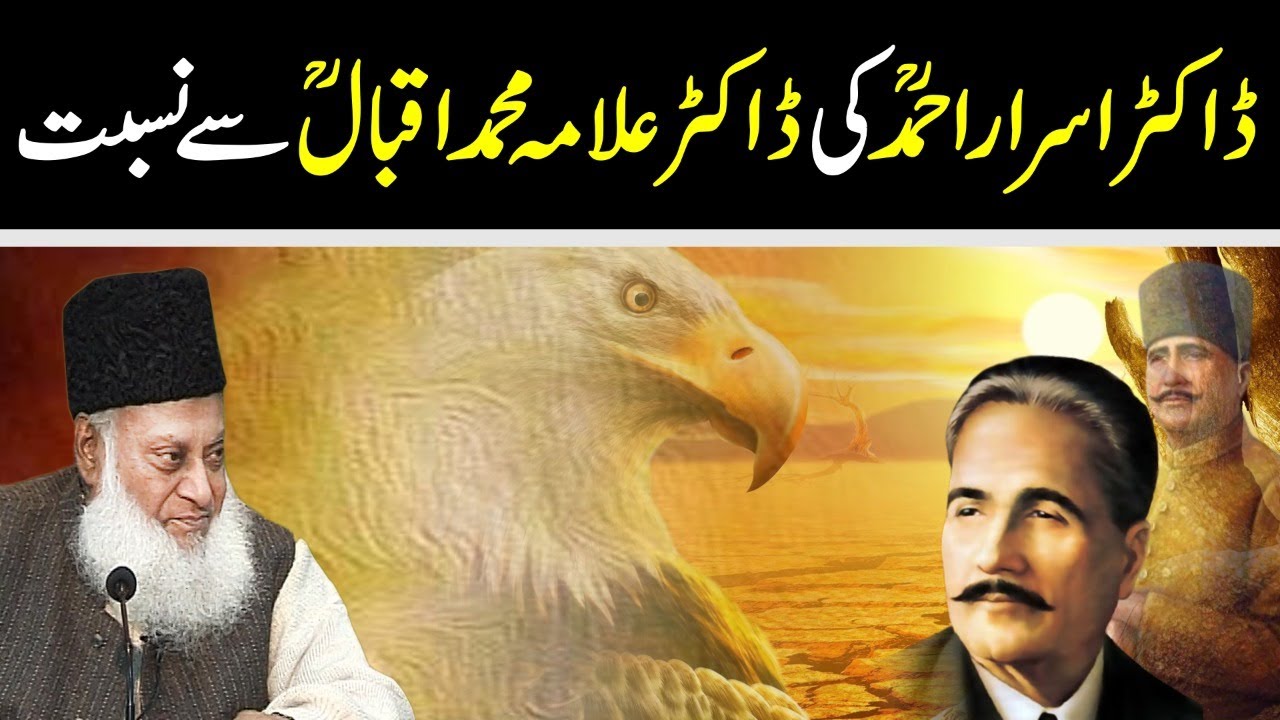
Dr. Israr Ahmad discusses Allama Iqbal’s vision for the Muslim Ummah, his early exposure to Islamic teachings, and the connection between his poetry and the Quran. He details the establishment of an organization fulfilling Iqbal’s dream of combining Quranic study with modern education, and the principles behind the founding of an organization dedicated to practicing Muslims committed to Quranic principles. He also explains the reasons behind the failure of the establishment of Jamaat-e-Islami and the founding of Tanzeem-e-Islami. Dr. Ahmad emphasizes the importance of prioritizing faith and practice over political engagement and adhering to a system based on commitment rather than elections. He shares his personal connection with Iqbal’s legacy and his commitment to continuing his work.
89
This lecture discusses the permissibility of stock market transactions in Islam. It clarifies that legitimate trade involves the actual exchange of goods, while stock trading, often based on speculation, resembles gambling. Direct purchase and sale with actual monetary exchange and receipt of shares is considered different. The speaker highlights the concerns surrounding speculative trading and its potential conflict with Islamic principles.
91

This lecture emphasizes the importance of witnesses in both immediate and future transactions, particularly for significant purchases like property. Establishing proof through witnesses avoids disputes and ensures the validity of agreements. The speaker highlights that witnessing a transaction provides legal security and is essential for any substantial deal, safeguarding both parties involved. It’s a crucial step for long-term financial and legal stability.
62
