Shorts
This lecture discusses a crucial inner assessment. One side of a metaphorical scale holds love for eight worldly things: father, son, siblings, spouse, relatives, wealth, skills, and home. The other side holds love for God, the Prophet, and striving in His path. True faith requires that the latter outweigh the former. Until this balance is achieved, one remains susceptible to worldly desires and divine guidance is withheld. Every individual must establish this internal scale to evaluate their spiritual state and prioritize devotion over material attachments. It emphasizes the importance of sincere faith and prioritizing spiritual values to attain divine guidance and success.

53
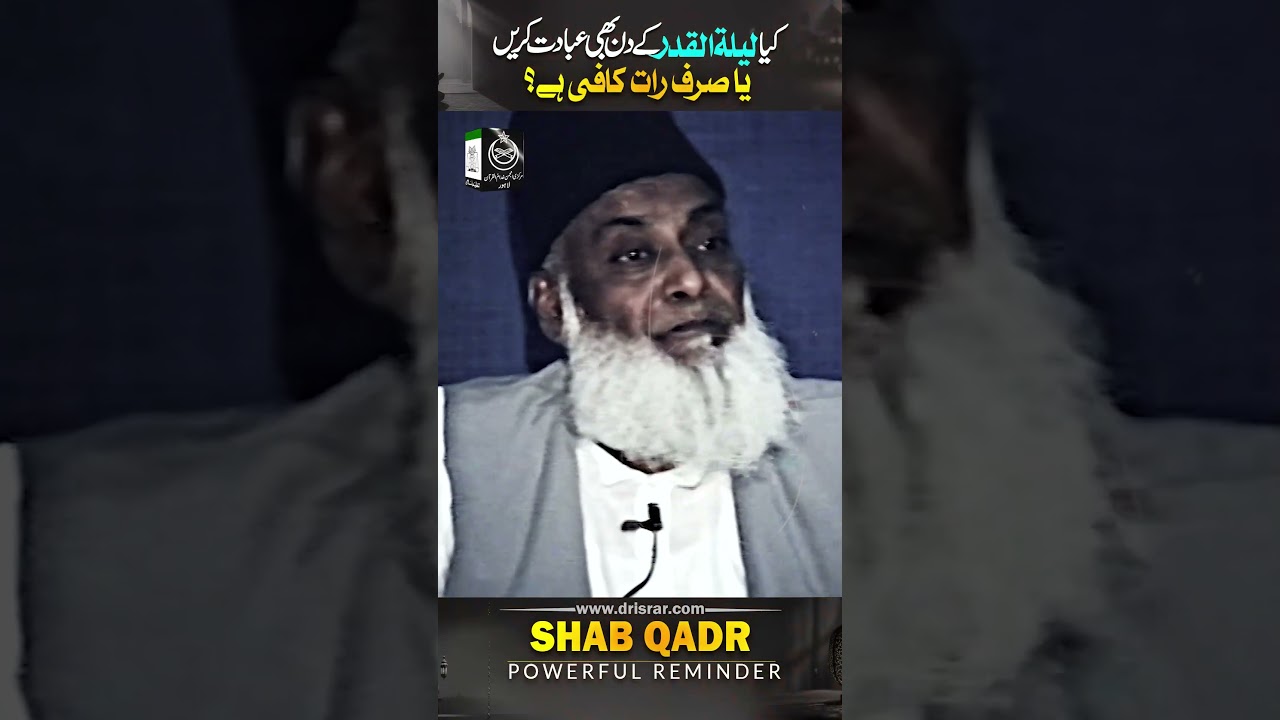
The lecture clarifies that the blessings of Laylat-ul-Qadr (the Night of Power) are not limited to the night itself, but extend to the following day. The Quranic use of terms like ‘yom’ (day) and ‘layl’ (night) encompasses the full 24-hour cycle. This means the entire day following Laylat-ul-Qadr shares in its spiritual significance. This resolves a potential issue regarding time zones; the blessings are universally available regardless of geographical location, ensuring no part of the Earth is excluded from this divine blessing. The lecture emphasizes the Quran’s comprehensive nature, leaving no aspect untouched by divine grace.
79
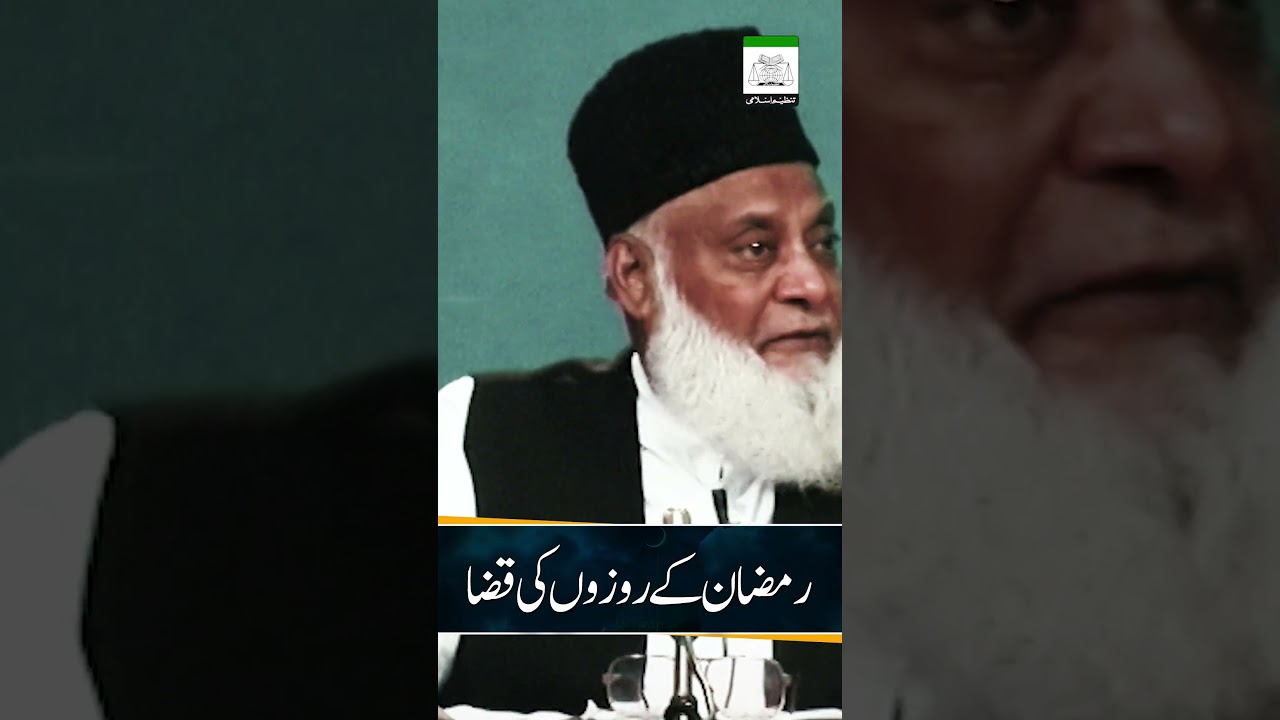
This lecture clarifies the rulings regarding making up missed fasts (qaza) and paying compensation (fidyah) during Ramadan. It explains that while the apparent command of fidyah seems rescinded, the Prophet Muhammad (peace be upon him) maintained it for specific cases: those whose health would be severely endangered by fasting, such as the elderly, chronically ill, or those with no hope of recovery. Healthy individuals capable of fasting are obligated to make up missed fasts. The lecture details who is exempt and when fidyah is permissible, emphasizing the importance of fulfilling religious obligations when physically able.
35
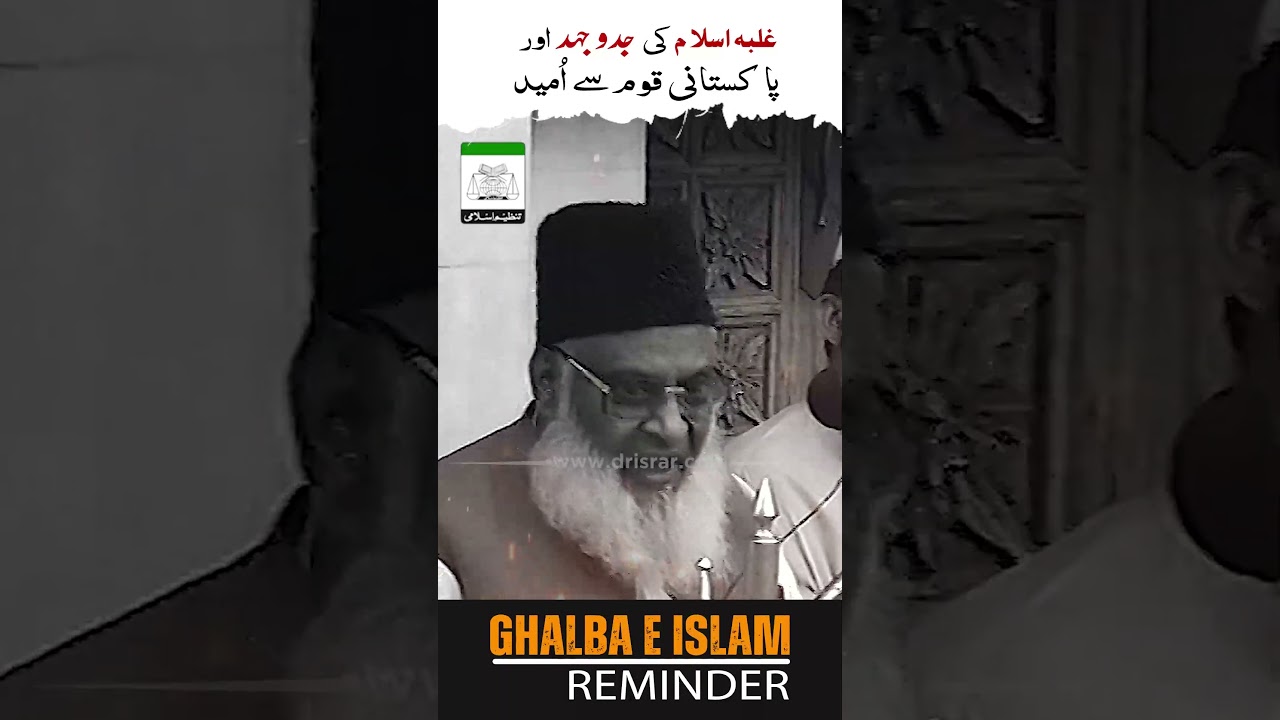
The speaker expresses a belief in Pakistan's destined role in the revival of Islam, despite current disillusionment with religious leadership and societal apathy. He anticipates a period of national upheaval that will ultimately cleanse existing problems and ignite a dormant spiritual fervor. This transformation will position Pakistan as a cradle of Islam and a launching pad for the global resurgence of Islamic values and principles. The speaker emphasizes that despite present difficulties, a powerful spiritual awakening is imminent.
33
Dr. Israr Ahmad discusses the comprehensive nature of Prophet Muhammad’s personality, highlighting his multifaceted roles as a ruler, leader, judge, husband, father, and spiritual guide. He contrasts this with the limitations of modern religious leaders who often struggle to fulfill even basic duties like leading five daily prayers consistently. The lecture emphasizes that the Prophet Muhammad embodied all these roles flawlessly, serving as a complete example for believers. The speaker points out a disconnect in modern religious practice, where individuals dedicated to self-purification often avoid leading congregational prayers.
51
This lecture clarifies the permissibility of dedicating the reward of charitable deeds to others, specifically deceased parents or loved ones. It distinguishes between financial donations, where transferring the reward is acceptable, and acts of worship like prayer and Quran recitation, where the reward belongs solely to the worshipper. The speaker emphasizes that dedicating worship directly to anyone other than Allah constitutes shirk (associating partners with God) and renders the act impermissible. Financial charity’s reward can be transferred, but the reward for obligatory worship remains with the individual performing it.
98
