Shorts
A recent gathering of Islamic movement leaders in London assessed global regions for the potential revival of Islam and the establishment of an Islamic system. The consensus identified Pakistan as the sole viable country for this purpose, possessing the inherent capabilities, resources, and challenges necessary for this undertaking. The lecture emphasizes Pakistan’s unique position and potential in the context of global Islamic resurgence.

241
This lecture outlines a three-stage approach to societal change, emphasizing initial passive resistance and endurance of persecution. The speaker stresses avoiding violence until sufficient strength is attained, then advocates for active, non-violent challenges to the existing system. The final stage involves decisive action, guided by the example of the Prophet Muhammad. The core message is a progression from patient suffering to assertive, yet peaceful, resistance, culminating in transformative change.
42
The lecture clarifies the distinction between being a Muslim—one who outwardly professes the faith—and a *mumin*—a true believer. It explains that merely claiming faith is insufficient; genuine belief requires complete trust in God and His Messenger, coupled with striving in His path with both wealth and life. The speaker references Surah Al-Hujurat, verse 14, highlighting that true faith enters the heart and manifests in dedicated action and sacrifice. A Muslim may adhere to the rituals, but a *mumin* embodies the complete essence of faith through unwavering dedication and continuous struggle for the sake of Allah.
81
This lecture explores the difference between superficial observation and true understanding. It asserts that animals perceive the external world, but humans possess the capacity to grasp the underlying reality of things. The speaker emphasizes that genuine vision comes from the heart, not merely the eyes, and seeks a deeper comprehension of existence, as exemplified in the prophetic supplication to see things as they truly are. True insight requires moving beyond appearances to grasp the essence of reality. The lecture highlights the importance of inner vision and spiritual understanding.
54
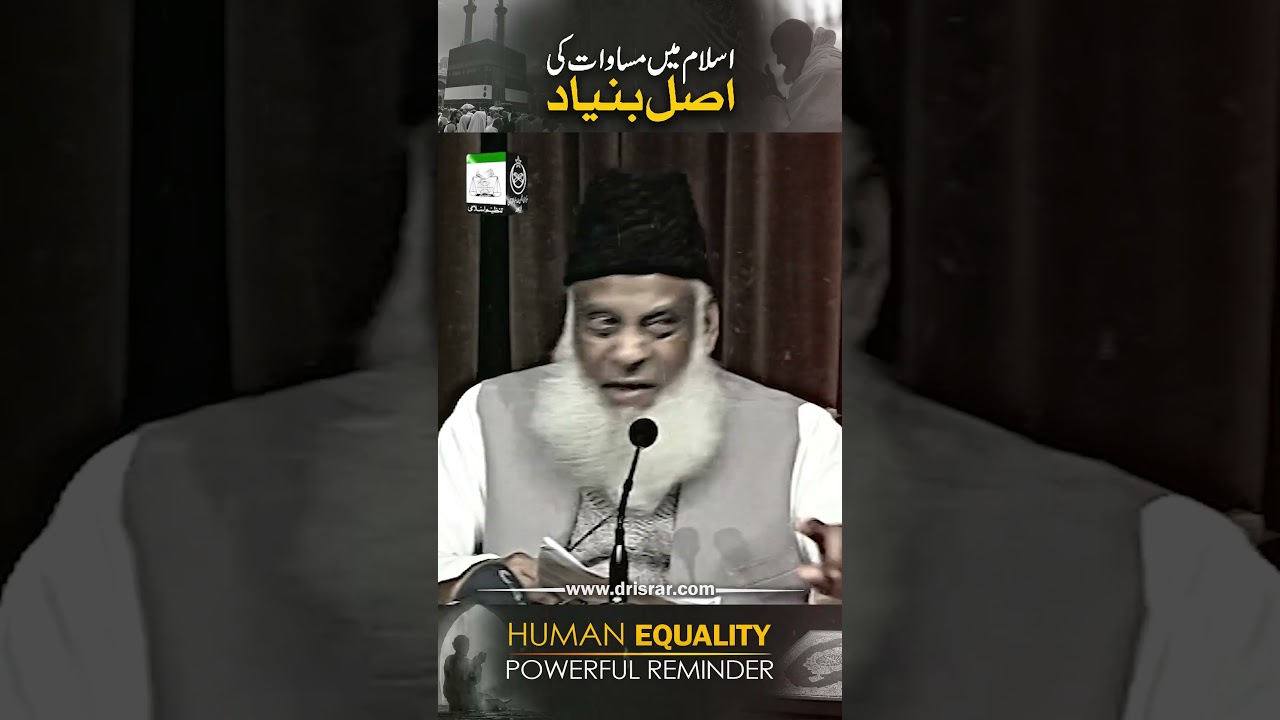
Humans are born equal, possessing inherent dignity regardless of race, ethnicity, gender, or social status. This equality is a fundamental principle, as highlighted by Allama Iqbal. Differences in status arise from acquired qualities like knowledge and piety, not from birth. True honor stems from devotion to God and righteous conduct, not from inherited characteristics. The Quran emphasizes that superiority is based on *taqwa* (piety), not on arbitrary distinctions like race or lineage. This concept rejects all forms of discrimination and promotes a society based on justice and merit.
69
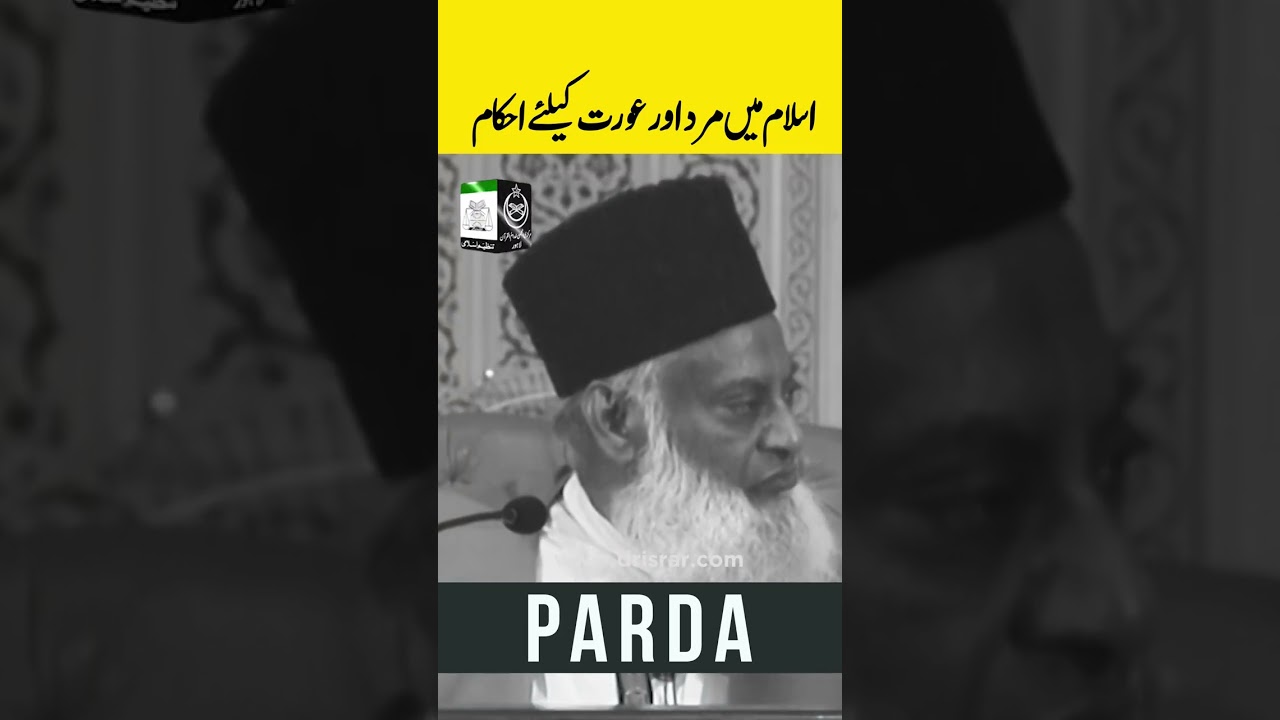
Hadrat Jaber ibn Abdullah states that a believer in God and the Day of Judgement should never be alone with a non-mahram woman. Any meeting should occur in the presence of a mahram (close male relative). This principle applies to both meetings and travel. The Prophet Muhammad (peace be upon him) emphasized that when a man and a non-mahram woman are alone, a third party – Shaytan – is present. Hadrat Ibn Abbas narrates a similar instruction: a man should not be alone with a woman unless a mahram accompanies her, and a woman should not travel without a mahram.
66
