السراويل القصيرة
This lecture clarifies the Islamic concepts of *israf* (wastefulness) and *tabzir* (extravagance). *Israf* is exceeding necessity when fulfilling a need, while *tabzir* is spending wealth unnecessarily for show and ostentation. The Quran condemns *tabzir* more severely than *israf*, equating those who practice it with the brothers of Satan. The speaker emphasizes the importance of moderation and fulfilling needs without excess, contrasting essential spending with wasteful displays of wealth. This discussion highlights the spiritual consequences of extravagance and promotes a mindful approach to resource utilization.

50
This discourse details the path of *Sirat-e-Mustaqeem* (the straight path) as it transitions from this world into the intermediate realm (Barzakh) and ultimately becomes the bridge over Hell on the Day of Judgement. It explains how the righteous will traverse this path to enter Paradise, witnessing the salvation granted by God, while the wrongdoers will fall from it due to their lack of divine guidance. The lecture emphasizes the immense value of God’s mercy and forgiveness for those who adopted a path of piety in this world. Those devoted to *taqwa* (piety) will be rescued, while the unjust will remain fallen. This path will be a test of faith and a demonstration of God’s justice.
46
This lecture explores the life of Prophet Muhammad (peace be upon him) as a comprehensive model for life, emphasizing the struggles and sacrifices made to establish Islam. It highlights the importance of not just following superficial rituals, but embodying the spirit of striving for the dominance of God's religion in all aspects of life. The speaker stresses the need for individual and collective effort, drawing parallels between the Prophet's challenges and the current state of the Muslim community. True devotion lies in aligning one's actions with the Prophet's example, not merely reciting slogans or claiming piety. It’s a call to emulate the Prophet’s relentless dedication to establishing justice, truth, and faith in the world.
84
Dr. Israr Ahmad discusses the remarkable correspondence between the Quran and modern scientific discoveries, specifically in the field of embryology. He recounts the story of a French surgeon, Maurice Bucaille, who, after being treated by King Faisal of Saudi Arabia, was presented with the Quran. Bucaille learned Arabic, studied the Quran, and ultimately wrote a book confirming that no scientific fact within the Quran had been proven false. He acknowledged that science may not yet have fully understood all of the Quran’s truths, but that no established scientific principle contradicts its teachings.
47
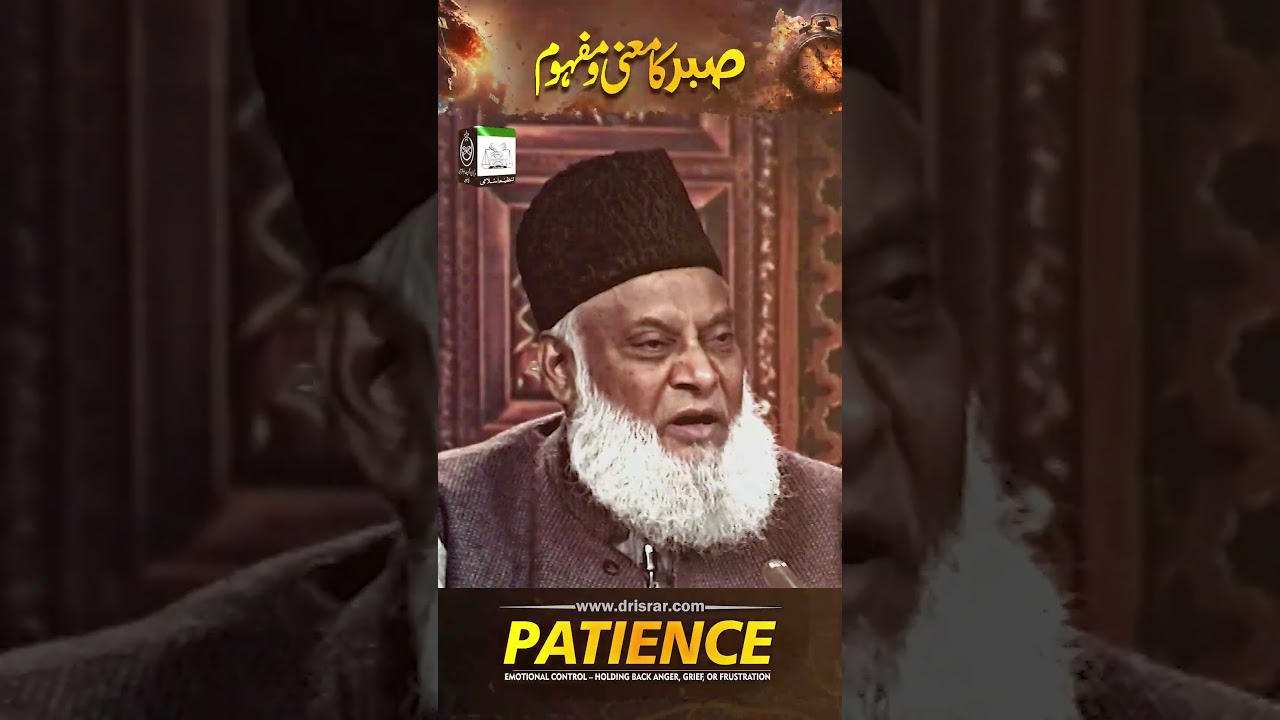
This lecture explores the etymological roots of the word 'Sabr' (patience) in Arabic and its connection to bitter substances historically used for medicinal purposes, specifically blood purification. The speaker details how the act of enduring bitterness—like consuming aloe vera or sour fruits—parallels the internal fortitude required to practice patience. The discussion extends to ancient practices of using aloe vera to preserve bodies, drawing a metaphorical link to its function in ‘cleansing’ and halting decay, mirroring the way patience preserves the soul. The core argument posits that the very essence of patience originates from the ability to withstand hardship and unpleasantness.
48
Hazrat Umar Farooq established a land system where conquered territories weren't individually owned, but held in common trust by the Muslim community. Revenue generated from this land was designated for the welfare of Muslims, both contemporary and future generations. Those working the land, regardless of religion, were required to pay land revenue. This revenue-generating status of the land would remain perpetual, even under non-Muslim rule, and revert to its original status upon regaining independence.
64
