Shorts

Allama Iqbal, at the beginning of the 20th century, foresaw the rise of a destructive ideology, even before its full manifestation in Nazi Germany. His initial work focused on economics, but he was a philosopher and a poet with profound insight. He recognized the seeds of a sentiment that would later fuel the Holocaust—the perception of being controlled by external forces. This early awareness, predating overt reactions within Nazi Germany itself, allowed him to anticipate the potential for extreme brutality. The systematic extermination of six million people, a horrific event, stemmed from this perceived control and the resulting resentment. Iqbal understood the danger inherent in such beliefs.

59
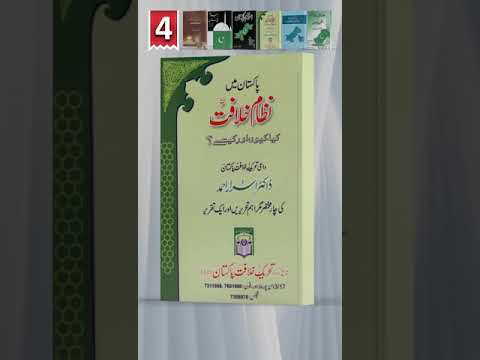
This collection of lectures by Dr. Israr Ahmad addresses critical questions about Pakistan’s history, ideology, and future. Topics include the legacy of the founder of Tanzeem-e-Islami, the viability of a caliphate system, the historical and political context of Islam in Pakistan, the factors contributing to Pakistan’s instability, and the reality of the Pakistan Ideology. The set also features Dr. Ahmad's analysis of Pakistan's political landscape from 1977 to 1987. Available for ₨1200 (originally ₨1900) from Maktaba Khuddam-ul-Quran, Lahore. Home delivery is free with cash on delivery. Order online at www.maktaba.com.pk or WhatsApp at 0301-1115348.
56

This lecture explores the concept of inner revolution as the true catalyst for lasting societal change. Dr. Israr Ahmad argues that external revolutions are temporary if not rooted in a fundamental transformation of individual character. He draws parallels to the revolution initiated by the Prophet Muhammad, highlighting the internal transformation within the Sahaba (companions) as the driving force behind its rapid expansion and unprecedented success. The lecture emphasizes the immense potential of this internal revolution to reshape the world, referencing a vision of its potential reach across vast geographical areas. The speaker contrasts this with the failed attempt at internal revolution, and resulting discord, by Abdullah ibn Saba, and the slowing of Muhammad’s revolution. The lecture posits that genuine and lasting change originates from within the individual, ultimately manifesting as a global phenomenon.
70

This lecture details Allah’s promises to those who uphold faith and righteous deeds: establishing them as successors on Earth, granting dominance to their religion, and replacing fear with security. It emphasizes the historical precedent of prophets like Dawood (David) receiving divine support and leadership, and applies this promise to the Muslim community, highlighting the eventual triumph of Islam and the establishment of a secure and just governance.
66
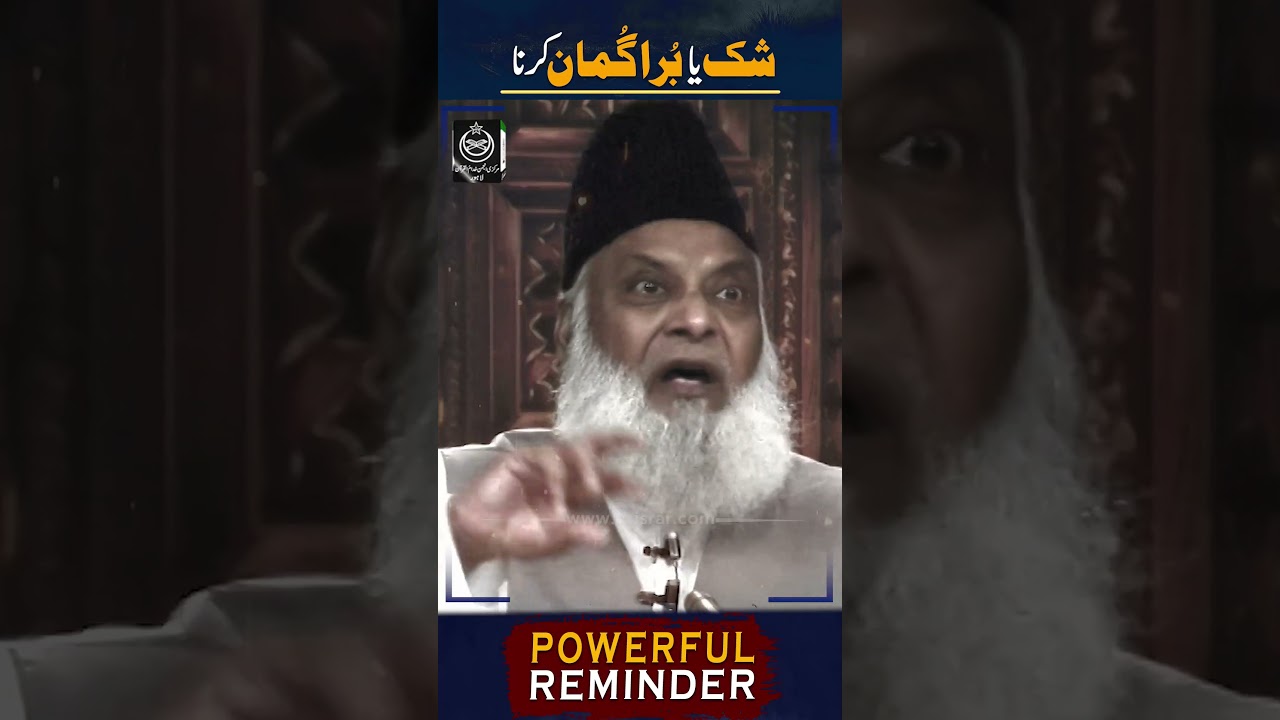
This lecture discusses the human tendency to form opinions and suspicions about others. It emphasizes that forming negative judgments without concrete evidence is harmful and unjust. While doubt itself is not inherently bad, it should prompt caution and careful consideration rather than immediate negative action. The speaker stresses the importance of avoiding pre-judgment and treating others with fairness, even when suspicions arise. Caution and thoughtful evaluation are preferable to hasty, unjust decisions.
50

True faith is a profound attribute, but it requires cultivation. Its source and foundation lie within the Quran. Genuine faith isn't acquired through philosophical debate or intellectual reasoning, but through deep contemplation and immersion in the Quran. The Quran unlocks the heart's potential, revealing truths to those who reflect upon its verses. Deliberate study and thoughtful engagement with the Quran are essential for fostering conviction and illuminating the path to spiritual understanding. This process unlocks the heart and strengthens belief.
60
