ショーツ

This lecture explores the concept of free will and its implications. Humans experience freedom in this world, but are accountable for their actions. The material laws of this world do not immediately punish wrongdoing, creating a false sense of impunity. However, the ultimate return is to God, where every deed, no matter how small, will be accounted for. Those who perform even a speck of good will find it before them, and those who commit even a speck of evil will also face its consequences. This emphasizes divine accountability and the importance of righteous conduct despite the apparent lack of immediate consequences.

49
The text details the events of the Battle of Karbala. Twenty families from the Banu Hashim clan fought bravely alongside Imam Hussain, sacrificing their lives. The battle saw intense fighting, with many from the Banu Hashim martyred. A young child of Imam Hussain was also among the martyrs. All male members of Imam Hussain's household were killed except for his son, Ali Zayn al-Abidin, who was ill and unable to participate. This occurred in 61 AH, exactly fifty years after the passing of the Prophet Muhammad.
69
Science and technology are rapidly advancing. This lecture addresses the permissibility of utilizing advancements, distinguishing between those aligned with Islamic principles (Kitab o Sunnat) and those that are neutral. It emphasizes that progress benefiting humanity should be embraced, while innovations contradicting core Islamic values should be rejected. The lecture posits that human progress is a collective inheritance, not the property of any individual, and should be guided by ethical considerations rooted in faith. Neutral advancements, permissible within an Islamic framework, can be adopted and integrated into society.
74
Societies often fall into the misconception that necessities will fulfill themselves without effort. This lecture explains that fulfillment requires proactive action and striving, even in the face of hardship or uncertainty. Waiting for things to happen automatically leads to stagnation. Real progress demands initiative and a clear understanding of the challenges at hand. Passive expectation yields no results; active pursuit is essential for achieving desired outcomes. The lecture emphasizes that even pursuing seemingly impossible goals, like mirages, is preferable to remaining idle.
49
This lecture emphasizes that propagating the message of Islam is no longer the sole responsibility of prophets, but a collective obligation incumbent upon the entire Muslim community. It argues that Muslims must actively convey the faith through their actions and outreach, becoming living examples of its principles. Failure to do so will result in a negative testimony on the Day of Judgment, with the community being held accountable for not upholding the legacy of the Prophet. The speaker stresses that establishing a clear argument for faith before all of humanity is a fundamental duty, requiring dedication of resources and abilities to effectively spread the message of Islam.
205
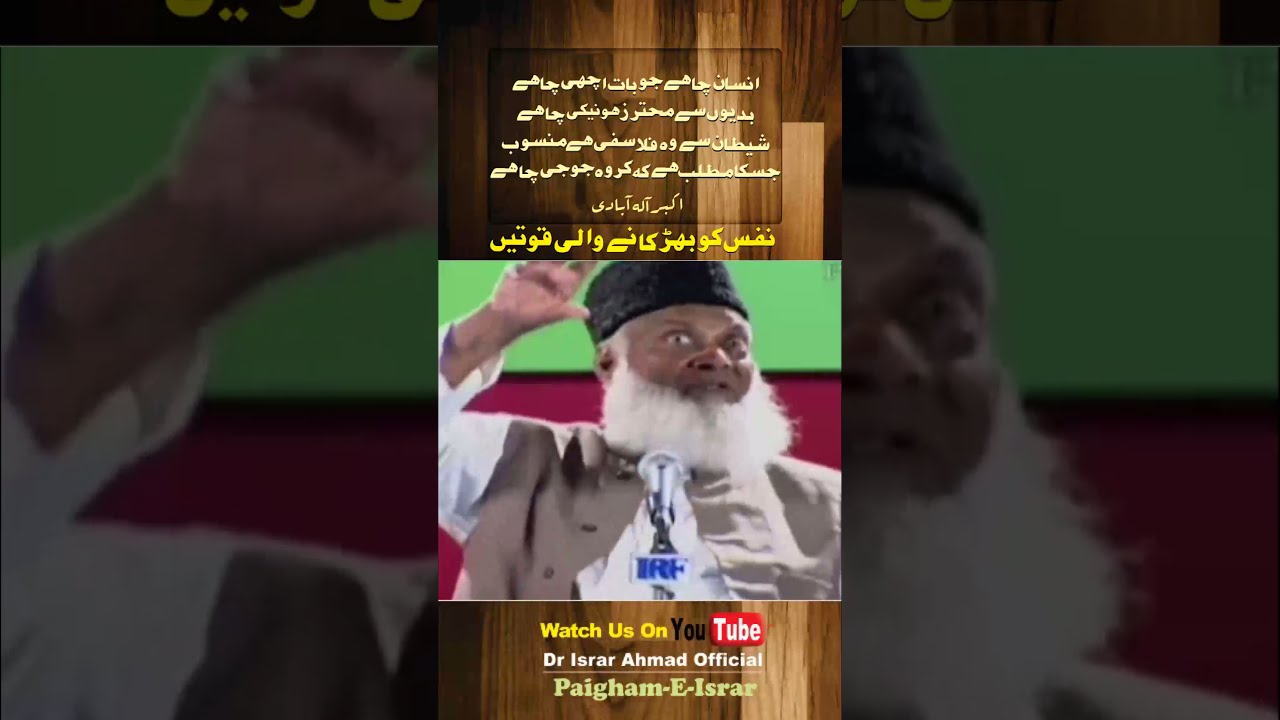
This lecture discusses the internal and external forces that incite the ego (nafs) to evil. It identifies both invisible forces—Satan and his jinn followers—and visible agents among humans who promote immorality as culture. The speaker emphasizes the necessity of actively resisting these pressures and recognizing Satan as an enemy to protect oneself from corruption and maintain spiritual integrity. Succumbing to these influences leads to spiritual decline and moral degradation. The core message is a call to vigilance and proactive opposition against all forms of evil.
56
