শর্টস

This lecture details the fundamental tenets of faith in Islam. It covers belief in Allah, the prophets, the final prophet Muhammad (peace be upon him), revealed scriptures including the Quran, the Day of Judgment, accountability, life after death, Paradise, and Hell. The discussion highlights the extensive treatment of these topics within the Quran, particularly in its earlier Meccan verses.

74

Faith is not merely belief; it is a radiant force, akin to the brilliance of the sun. True faith manifests through righteous action, blossoming into ethical conduct, unwavering trust in God, contentment with divine decree, obedience to God, following the Prophet’s example, and consistent goodness. It is the inner light that guides one’s life and shapes one’s character. This lecture explores the comprehensive nature of faith, emphasizing its practical implications and transformative power.
63

This lecture critiques the modern banking system, arguing it is fundamentally based on interest (riba) which constitutes a declaration of war against God and His Messenger. The speaker asserts that the claim a system cannot function without interest is an expression of disbelief in God’s knowledge and provision. It implies either God was unaware of a future where interest-free systems would be necessary, or He prohibited something essential. The argument highlights that God does not burden any soul beyond its capacity, and therefore, reliance on interest demonstrates a lack of faith in divine support and provision.
88

Effective training requires both encouragement and warning. Sometimes, firm discipline is necessary to correct behavior, while other times, positive reinforcement builds confidence and unlocks potential. The Quran utilizes both approaches – *tabshir* (giving glad tidings) and *anzar* (warning). Surah Al-Asr specifically highlights the consequences awaiting those who do not fulfill four conditions: faith, righteous deeds, advocating truth, and encouraging one another to uphold it. This lecture explores the balance between these methods and their importance in personal and societal development.
87

Umar bin Abd Wud, a renowned Arab warrior and skilled horseman, challenged the Muslims during a siege. He fearlessly crossed the trench surrounding Medina, seeking a worthy opponent. Hazrat Ali (RA) stepped forward, offering Umar bin Abd Wud three opportunities to make a request before engaging in combat. Umar initially demanded the acceptance of Islam, then asked for safe passage, both of which Ali refused. Finally, Umar challenged Ali to a duel. Ali accepted, ultimately defeating and killing Umar bin Abd Wud, demonstrating courage and faith.
48
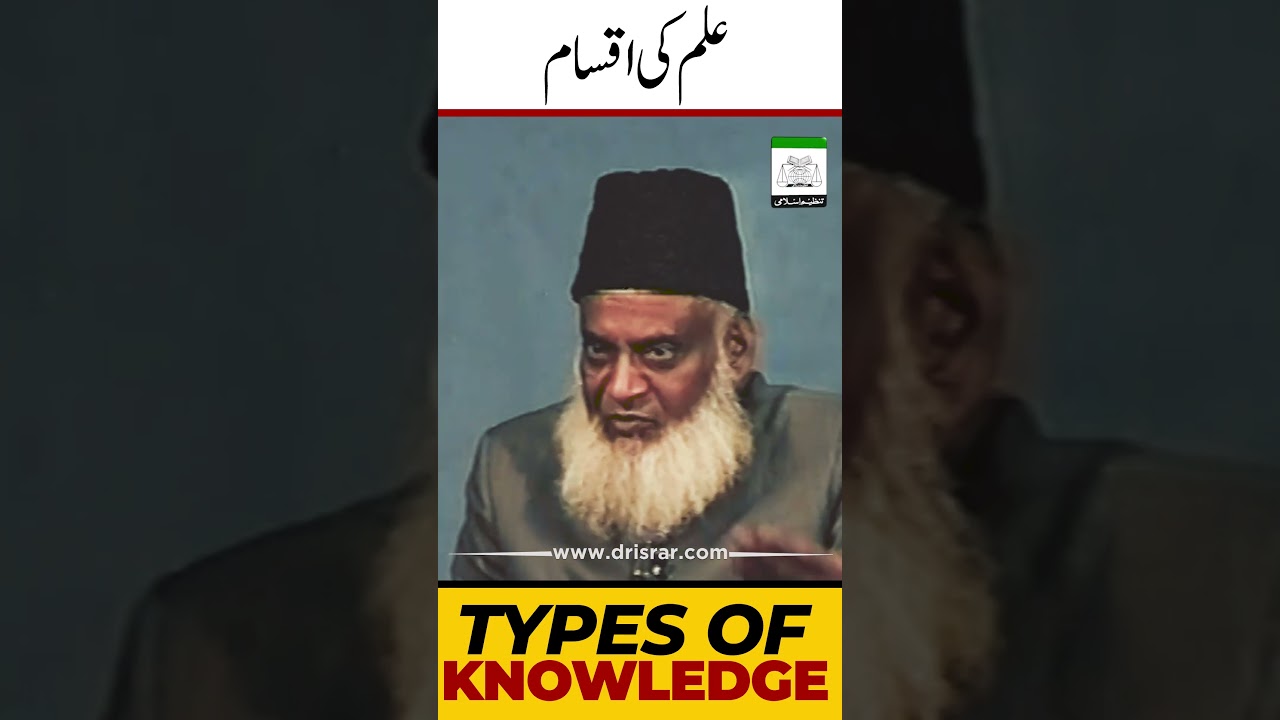
This lecture explores the dual nature of knowledge: revealed guidance and knowledge acquired through human senses and intellect. It emphasizes the responsibility of utilizing these faculties to understand the universe, analyze phenomena, and draw conclusions. The speaker highlights the importance of observation, rational thought, and the pursuit of truth through both spiritual insight and scientific inquiry. The lecture stresses that humanity has been gifted with senses, perception, and intellect and will be held accountable for their proper use in unraveling the mysteries of existence and applying that knowledge for betterment.
95
