Shorts

This lecture addresses the hypocrisy of requesting guidance from the Quran while simultaneously rejecting its comprehensive system of life. The speaker argues that simply reciting the Quran or making supplications based on its verses is insufficient if one isn’t prepared to fully embrace its principles and implement them in all aspects of life. True acceptance of the Quran as a guide, or *Imam*, requires a commitment to establishing its complete framework, not merely selective adherence. Prayers offered without this genuine commitment are deemed ineffective and ultimately rejected.

106

This lecture explains a crucial Islamic principle: the balance between reliance on God (Tawakkul) and utilizing practical means (Asbab) to achieve goals. The Prophet Muhammad (peace be upon him) rebuked a Bedouin for leaving his camel untethered, emphasizing that true faith requires both trust in God *and* responsible action. The speaker clarifies that simply relying on God without making an effort is incorrect, and neglecting to utilize available resources after making an effort is also a mistake. Results ultimately come from God, but effort is a prerequisite. It is crucial to strive, use resources, and *then* place trust in God for the outcome. True Tawakkul is not passivity, but a confident reliance on God *after* taking all necessary steps.
87
This lecture emphasizes the significance of fulfilling commitments within societal and Islamic frameworks. Agreements, whether formal contracts like employment or social contracts like marriage, establish mutual obligations and trust. The speaker highlights that upholding one's promise is a fundamental aspect of faith, as individuals will be held accountable by God for their commitments. Every agreement is witnessed by God, and failure to fulfill a promise is considered a serious matter. The lecture underscores that maintaining integrity and fulfilling promises is essential for a righteous life.
32

This lecture analyzes verse 55 of Surah Noor, explaining Allah’s promise to believers: establishing them as successors on Earth, granting dominance to their faith, and replacing their fear with security. The discussion highlights that true Tawhid (Oneness of God) is incomplete until the religion of Allah prevails. The verse connects political empowerment with spiritual fulfillment, asserting that genuine worship requires both faith and the ability to practice it without oppression. Dr. Israr Ahmad explains that the promise of governance is intrinsically linked to the establishment of Allah’s way of life and the eradication of fear among believers.
179

The pursuit of truthfulness is often hindered by perceived consequences. While dishonesty may offer immediate benefits, genuine motivation stems from love for God and the belief in accountability in the afterlife. This internal force compels individuals to choose righteousness over self-serving deceit. God favors those who fulfill their promises and detest those who break them. The cultivation of divine love naturally leads one to embrace good deeds and abstain from evil, driven by an inherent desire to please God.
44
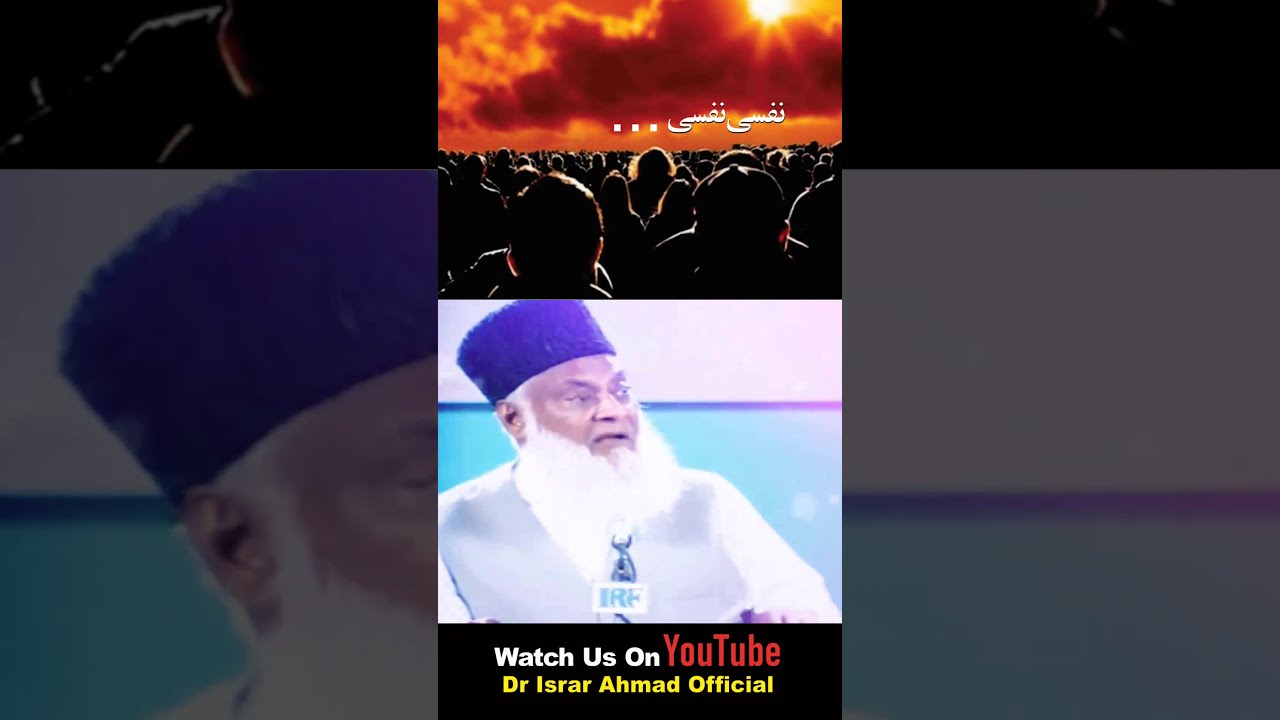
The Quran describes a day of immense hardship, 'Yaum-e-Farar,' where individuals will prioritize self-preservation above all else. On this day, familial and societal bonds will dissolve as people flee from loved ones—siblings, parents, spouses, and children—driven by intense fear and a desperate desire for personal salvation. The text highlights the complete breakdown of relationships and the overwhelming self-interest that will characterize this day of reckoning, where individuals will solely focus on escaping divine punishment.
88
